

Automatically organize expenses into practical budget categories.
Need an Expense Tracker App That Is Easy to Use?
Vala helps you understand where your money goes so you can control category spending, reduce waste, and build stronger financial habits.
Why People Choose Vala
Review spending changes across weeks and months without manual work.
Flag unusual patterns early with reminders and alerts.
Connect expense tracking directly to savings and budgeting decisions.
Who This Helps Most
Professionals managing variable monthly expenses.
Users trying to cut unnecessary subscriptions and impulse spending.
Anyone who needs a cleaner view of cash-flow behavior.
Why Expense Tracker App Matters for Consistent Money Results
People searching for "expense tracker app" usually want a system they can trust every day, not a dashboard they open once and forget. The strongest budgeting workflow turns daily transactions into clear decisions before problems grow. That means category visibility, practical reminders, and simple guidance that helps users stay on plan during normal weeks and high-spend weeks.
Vala is built for users who need faster visibility into categories, subscriptions, and cash-flow behavior. Instead of forcing complex setup, Vala combines quick onboarding with useful depth. It works as a money saver, budget planner, and expense manager so users can make better decisions in less time. This approach helps users avoid reactive month-end stress and maintain financial confidence through repeatable routines.
- Action-focused guidance instead of passive charts.
- Clear visibility across budgets, bills, and savings goals.
- Daily usability designed for long-term consistency.
Keyword Fit and Search Intent Coverage
Strong ranking pages must satisfy user intent, not just include keywords. This page naturally covers high-intent terms like expense tracker, expense manager, budget planner, money saver because users need these workflows together. A budget planner without tracking creates blind spots, and a tracker without planning leaves users reacting late. Combining these terms reflects the real way people evaluate modern finance apps.
For Google, semantic relevance improves when headings, body copy, and internal links connect the user journey from education to install. For users, this means fewer dead ends. They can learn what the feature does, understand how it works in real life, and move directly to app installation when ready. That balance supports both rankings and conversion quality.
- Primary and semantic keywords integrated naturally.
- Educational sections aligned with commercial search intent.
- Internal linking path built for discovery and conversion.
30-Minute Setup Plan That Improves Adoption
The fastest way to fail with a finance app is overbuilding on day one. A practical setup should focus on essentials first: income, fixed obligations, flexible spending categories, and one savings goal. Once those basics are stable, users can expand into reminders, shared categories, and deeper optimization. This staged setup lowers friction and improves app retention.
In Vala, users can start with a free budget app workflow, then add premium depth if and when they need it. This avoids outdated all-or-nothing claims and keeps the value message accurate. Users can test their routine with real behavior data before deciding to expand. That clarity builds trust and improves both conversion and long-term satisfaction.
- Start with core categories and one primary goal.
- Add complexity only after baseline behavior is stable.
- Use free and premium options based on measurable needs.
Weekly Execution Workflow for Better Outcomes
Monthly planning is useful, but weekly execution is what protects results. High-performing users review category burn rate, upcoming bills, and savings contributions at least once per week. This simple rhythm helps users correct spending earlier, preserve goal savings momentum, and avoid sudden end-of-month cuts that feel discouraging and hard to sustain.
Vala supports this cadence with reminders, insight cards, and clear category trends. Users can see what changed, why it changed, and what to do next. That is especially valuable for users who want an easy saver or penny saver routine without manual spreadsheets. Small weekly adjustments typically outperform dramatic monthly resets because they are easier to maintain.
- Review category burn rate relative to days remaining.
- Check reminder windows for recurring bills and subscriptions.
- Reallocate small amounts before overspending becomes locked in.
Automation, Alerts, and Insight Cards
Automation is strongest when it is tied to behavior visibility. Recurring savings transfers, bill reminders, and threshold alerts should work together so users can take action before drift compounds. A true automatic savings app does more than move money; it helps users protect transfers by reducing avoidable category leakage and unnecessary recurring charges.
Insight cards in Vala translate raw transactions into recommendations users can apply quickly. Instead of vague warnings, users get context on where spending changed, which categories are at risk, and what adjustment will have the highest impact. This is where AI budget coaching creates practical value. It turns data into decisions that are realistic in daily life.
- Recurring automation connected to category monitoring.
- Insight cards that identify high-impact adjustments.
- Alerts designed to prevent, not just report, overspending.
Shared Budgeting for Couples, Families, and Roommates
Many high-intent searches come from shared-budget use cases: couples splitting rent, families coordinating bills, or roommates tracking utilities and groceries. A strong split bills app must preserve clarity around who paid, who owes, and when each recurring due date is approaching. Ambiguity creates conflict, delayed payments, and weak budgeting follow-through.
Vala supports shared budgeting workflows while still allowing users to maintain personal category visibility. This matters because real households often combine shared and individual financial responsibilities. By linking split bills, reminders, and goal planning in one interface, users reduce friction and maintain transparency. Better communication around money usually leads to better savings outcomes.
- Clear contributor-level tracking for shared expenses.
- Recurring reminder windows for household obligations.
- Shared goals with visible progress and accountability.
Trust Signals, Security Language, and Conversion Confidence
Financial products need clear trust messaging. Users should understand that data protection, encryption standards, and provider transparency are core priorities, not hidden details. Conversion improves when trust language is specific and consistent across feature pages, FAQ sections, and metadata. Users are more willing to install when product claims are precise and easy to verify.
Vala messaging avoids outdated claims and keeps plan language accurate: free and premium capabilities can coexist while platform details are shown in-app. This approach keeps expectations aligned with product reality. For SEO, trust-forward copy also improves quality signals because users spend more time engaging with pages that feel credible and professionally maintained.
- Clear security-first language and privacy transparency.
- Accurate plan messaging without outdated pricing claims.
- Consistent trust narrative across landing and FAQ content.
How to Use Internal Linking for Faster Discovery and Better Conversion
High-performing SEO pages should guide users through a clear path: educational article to feature page to installation CTA. This route helps search engines understand topical relationships while helping users make informed decisions without leaving the site confused. In practice, this means every major landing page should connect to supporting blog content, related comparisons, and one obvious download destination.
Vala follows this structure by linking blog guides to feature pages, then directing users to the homepage download section and store links. This improves crawl depth, helps important pages receive more authority, and shortens the path from informational intent to conversion. Over time, this internal linking framework can improve rankings for high-intent terms while increasing app install completion rates from organic traffic.
- Guide users from informational pages to product pages naturally.
- Reinforce keyword clusters with contextual links, not repetitive anchors.
- Keep install CTAs visible on feature and article pages for conversion continuity.
Mobile UX and Page Speed Best Practices for Finance App SEO
Most finance app search traffic is mobile-first, so speed and clarity are non-negotiable. Landing pages should load fast, avoid layout shift, and keep high-value content near the top. Users need immediate proof of relevance: a clear headline, direct value proposition, and trusted install links. Heavy layouts, delayed hero content, or hidden CTAs usually reduce both engagement and ranking performance.
Vala pages are designed to support these goals with image optimization, deferred scripts, and concise CTA blocks for iOS and Android. Strong technical execution also supports better crawl efficiency because pages render quickly and keep metadata stable. When combined with accurate structured data and intent-matched copy, mobile performance improvements contribute directly to better user trust, stronger retention, and more install-driven organic growth.
- Keep above-the-fold messaging and CTAs clear on small screens.
- Reduce rendering bottlenecks with lightweight asset strategy.
- Align speed work with conversion goals, not technical metrics alone.
How to Evaluate Results in 30, 60, and 90 Days
To measure whether "expense tracker app" is delivering value, track outcomes over fixed time windows. In 30 days, look at consistency metrics: weekly review completion and reminder response rate. In 60 days, evaluate behavior shifts such as reduced category leakage and stronger bill timing. In 90 days, measure strategic outcomes like goal savings progress and lower stress around monthly planning.
This measurement model helps users decide whether to deepen usage, adjust categories, or expand into shared workflows. It also supports better retention because users can see concrete wins. Vala is designed to make these milestones visible through budgeting dashboards, expense trends, and savings tracking. Clear progress is one of the strongest drivers of long-term app usage.
- 30 days: consistency and engagement signals.
- 60 days: behavior change and category control.
- 90 days: measurable savings and planning confidence.
Install Vala and Start Today
Return to the Vala homepage for full product details, or jump directly to the download section.
Benefits of AI Budgeting with Vala
Faster category decisions
AI insights highlight where to adjust spending before month-end pressure builds.
Stronger savings consistency
Connect spending reductions to recurring goal contributions with less manual work.
Clear shared-money workflows
Split bills and track household expenses with practical visibility and reminder support.
Vala App Screenshots
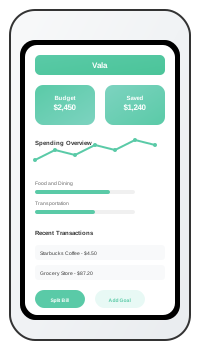
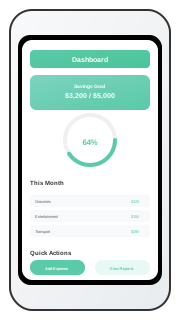
What Users Say About Vala
“Finally a budget app I keep using.”
“The insight cards make weekly decisions easy. I save more consistently now.”
“Shared budgeting is much clearer.”
“Split bills and reminders removed most of our monthly money confusion.”
“Great for building better habits.”
“I can see category trends and adjust before I overspend.”
FAQs for This Topic
Yes. Vala combines budget planning with day-to-day expense tracking so you can move from data to action quickly.
Yes. Subscription and recurring-payment visibility is built in so you can decide what to keep, pause, or cancel.