
Instant expense logging is the practice of capturing every purchase at the exact moment it occurs, giving you real-time visibility into where your money goes. This approach, also called real-time expense tracking in financial management circles, closes the gap between spending and awareness. Frequent trackers spend 15–20% less overall without consciously restricting themselves. That single fact explains why the role of instant expense logging has moved from a nice-to-have habit to a core budgeting practice for individuals, couples, and groups who want genuine financial control.
How does instant expense logging improve budgeting accuracy?
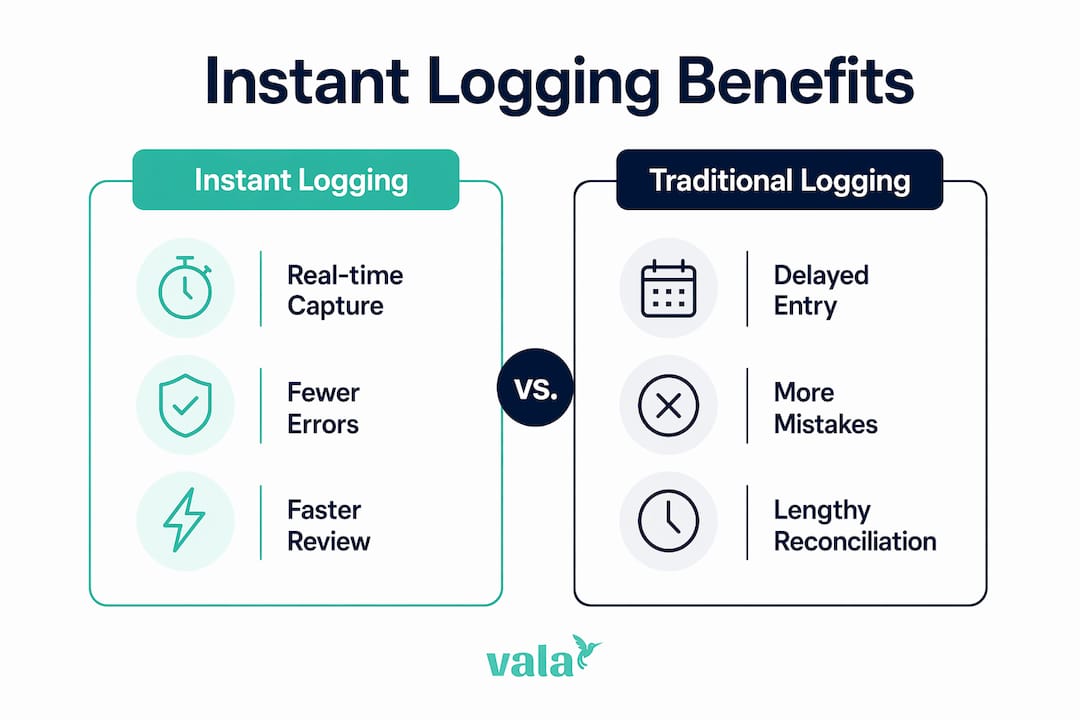
Instant logging beats traditional tracking on one key metric: time between spending and recording. Traditional methods, such as batch entry at the end of the week or month, rely on memory and paper receipts. Both fail regularly. Receipts fade, memories blur, and small purchases disappear entirely from your mental record.
Automated systems capture data in seconds versus a 1–72 hour lag with traditional syncing. That lag is where errors breed. A forgotten $14 lunch, a duplicate subscription charge, or a miscategorized grocery run all slip through when you record expenses days after the fact.

| Feature | Instant logging | Batch/manual entry |
|---|---|---|
| Data capture speed | Seconds | Hours to days |
| Error rate | Low | High |
| Reconciliation time | Minutes | Hours |
| Missed transactions | Rare | Common |
| Behavioral feedback | Immediate | Delayed or absent |
Automated expense workflows cut days off month-end close cycles by replacing manual steps with real-time categorization. For personal budgeters, the equivalent benefit is a budget that reflects reality at any given moment, not a version of reality from last Tuesday.
Pro Tip: Set your expense app to send a push notification after every card transaction. Reviewing the notification takes five seconds and keeps your log current without any extra effort.
What psychological effects does instant logging have on spending?
Instant logging does something no spreadsheet can do on its own: it changes how you feel about spending before you spend. This is the observer effect, sometimes called the Hawthorne effect in behavioral research. Knowing a transaction must be logged creates a psychological pause that deters impulse purchases more effectively than complex budgeting rules.
The mechanism is loss aversion, a well-documented principle in behavioral economics. Losses feel roughly twice as painful as gains of equal size. When you see a $6 coffee appear instantly in your daily total, your brain registers it as a loss, not just a transaction. That feeling is a natural brake on casual overspending.
“Instant visibility activates loss aversion, making invisible expenses tangible and naturally curbing spending without requiring willpower or complex rules.” — Freenance
The practical result is measurable. Consistent expense tracking correlates with 40% higher savings rates among people who track regularly versus those who do not. The savings do not come from deprivation. They come from awareness.
Here is what that awareness produces in daily behavior:
- You pause before buying because you know the purchase will appear in your log immediately.
- You spot recurring small costs, like streaming services or daily snacks, that add up to significant monthly totals.
- You feel the weight of a purchase category when it is already near its limit, which naturally slows spending in that area.
- You build a clearer picture of which spending brings satisfaction and which is purely habitual.
For groups and couples, this effect multiplies. Shared visibility into a joint log creates mutual accountability without requiring difficult money conversations. Everyone sees the same numbers at the same time.
What routines make instant expense logging sustainable?
The biggest reason people abandon expense tracking is complexity. They set up 30 categories, spend an hour logging one week, and quit by week three. Sustainable logging requires a simple structure and a minimal time commitment.
Using 8–12 spending categories provides enough detail without overload. A practical set for most people includes housing, groceries, dining out, transportation, health, entertainment, subscriptions, personal care, savings, and miscellaneous. That range covers the vast majority of spending without forcing you to decide whether a pharmacy purchase is “health” or “personal care” every single time.
The time commitment is smaller than most people expect:
- Log each expense immediately. This takes 10–30 seconds per transaction when you use a mobile app with receipt scanning or card sync.
- Spend 5 minutes each week reviewing your category totals. A quick scan tells you whether any category is running ahead of pace.
- Complete a 20–30 minute monthly review. This is where real behavior change happens. The monthly review converts raw numbers into spending trends you can act on.
- Adjust categories once per quarter. Life changes, and your categories should reflect that. A new gym membership or a side income stream warrants a category update.
Failure to perform regular monthly reviews turns your log into a pointless historical archive rather than a tool for change. The data only works if you look at it with intention.
Pro Tip: Schedule your monthly review like a bill payment. Put it on your calendar for the first Saturday of each month. Treat it as a fixed appointment, not an optional task.
Cash and irregular expenses deserve special attention. Automated card sync handles most transactions, but cash purchases require manual entry. Keep your app open on your phone and log cash immediately after paying. For irregular expenses like annual insurance premiums or car repairs, create a dedicated category and log them as they occur rather than spreading them across months.
Which tools best support real-time expense management?
The right tool removes friction from the logging process. When logging feels effortless, you do it consistently. When it feels like work, you delay and eventually stop.
Live dashboards update spending by category immediately, giving you an accurate picture of your financial position at any moment. The best apps for individuals and groups combine several capabilities:
- Automatic card and bank sync: Transactions appear in your log within seconds of purchase, with no manual entry required.
- AI receipt scanning: Point your phone camera at a receipt and the app extracts the amount, merchant, and date automatically.
- Smart categorization: AI assigns categories based on merchant type and your past behavior, reducing the time you spend sorting transactions.
- Shared expense tracking: Group and couple features let multiple people log to the same budget, with clear visibility for everyone.
- Spending insights: Pattern recognition surfaces trends you would not notice manually, such as a 30% increase in dining costs over three months.
Valapoint’s Vala app covers all of these functions in one place. Its AI expense tracker automates capture and categorization, while its group features make shared budgeting practical for couples, roommates, and families. For users who want to understand the deeper logic behind their spending patterns, Valapoint also offers AI-driven budget personalization that adapts recommendations to your actual behavior over time.
| Tool feature | Benefit for budgeters |
|---|---|
| Card sync | Zero manual entry for most transactions |
| Receipt scanning | Captures cash and paper-based purchases |
| AI categorization | Saves time and reduces sorting errors |
| Group logging | Shared visibility for couples and groups |
| Monthly insights | Turns data into spending trend reports |
The combination of automation and AI categorization is what separates modern instant logging tools from basic spreadsheets or older budgeting apps. You get the accuracy of manual tracking without the time cost.
Key takeaways
Instant expense logging works because it closes the gap between spending and awareness, activating behavioral changes that reduce overspending without requiring willpower.
| Point | Details |
|---|---|
| Accuracy over batch entry | Instant logging captures transactions in seconds, eliminating the errors that accumulate with delayed manual entry. |
| Behavioral impact | Seeing expenses immediately activates loss aversion, which naturally reduces impulse spending over time. |
| Simple structure sustains habits | Using 8–12 categories and just 5 minutes weekly keeps logging manageable and consistent long-term. |
| Monthly review is non-negotiable | A 20–30 minute monthly review converts logged data into spending trends you can act on. |
| Technology removes friction | AI categorization and card sync make real-time logging effortless enough to maintain indefinitely. |
Why instant logging is the most underrated budgeting habit
Most budgeting advice focuses on the budget itself: set limits, stick to them, review monthly. That advice skips the step that makes everything else work. You cannot stick to limits you cannot see in real time. The budget is the plan; instant logging is the feedback system that tells you whether the plan is working right now, not at the end of the month when it is too late to adjust.
What surprises me most about instant logging is how quickly the behavioral shift happens. People expect it to feel restrictive. Instead, most find it clarifying. Knowing exactly where your money goes removes the low-level financial anxiety that comes from uncertainty. You stop wondering whether you can afford something because you can check in seconds.
The technology concern I hear most often is over-reliance on automation. Some users set up card sync, watch transactions appear, and never actually look at the data. Automation handles capture; you still have to handle interpretation. The expense tracking best practices that work long-term combine automated capture with intentional weekly and monthly review. Neither alone is sufficient.
Start with one week of consistent logging before worrying about categories, budgets, or goals. The act of logging alone will change how you think about spending. Build the habit first, then layer in the analysis.
— SaverStride
Valapoint’s Vala app: built for instant, effortless expense logging
Valapoint designed Vala specifically for people who want real financial clarity without spending hours managing spreadsheets.
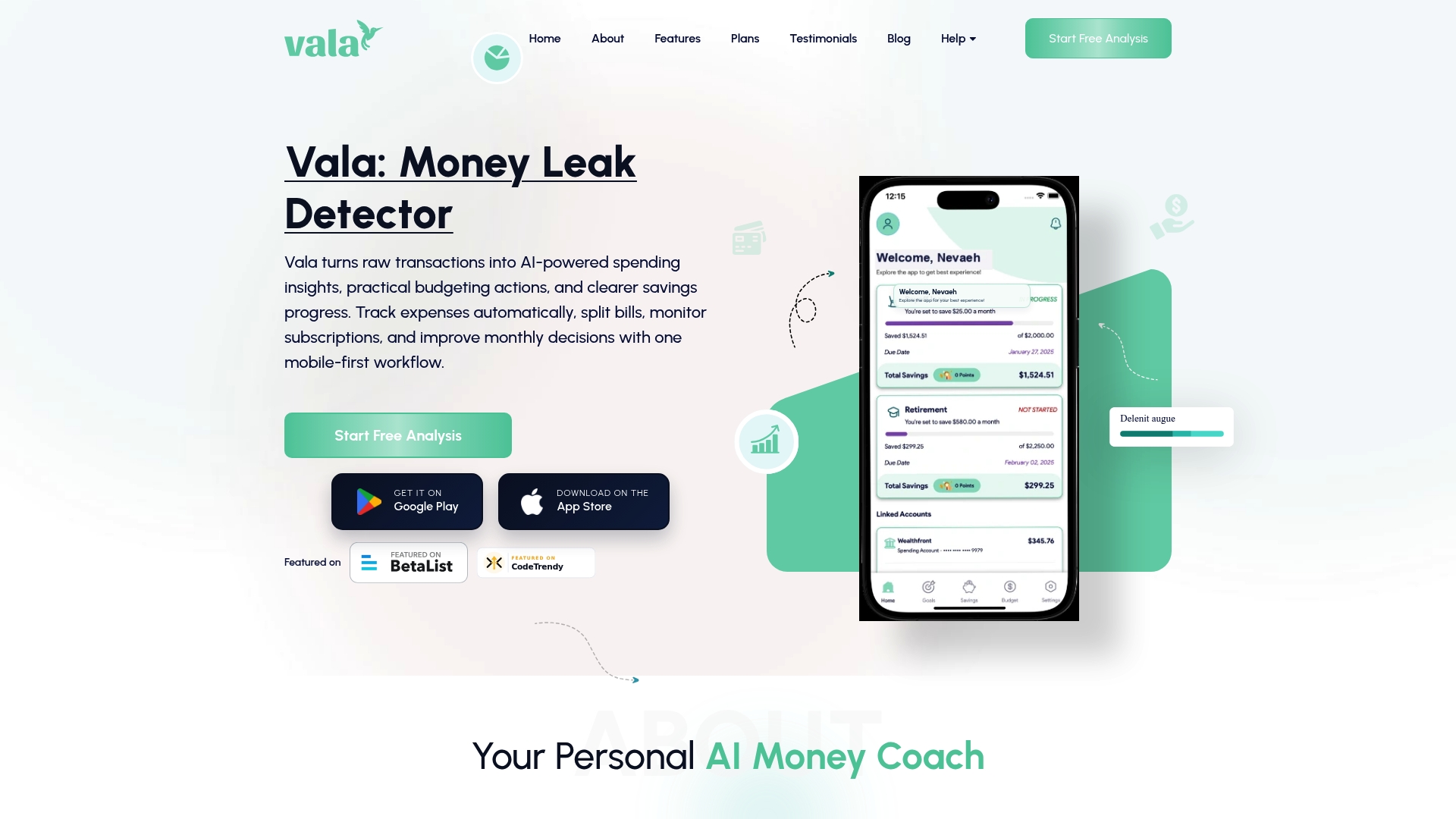
Vala’s personal finance app connects to your accounts, scans receipts, and categorizes spending automatically so your log stays current with no manual effort. AI-powered insights surface hidden spending patterns and flag financial leaks before they compound. For couples and groups, Vala’s shared expense features keep everyone on the same page with one shared view of the budget. Whether you are tracking solo or splitting costs with others, Vala gives you the real-time visibility that turns a budget from a plan into a result.
FAQ
What is instant expense logging?
Instant expense logging is the practice of recording a purchase at the exact moment it occurs, rather than entering expenses in batches later. This approach gives you real-time visibility into your spending and reduces errors caused by memory gaps or lost receipts.
How does instant logging help with budgeting?
Instant logging keeps your budget current at all times, so you always know how much you have spent and how much remains in each category. Frequent trackers spend 15–20% less overall compared to those who track inconsistently or not at all.
How much time does expense logging actually take?
Sustainable logging requires about 5 minutes per week for quick category reviews, plus a 20–30 minute monthly review to identify trends. Individual transaction logging takes 10–30 seconds when you use an app with card sync or receipt scanning.
Does instant logging work for groups and couples?
Shared expense logging apps let multiple people contribute to the same budget log, giving everyone real-time visibility into joint spending. This creates natural accountability without requiring constant check-ins or money conversations.
What is the best way to start logging expenses instantly?
Download an expense tracking app that syncs with your bank and credit cards, then enable transaction notifications. Log any cash purchases immediately after paying. Commit to one week of consistent logging before adjusting categories or setting budget limits.