
Group financial planning is defined as a coordinated approach where two or more people align their money decisions, shared expenses, and long-term goals together rather than in isolation. Why group financial planning matters becomes clear fast: families who engage in collaborative financial planning report 62% less financial stress and are three times more confident in their financial future. That kind of result does not come from budgeting harder alone. It comes from planning together. Whether you share rent with roommates, split bills with a partner, or save toward a family vacation, coordinated planning produces outcomes that solo management simply cannot match.
What are the core benefits of group financial planning?
Group financial planning produces measurable advantages across emotional, practical, and long-term financial dimensions. The most direct benefit is stress reduction. When everyone in a household or group understands the shared financial picture, anxiety drops because uncertainty drops.
Couples who combine finances for shared goals like housing, vacations, and retirement report significantly higher satisfaction than those who manage money separately. That satisfaction comes from alignment, not just pooled income. When two people are working toward the same target, every dollar feels purposeful.

The importance of group financial planning also shows up in conflict prevention. Transparent shared budgets remove the guesswork about who paid what and who owes whom. That clarity stops resentment before it starts. A shared expense tracker, for example, makes it obvious when one person consistently covers more than their share.
Key benefits of collaborative financial management include:
- Reduced financial stress. Shared visibility into group finances lowers anxiety for every member.
- Aligned priorities. Group planning forces conversations that surface competing goals early, before they become arguments.
- Better coverage of shared expenses. Groceries, utilities, rent, and eldercare costs get assigned clearly rather than falling through the cracks.
- Stronger long-term outcomes. Coordinated group planning aligns all financial decisions to shared objectives, preventing individual choices from undermining group goals.
- Estate and emergency preparedness. Groups that plan together are more likely to address insurance, wills, and emergency funds as a unit.
The team financial planning benefits extend beyond money. Regular financial conversations build communication habits that strengthen relationships across the board.
How do group financial planning frameworks actually work?
Two frameworks stand out for young adults building collaborative financial habits: the three-account model and family mapping.
The three-account model
The three-account structure divides finances into “yours,” “mine,” and “ours.” Each person keeps a personal account for individual spending. A shared account covers joint expenses like rent, groceries, and utilities. This model is more sustainable than merging all finances immediately. It preserves individual autonomy while creating a clear, functional system for shared costs.
| Account | Purpose | Who contributes |
|---|---|---|
| Yours | Personal spending, individual savings | Individual only |
| Mine | Personal spending, individual savings | Individual only |
| Ours | Rent, groceries, utilities, shared goals | Both or all members |
This structure works for couples, roommates, and even adult siblings sharing a household. The “ours” account becomes the operational center of the group’s financial plan.
Family mapping from Fidelity
Family mapping is a concept developed by Fidelity that visualizes financial connections across group members over time. It helps a group see how one person’s financial decision affects everyone else. For example, if one roommate takes on significant debt, that affects the group’s ability to save for a shared security deposit on a new apartment. Mapping makes those ripple effects visible before they cause problems.
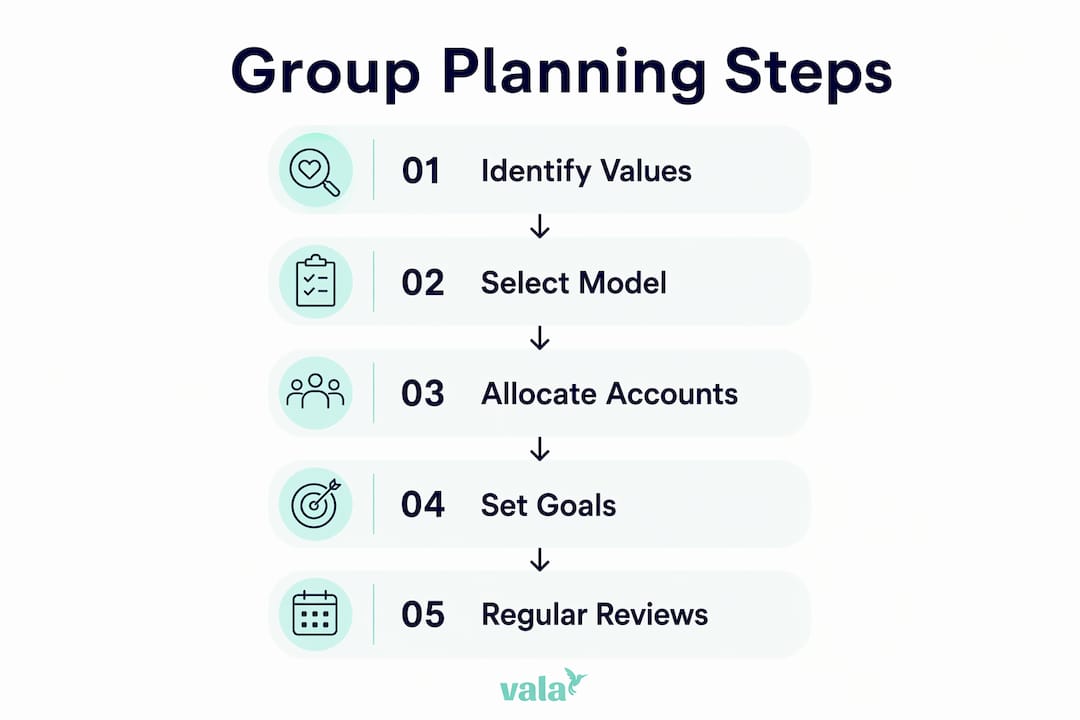
Pro Tip: Before any numbers discussion, have each group member write down their top three money values. Security, freedom, generosity, and adventure are common answers. Mismatched values cause more financial conflict than mismatched incomes.
Recurring review meetings are the third pillar of effective group financial strategies. Regular check-ins on a quarterly or biannual schedule keep the plan current as life changes. A job change, a new roommate, or a planned move all require the group to revisit and adjust. Without scheduled reviews, even a well-built plan drifts out of sync with reality.
What common challenges arise in group financial planning?
The most common mistake groups make is skipping the values conversation and jumping straight to numbers. A technically sound budget fails when one person feels their priorities were ignored. Emotional buy-in is not optional. It is the foundation that keeps a plan working when circumstances get difficult.
A second challenge is premature full financial merging. Moving too fast into a single shared account, without establishing individual boundaries, creates friction. One person may feel monitored. Another may feel their spending habits are being judged. The three-account model exists precisely to solve this problem.
Here are the four most effective ways to avoid group financial planning pitfalls:
- Discuss money values before money amounts. Ask each member what financial security means to them personally. This surfaces assumptions that would otherwise cause conflict later.
- Schedule non-negotiable review meetings. Put them on the calendar like any other commitment. Monthly or quarterly works for most groups. The frequency matters less than the consistency.
- Assign clear financial roles. Decide who tracks shared expenses, who initiates bill payments, and who monitors the shared account balance. Ambiguity creates resentment.
- Use transparent tools. Apps that show real-time shared balances and expense histories remove suspicion. When everyone can see the same data, accusations of unfairness drop sharply.
Pro Tip: Set a “financial floor” rule for your group: any individual purchase above a set amount (say, $200) that affects shared finances gets discussed before it happens. This one rule prevents most major conflicts.
Proactive expectation-setting around shared expenses like groceries, utilities, and eldercare prevents financial instability and household conflict. Groups that define these expectations upfront spend far less time arguing about money later.
Which tools support effective group financial planning for young adults?
Digital tools are the practical backbone of effective group financial management. The right app removes the friction of tracking shared expenses manually and gives every group member real-time visibility into the shared financial picture.
Valapoint’s Vala app is built specifically for this use case. It supports expense tracking, shared budgeting, bill splitting, and goal tracking in one place. You can split shared expenses clearly among roommates, partners, or family members without spreadsheets or awkward conversations about who owes what.
Key features to look for in any group financial planning tool:
- Real-time expense tracking. Every member sees transactions as they happen, not at the end of the month.
- Bill splitting with clear records. The app should show who paid, what for, and what each person owes.
- Shared goal tracking. A vacation fund or emergency fund should be visible to all contributors so everyone stays motivated.
- Spending pattern analysis. Tools that surface hidden spending habits help groups identify financial leaks before they compound.
| Tool feature | Why it matters for groups |
|---|---|
| Real-time shared balance | Prevents overspending and reduces check-in friction |
| Expense categorization | Clarifies where shared money actually goes |
| Bill split history | Creates an auditable record that prevents disputes |
| Goal progress tracker | Keeps all members engaged and accountable |
Valapoint also offers a budget goal tracker that lets groups set savings targets and monitor progress together. For young adults saving toward a first home, a group trip, or a shared emergency fund, that shared visibility is a direct motivator. You can also explore financial planning tools designed specifically for the 18–45 age group to find the right fit for your situation.
Choosing the right tool comes down to two factors: how tech-comfortable your group is and how complex your shared finances are. A couple splitting rent needs less than a four-person household managing utilities, groceries, and a shared car payment. Start with the simplest tool that covers your actual shared expenses, then add features as your group’s needs grow.
Key Takeaways
Group financial planning reduces stress, prevents conflict, and builds long-term financial confidence by aligning shared goals, establishing clear roles, and maintaining regular communication across all group members.
| Point | Details |
|---|---|
| Stress drops with collaboration | Groups that plan together report 62% less financial stress than those who manage finances separately. |
| Use the three-account model | Separate “yours,” “mine,” and “ours” accounts balance individual autonomy with shared financial responsibility. |
| Values before numbers | Discuss money values first to build emotional buy-in before setting any shared budget or savings target. |
| Schedule regular reviews | Quarterly or biannual check-ins keep the plan current as income, expenses, and group circumstances change. |
| Use transparent digital tools | Real-time expense tracking and bill-splitting apps reduce disputes and keep every member accountable. |
The shift I keep seeing in how young adults handle money
The most underrated change in personal finance right now is not a new app or a new investment strategy. It is the growing willingness of people in their 20s and 30s to talk openly about money with the people they live and plan alongside.
For years, the cultural norm was to keep finances private, even from close partners. That norm produced a lot of technically independent people who were quietly stressed, resentful, and financially misaligned with the people they shared their lives with. Wealth decisions are interconnected. Uncoordinated plans risk sabotaging long-term goals, even when each individual plan looks fine on its own.
What I find most encouraging is that the fix is not complicated. Groups that start with a simple shared account and a monthly 20-minute check-in make real progress. They do not need a financial advisor on day one. They need a shared commitment to transparency and a tool that makes the numbers easy to see.
The emotional clarity that comes from knowing your group is on the same page is genuinely undervalued. It changes how you spend, how you save, and how you talk about money. Start simple. Build the habit. The financial results follow.
— SaverStride
How Valapoint makes group financial planning practical
Managing shared finances gets much easier when you have one clear place to track everything. Valapoint’s Vala app gives couples, roommates, and families the tools to split costs, set shared goals, and monitor spending together in real time.

With Vala, you can track every shared expense, see who owes what, and watch your group’s savings goals grow without chasing anyone for updates. The app’s AI-powered spending insights also surface patterns you would not catch manually, so your group can fix financial leaks before they add up. Try Vala’s personal finance app to bring your group’s financial plan to life with tools built for the way you actually manage money today.
FAQ
What is group financial planning?
Group financial planning is a coordinated process where two or more people align their shared expenses, savings goals, and financial decisions together. It applies to couples, roommates, families, and any group managing money collectively.
Why does financial collaboration reduce stress?
Families and groups that plan collaboratively report 62% less financial stress compared to those managing finances individually. Shared visibility into finances removes uncertainty, which is the primary driver of money-related anxiety.
What is the three-account model in group financial planning?
The three-account model uses separate “yours,” “mine,” and “ours” accounts to balance individual autonomy with shared financial responsibility. The joint account covers shared expenses while personal accounts preserve individual spending freedom.
How often should a group review its financial plan?
Groups should review their shared financial plan at least quarterly or biannually. Regular check-ins keep the plan aligned with changes in income, expenses, and group circumstances.
What app works best for tracking shared group expenses?
Valapoint’s Vala app supports real-time expense tracking, bill splitting, and shared goal monitoring for couples, roommates, and families. For a broader comparison of options, the shared budget guide on Valapoint covers methods and tools in detail.