
Manually tracking every coffee, subscription, and grocery run sounds simple until you’re staring at a shoebox full of receipts and a bank account that makes no sense. The benefits of automated expense tracking go far beyond saving time. They give you accurate data, real-time awareness of where your money actually goes, and the feedback loops that make better spending habits stick. If you’ve ever looked at your bank balance and thought “where did it all go,” this is exactly why automation changes the game.
Table of Contents
- Key takeaways
- 1. The core benefits of automated expense tracking start with accuracy
- 2. Real-time spend tracking stops overspending before it happens
- 3. Fraud detection and policy enforcement run automatically
- 4. Faster approvals and reimbursements save time and reduce friction
- 5. Smarter budgeting through expense pattern analysis
- 6. Comparing key benefits: what matters most for your situation
- My honest take on automated expense tracking
- Take control of your money with Valapoint
- FAQ
Key takeaways
| Point | Details |
|---|---|
| Automation removes human error | OCR and auto-categorization eliminate missed entries and miscodings that skew your budget data. |
| Real-time alerts prevent overspending | Instant notifications let you correct course before spending becomes a problem, not after. |
| Fraud and policy enforcement happen automatically | Built-in validation flags suspicious charges at the moment of submission, not weeks later. |
| Faster reimbursements reduce frustration | Digital submission and smart routing cut approval time significantly, saving hours every week. |
| Consistent tracking builds better habits | Seeing accurate, categorized spending every day creates lasting awareness and behavioral change. |
1. The core benefits of automated expense tracking start with accuracy
Manual expense tracking has one fatal weakness: humans make mistakes. Transposed numbers, forgotten receipts, miscategorized purchases. Over a month, those small errors add up to a budget you can’t trust.
Automated expense management solves this at the source. Most modern expense tracker apps use optical character recognition, commonly called OCR, to extract data directly from receipts. You snap a photo, and the software pulls the vendor name, date, and amount without you typing a single character.
Here is what that accuracy improvement looks like in practice:
- No missed receipts. Transactions sync from your bank or card automatically, so nothing slips through.
- Consistent categorization. The software applies the same logic every time, unlike manual sorting where “dinner with client” lands in three different categories depending on your mood.
- Reliable budget data. When your numbers are clean, your decisions based on those numbers actually work.
- Less time spent fixing errors. Navan customers save 24 minutes per expense report and cut auditing time by 40% after switching to automation.
Pro Tip: When you first set up any automated expense tool, spend 15 minutes reviewing its default categories and adjusting them to match your actual spending habits. The accuracy benefit only fully kicks in when the categories reflect your real life.
The confidence you get from knowing your data is correct is underrated. Most people do not avoid budgeting because they lack discipline. They avoid it because their numbers never feel reliable enough to trust.
2. Real-time spend tracking stops overspending before it happens
This is where automated expense tracking pulls away from anything you can do with a spreadsheet. Real-time visibility means you know what you have spent today, not what you spent last Tuesday when you finally sat down to update your records.

Real-time alerts when spending approaches set limits give you a window to act before a purchase becomes a problem. That window does not exist with delayed reporting. By the time you reconcile a manual tracker, the money is already gone.
Modern automated expense systems deliver several layers of real-time insight:
- Live dashboards that show spending broken down by category, merchant, or time period
- Push notifications when you get close to a budget limit for dining, entertainment, or any custom category you set
- Instant transaction sync from connected bank accounts and cards so your picture of spending is never more than minutes old
- Trend visibility so you can see if your grocery spending is creeping up week over week before it becomes a serious budget issue
Finance teams gain clear spending pictures with live updates rather than delayed reports. The same principle applies to your personal finances. Delayed data is not just inconvenient. It is a direct cause of overspending, because you are always making decisions without the full picture.
The benefits of real-time expense alerts extend beyond the notification itself. Seeing a “you have used 80% of your dining budget” message on a Wednesday trains you to make different choices on Thursday. That feedback loop, repeated consistently, is what actually changes spending behavior over time.
Pro Tip: Set your budget alerts to trigger at 75% of your limit, not 100%. Waiting until you have already hit your ceiling gives you no room to adjust.
3. Fraud detection and policy enforcement run automatically
Most people think fraud protection is only for businesses. That framing misses the reality of personal finance. Unauthorized charges, duplicate transactions, and subscription creep are forms of financial leakage that cost individuals real money every month.
Automated expense management platforms flag anomalies continuously. AI auditing increases detection rates, with 76% of users trusting AI for expense and travel tasks. When you have software watching every transaction against rules you define, problems surface fast.
Key protections automated tracking provides:
- Duplicate detection flags when the same charge appears twice, which happens more often than most people realize with subscription services.
- Anomaly alerts notify you when a purchase looks out of pattern, like a charge at 3 a.m. from a vendor you have never used.
- Policy checks at submission rather than after the fact, meaning out-of-policy spending gets flagged immediately rather than during a month-end review.
- Digital audit trail so every transaction has a record, a timestamp, and context attached to it.
The benefits of real-time group expense tracking matter here too. When couples or groups share expenses, automated validation makes it easy to see if a shared charge has been submitted twice or if a category is being used incorrectly. Transparency reduces conflict. Clear records make conversations about money easier.
Pro Tip: Connect all your payment methods to one tracking platform. Partial visibility is the biggest gap that lets unauthorized charges go unnoticed for months.
4. Faster approvals and reimbursements save time and reduce friction
If you have ever submitted an expense report and waited two weeks to hear back, you understand the frustration this section addresses. That waiting exists because manual approval processes are slow, inconsistent, and dependent on someone having time to review paperwork.
Digital submission changes the entire process. Automated routing saves 8 hours per week on approvals by sending reports to the right person automatically instead of letting them sit in inboxes. For individuals tracking personal expenses rather than business reimbursements, this benefit translates to reduced administrative burden and faster access to accurate financial information.
The user experience improvements are direct:
- Mobile capture lets you log an expense the moment it happens, which means you never have to reconstruct a week’s worth of spending from memory.
- Paperless workflows eliminate the physical filing and storing of receipts.
- Faster reimbursements when expenses are work-related, digital submission and routing cut the approval cycle significantly.
- Consistent tracking because when the process is easy, you actually do it. Friction is the enemy of good financial habits.
The role of real-time group expenses is especially clear here. When you are splitting costs with a partner or group of friends, automated platforms remove the back-and-forth of “wait, who paid for what.” Everyone sees the same data in real time, which eliminates both confusion and awkward money conversations.
5. Smarter budgeting through expense pattern analysis
Tracking individual transactions is useful. Seeing patterns across dozens of transactions is where automated tools become genuinely powerful. This is the level of insight that helps uncover hidden spending patterns that lead to financial leaks most people never notice.
Automated expense analysis surfaces information you would never catch manually:
- Which subscription services you are paying for but rarely using
- Which days of the week or times of month your discretionary spending spikes
- How your spending in a category compares month over month
- Where small, frequent purchases are quietly adding up to large monthly totals
This kind of pattern recognition is the difference between knowing you overspend and understanding why you overspend. Once you can see that 60% of your dining budget goes to a single type of purchase, you can make one targeted adjustment instead of trying to change everything at once.
The advantages of expense automation extend to goal tracking too. When your categorized spending data feeds directly into budget goals, you get a live view of whether you are on track. That visibility makes saving for a specific target, whether it is a trip, an emergency fund, or paying down debt, feel concrete instead of abstract.
6. Comparing key benefits: what matters most for your situation
Not every benefit of automated expense tracking carries equal weight for every person. Your priorities depend on your current financial challenges. This table helps you match the right benefits to what you actually need.
| Benefit | Best for | Impact level | Ease of setup |
|---|---|---|---|
| Accuracy and auto-categorization | Anyone starting fresh with budgeting | High | Easy |
| Real-time alerts and dashboards | People who tend to overspend in specific categories | High | Easy |
| Fraud and duplicate detection | Those with multiple cards or subscriptions | Medium-High | Easy |
| Pattern analysis and trend tracking | People trying to find hidden spending leaks | High | Moderate |
| Group expense tracking | Couples, roommates, or friends splitting costs | High | Moderate |
| Faster approval workflows | Anyone tracking business or reimbursable expenses | Medium | Easy |
When selecting expense tracking tools for your needs, focus on three things: how many accounts it can connect, whether it offers real-time alerts, and how clearly it visualizes your spending categories. Everything else is secondary.
If you are just starting out, learning how to track expenses automatically is a practical first step. Start with one or two financial goals and let the tool show you what your spending looks like against those targets before expanding.
Pro Tip: Do not try to optimize everything at once. Pick the one category where you consistently go over budget and set an alert for it. Fixing one pattern at a time is more effective than a full budgeting overhaul.
My honest take on automated expense tracking
I’ve spent years watching people try to get control of their finances with spreadsheets, apps, and sheer willpower. Here is what I have actually learned: the problem almost never comes from a lack of effort. It comes from a lack of timely information.
When I started using automated tracking with real-time alerts, the biggest surprise was not how much I was spending. It was when. I had no idea that most of my discretionary overspending happened in the same three-day window every month. Once I could see that pattern clearly, I could address it specifically instead of trying to restrict myself across the board.
I have also heard the concern that automation means sharing financial data with apps you cannot fully trust. That concern is legitimate. What I have found is that the risk of financial data exposure in well-designed apps is far lower than the risk of continued overspending from having no clear picture of your money. The math consistently favors getting the visibility.
The biggest myth I encounter is that automation removes the need for any financial awareness. It does the opposite. Automated tools make you more aware because the information is always current and always clear. You cannot ignore a push notification the way you can ignore a spreadsheet you have not opened in two weeks.
My recommendation: start with the free budgeting tools available to you right now. Get familiar with your numbers. Then let automation do the heavy lifting of keeping those numbers accurate and up to date.
— SaverStride
Take control of your money with Valapoint
If the benefits described in this article sound like what you need, Valapoint’s personal finance app, Vala, was built to deliver exactly that.
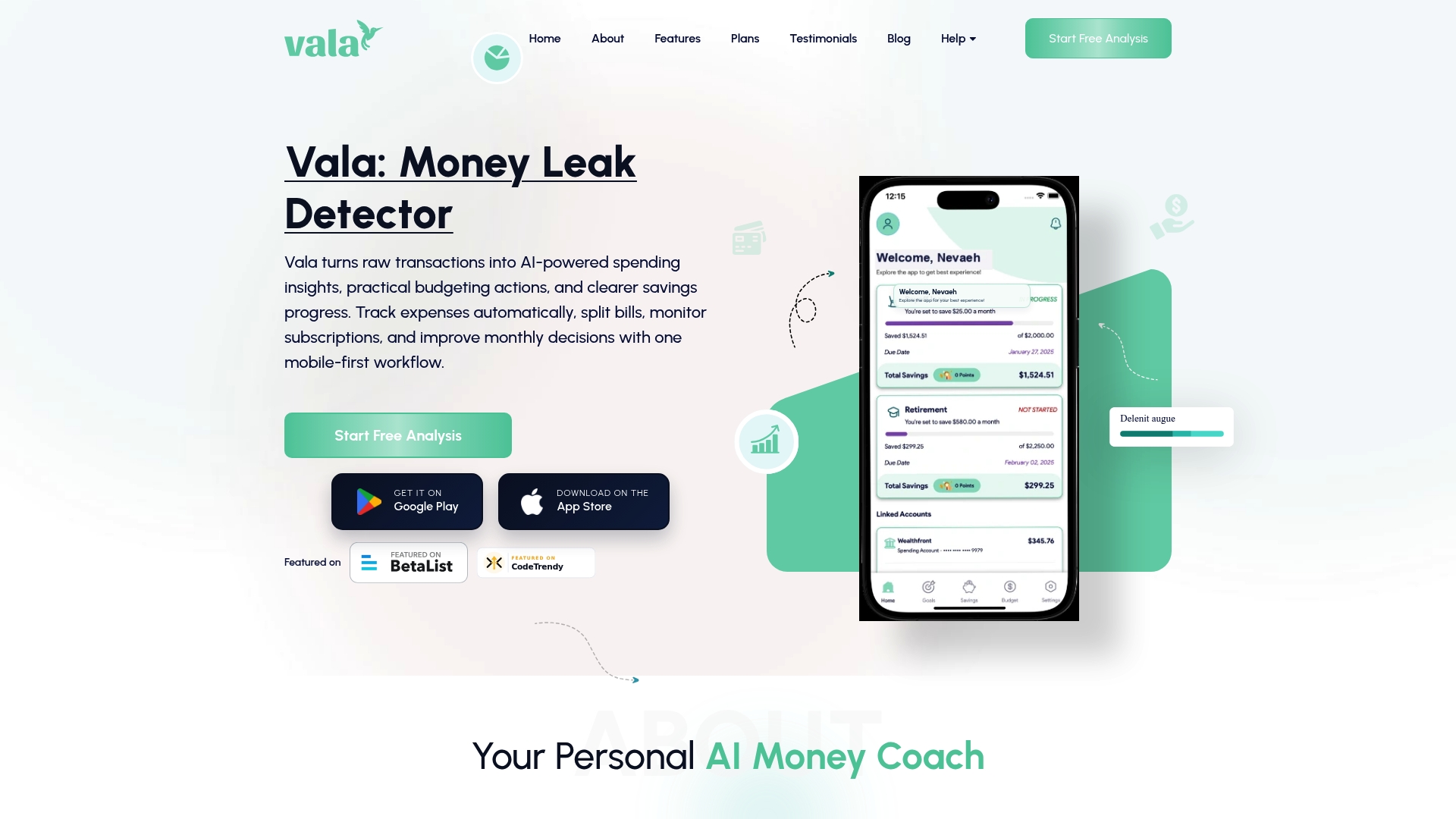
Vala connects your accounts, categorizes every transaction automatically, and sends you real-time alerts before you go over budget. It also handles group expenses, so splitting costs with a partner or friends is clear and conflict-free. Whether you want to reduce overspending, build savings, or finally understand where your money goes, Vala gives you the tools to do it without making finance feel like a second job. Explore what Vala offers through the personal finance app and see how automated tracking fits into your budget goals.
FAQ
What are the main benefits of automated expense tracking?
Automated expense tracking improves accuracy by eliminating manual data entry, provides real-time visibility into spending, and sends alerts before you exceed budget limits. Together, these features help you control overspending and build more reliable budgeting habits.
How do real-time expense alerts help with budgeting?
Real-time alerts notify you when spending approaches or crosses a set limit, giving you time to adjust before the budget is broken. This immediate feedback is more effective than reviewing expenses days or weeks later.
Does automated expense tracking help detect fraud?
Yes. Automated platforms use validation rules to flag duplicate charges and unusual transactions as they happen. AI-powered auditing catches anomalies that manual review would typically miss.
Is automated expense tracking useful for personal finances, not just businesses?
Absolutely. The core advantages of expense automation, including accurate categorization, spending pattern analysis, and real-time alerts, apply directly to personal budgeting. Individuals benefit from the same visibility that finance teams rely on.
How do I get started with automated expense tracking?
Connect your bank accounts and cards to a dedicated tracking app, set budget limits by category, and enable real-time alerts. Most personal budgeting apps can have you set up and tracking within minutes.