Yes, most overdraft fees are avoidable. The fastest levers are opting out of debit and ATM overdraft coverage, turning on low-balance alerts, and linking a backup funding source like a savings transfer. Keep a small cushion in checking, and if you do get hit with a fee, call your bank before you do anything else.
TL;DR:
- Opting out of debit and ATM overdraft coverage prevents transactions from being approved and charged, reducing the chance of fees.
- Setting low-balance alerts at around $50 to $150 gives enough warning to transfer funds before overdraft occurs.
- Linking a savings account or automating transfers offers a low-cost backup that typically costs less than standard overdraft fees.
- Synchronizing paycheck deposits with bill due dates and maintaining a small buffer helps avoid negative balances caused by pending transactions.
- Regularly checking pending transactions and using automated alerts combined with predictive tools keeps account holders ahead of overdraft risks.
Table of Contents
- How Do You Avoid Overdraft Fees Starting Today?
- Why Do Overdraft Fees Happen in the First Place?
- What’s Cheaper Than Standard Overdraft Coverage?
- How Do You Change Your Overdraft Settings and Alerts?
- Already Overdrawn? Here’s How to Limit the Damage
- Why Automated Habits Beat Reactive Overdraft Coverage
- How Vala Helps You Stay Ahead of Overdrafts
- Where to Verify These Rules Yourself
- Sources
How Do You Avoid Overdraft Fees Starting Today?
You don’t need a financial overhaul to stop overdraft fees. You need five specific moves, done in order, most of which take less than ten minutes each.
- Opt out of debit and ATM overdraft coverage. Once you do, a card swipe or ATM withdrawal that exceeds your balance gets declined instead of approved and charged. That’s the CFPB’s opt-in rule working in your favor. No coverage means no surprise fee on that transaction type.
- Set low-balance and transaction alerts. Most banking apps let you set a threshold, such as $100, and get a text or push notification the moment your balance drops below it. Set the number high enough that you actually have time to react.
- Link a savings account or automate transfers. A linked savings account catches shortfalls before they become overdrafts, usually for a small fee or none at all, according to the CFPB. Compare that against an overdraft line of credit if you tend to run short by larger amounts.
- Sync your paychecks and bills. Time recurring payments to land a day or two after direct deposit, not before. Keep a small buffer in checking, even $50 to $100, as breathing room against pending charges.
- Check pending transactions regularly. A quick daily or weekly look at pending charges catches the gap between what your balance shows and what’s actually about to clear.
Pro Tip: Set two alerts, not one. A “heads up” alert at a higher balance gives you time to transfer money; a second alert closer to zero is your last warning before a decline or a fee.
Why Do Overdraft Fees Happen in the First Place?
An overdraft fee hits when you spend more than what’s in your account and the bank covers the difference anyway. A non-sufficient funds (NSF) fee happens when the bank refuses to cover it and simply bounces the transaction, and a returned-item fee applies specifically to checks or automatic payments that get sent back unpaid.
Since 2010, federal rules have required banks to get your explicit opt-in before they can charge overdraft fees on ATM withdrawals and one-time debit card purchases, a protection the CFPB still enforces today. Without opt-in, those transactions simply get declined.
- Fees apply per transaction, not per day, so multiple small purchases while your balance is negative can each trigger a separate charge.
- Some institutions add sustained or extended overdraft fees the longer an account stays negative.
- Overdraft fees commonly run around $30 per transaction, which means three declined-but-covered purchases in one day can cost close to $90.
Pending transactions add another layer of risk. Your displayed balance may not reflect purchases still processing, and posting order (the sequence in which the bank clears transactions) can push a smaller charge through before a larger one you were counting on clearing first.
What’s Cheaper Than Standard Overdraft Coverage?
Standard overdraft coverage is convenient, but it’s rarely your cheapest option. Here’s how the common backups stack up.
- Linked savings account: Usually the lowest-cost option, often free or a flat few dollars per transfer, though most savings accounts cap the number of withdrawals allowed per month.
- Overdraft line of credit: Functions like short-term borrowing with interest charges, but even with interest, it typically costs far less than repeated per-transaction overdraft fees when you pay it down quickly.
- Linked credit card: Some banks allow this as a backup funding source; it carries interest from the moment it’s used, so treat it as a short-term patch, not a habit.
- Courtesy pay or standard overdraft coverage: The most expensive option per incident in nearly every case. Save it as a last resort, not your default safety net.
How Do You Change Your Overdraft Settings and Alerts?
Making these changes usually takes one phone call or a few taps in your banking app.
- Log into online banking and look for “Overdraft Settings,” “Overdraft Services,” or “Account Preferences.” If you can’t find it, call customer service and say: “I’d like to opt out of overdraft coverage for my debit card and ATM transactions.”
- Link a savings account under “Transfers” or “Overdraft Protection,” and confirm the transfer fee, if any, before activating it.
- Set balance alerts under “Notifications” or “Alerts,” picking a threshold with enough cushion to react, commonly $50 to $150 depending on your typical spending.
- If you’re unsure your bank even offers these options, check its official policy page or ask a representative directly. This is exactly what the American Bankers Association recommends before you assume a feature isn’t available.
Already Overdrawn? Here’s How to Limit the Damage
If you’ve already been hit, your first move is to stop the bleeding, not panic.
- Pause non-essential card use and cancel or delay any upcoming automatic payments you can control.
- Transfer available funds from savings or another account immediately to bring the balance positive.
- Call your bank and ask directly for a one-time courtesy reversal. Being polite and citing a positive account history genuinely improves your odds, since banks can and often will waive a fee for account holders in good standing.
- Ask if the bank offers short-term fixes like an internal same-day transfer or a small-dollar loan product.
Pro Tip: Keep a mental note of how many fees you’ve absorbed in the past 30 days. Sustained overdraft fees can stack on top of the original charge, and once you’re several fees deep, it’s worth asking the bank about a repayment plan instead of letting the balance dig deeper.
Why Automated Habits Beat Reactive Overdraft Coverage
Automation catches what human attention misses. Alerts, scheduled transfers, and predictive balance tracking remove the timing errors that cause most overdrafts in the first place. A five-minute weekly balance check, paired with a standing rule to sweep extra cash into savings, does more for your account health than any single fee waiver. For habit-building ideas, Vala’s guide on predicting overdraft before payday and its broader budgeting blog are worth a look.
— SaverStride
How Vala Helps You Stay Ahead of Overdrafts
Every step in this guide, from alerts to backup transfers to tracking pending charges, is exactly what Vala automates for you. Instead of checking your balance manually or setting up separate alerts across accounts, Vala watches your cash flow in real time and flags a shortfall before it turns into a fee.
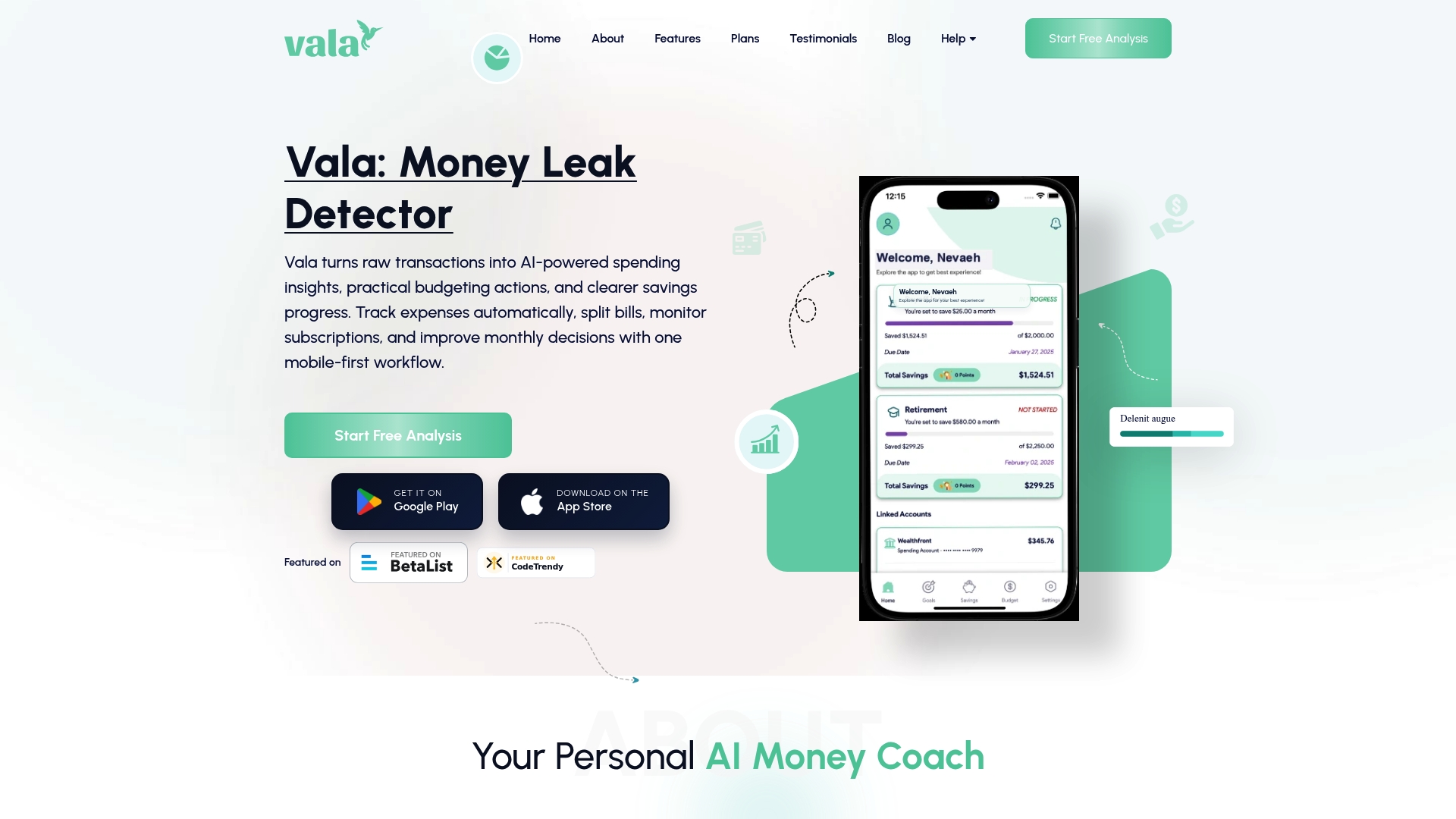
Here’s how Vala’s features map to the actions covered above:
| This Guide Recommends | What Vala Automates |
|---|---|
| Low-balance and transaction alerts | Real-time balance tracking with custom notifications |
| Syncing paychecks with bill due dates | Automated bill reminders and payment scheduling |
| Checking pending transactions daily | Continuous transaction reconciliation |
| Linking savings as a backup | Overdraft prediction that flags shortfalls in advance |
You don’t have to build this system piece by piece across your bank’s app and your own memory. Vala’s personal finance app pulls it into one place, with predictive alerts that tell you a shortfall is coming days before payday, not after the fee posts. If you want to see your recurring bills, spending patterns, and savings buffer in one view, start with Vala’s budgeting and tracking tools and set up your first low-balance alert today.
Where to Verify These Rules Yourself

The guidance in this article draws directly from federal consumer protection resources, and it’s worth bookmarking them. The CFPB’s overdraft options guide covers opt-in rules and fee reversal requests in detail. The FDIC’s overdraft prevention guide breaks down how per-transaction and sustained fees stack up. The ABA’s consumer tips page offers a practical checklist you can cross-reference against your own bank’s policies.

This article is general information, not a substitute for advice from a qualified financial advisor. Consult a qualified financial professional about your own circumstances before acting on anything here.
Sources
- Know your overdraft options | Consumer Financial Protection Bureau
- How can I avoid debit card overdrafts? | Consumer Financial Protection Bureau
- Preventing and Managing Overdraft Fees | FDIC
- Eight ways to avoid overdraft fees | American Bankers Association