
Spending insights are defined as the structured analysis of your transaction data to reveal patterns, leaks, and opportunities in your personal finances. The industry term for this process is spend analysis, and it covers everything from categorizing daily purchases to forecasting next month’s cash flow. When you apply spend analysis consistently, you stop guessing where your money goes and start making decisions based on real evidence. Tools like Valapoint, NeoChain, and Blackbee AI have built entire platforms around this idea, because the data proves it works. Structured spend analysis can reduce personal costs by 5–15% by surfacing inefficiencies and duplicate subscriptions you would never catch by eyeballing a bank statement.
What is the role of spending insights in personal budgeting?
Spending insights do one core job: they turn raw transaction data into decisions you can act on today. Without that translation, your bank statement is just a list of numbers. With it, you can see that you spent $340 on food delivery last month, that three streaming subscriptions overlap, and that your grocery bill spikes every third week.
The importance of spending analysis lies in closing the gap between measurement and action. Most people measure their spending occasionally, usually after a stressful month. Spend analysis makes that measurement continuous and purposeful, so you catch problems early instead of reacting to them after the damage is done.

How does structured tracking and categorization improve your finances?
Repeatable tracking beats ad hoc review every time. When you record expenses on a consistent schedule and sort them into meaningful categories, patterns emerge that a one-time audit would miss entirely.
The biggest pitfall in categorization is relying on generic merchant tags. Your bank might label a charge as “miscellaneous retail,” which tells you nothing useful. Standard banking categories often miss the personalized detail necessary for real behavior change. Categories aligned with your actual life goals, such as “date nights,” “professional development,” or “home maintenance,” give you context that motivates action.
Here are the core steps for effective tracking and categorization:
- Connect all accounts in one place so no transaction slips through untracked.
- Create goal-aligned categories that reflect your priorities, not just merchant types.
- Review and reclassify transactions weekly to keep your data clean and accurate.
- Flag recurring charges separately so subscriptions are always visible and easy to audit.
- Compare month over month within each category to spot upward drift before it becomes a problem.
Pro Tip: Treat data hygiene as a weekly habit, not a monthly chore. Correcting one misclassified transaction takes 10 seconds. Correcting three months of bad data takes an hour and kills your motivation.
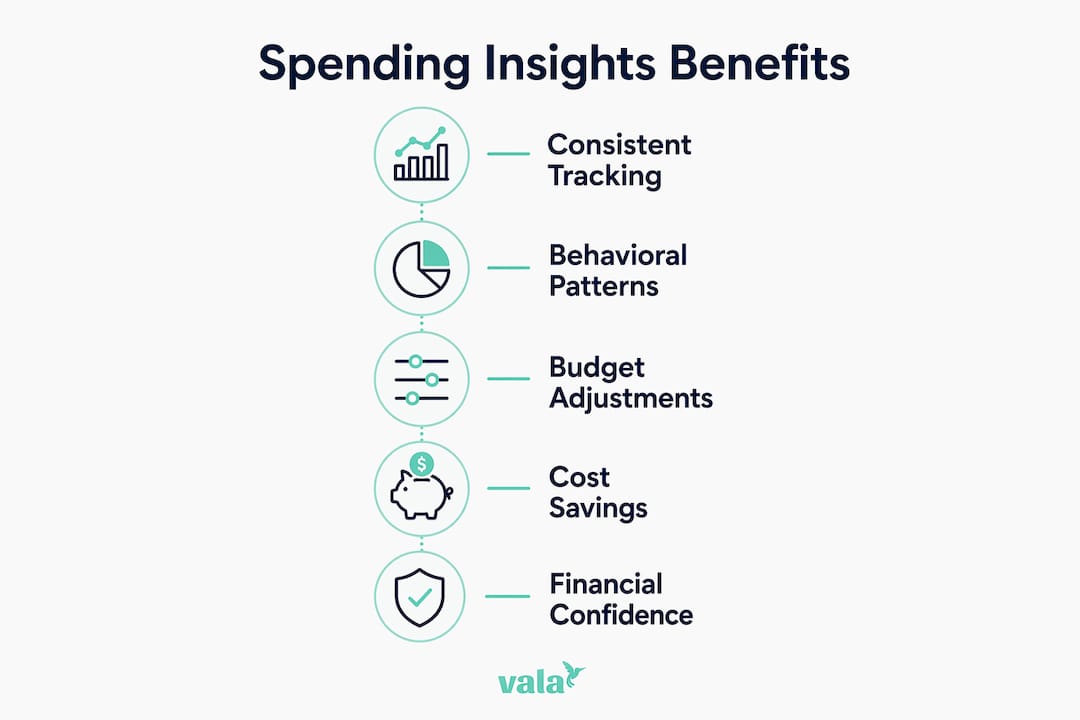
Spending insights benefits compound over time. The more consistent your categorization, the more accurate your patterns become, and the more confident your budget decisions get.
Real-time vs. periodic monitoring: which one actually works?
Monthly budget reviews feel productive, but they are mostly forensic. You are examining what already happened, not influencing what happens next. Real-time spending monitoring increases cash flow predictability by around 25% compared to periodic reviews. That gap is significant. It means you can anticipate shortfalls and redirect spending before the month ends in deficit.
| Feature | Periodic review | Real-time monitoring |
|---|---|---|
| Timing | Monthly or weekly lookback | Continuous, transaction by transaction |
| Best for | Trend analysis and reporting | Catching leaks and impulse spending |
| Subscription control | Easy to miss mid-cycle charges | Flags new charges immediately |
| Cash flow accuracy | Estimated, often off | Predictive and current |
| Behavioral impact | Low, after the fact | High, in the moment |
Real-time tools are especially useful for two problem areas: subscription creep and impulse buying. A new $12.99 subscription is easy to forget. A real-time alert the moment it charges is hard to ignore. The same logic applies to impulse purchases. Seeing your dining budget hit 80% on the 15th of the month changes your behavior for the rest of the month in a way that a retrospective report never could.
How do you identify hidden spending patterns and leaks?
Maverick spending is defined as small, impulsive purchases made outside your planned budget. Individually, each transaction feels harmless. Collectively, maverick spending quietly erodes your financial goals in ways that are hard to detect without structured analysis.
The problem is not the $6 coffee or the $14 app purchase. The problem is that these transactions are invisible in aggregate until you map them. As financial analysts put it: the goal of spend analysis is to turn messy transaction data into a clear spending map where every dollar has a visible address.
The most common hidden spending patterns, and how to address each one:
- Subscription overlap. You pay for two services that do the same thing. Audit every recurring charge quarterly and cancel duplicates immediately.
- Lifestyle inflation. Your income grew, and so did your spending, but your savings rate stayed flat. Set a savings percentage target before adjusting any lifestyle category.
- Convenience spending. Food delivery, ride shares, and last-minute purchases cost 20–40% more than planned alternatives. Track these in a dedicated category to see the true monthly total.
- Forgotten trials. Free trials convert to paid subscriptions silently. Flag every trial start date with a calendar reminder set three days before the billing date.
- Category bleed. Purchases that belong in one budget category get charged to another, hiding overspending. Weekly reclassification keeps this under control.
Behavioral spending insights must go beyond static category totals to align with your personal priorities. Knowing you spent $200 on “entertainment” is less useful than knowing $140 of that was impulse purchases on nights you were stressed.
How does AI change the way you analyze spending?
AI transforms spend analysis from a manual, backward-looking task into an automated, forward-looking system. AI-powered spend intelligence automates data ingestion, classification, anomaly detection, and decision guidance with measurable outcomes. That means the system catches a duplicate charge, flags an unusual restaurant spike, and suggests a budget adjustment, all without you opening a spreadsheet.
The shift that matters most is from hindsight reporting to decision intelligence. Decision intelligence means using spending data to ask predictive questions: “Will I hit my savings goal this month?” instead of “Why did I overspend last month?” That reframe changes how you use financial data entirely.
Key capabilities to look for in an AI-driven spending insights app:
- Automatic categorization that learns your habits and improves over time.
- Anomaly alerts that flag charges outside your normal patterns within hours.
- Spending forecasts that project your month-end balance based on current behavior.
- Goal tracking that connects daily spending decisions to longer-term financial targets.
- Personalized recommendations that suggest specific cuts, not generic advice.
Pro Tip: Choose an app that gives you recommendations, not just reports. A chart showing you overspent on dining is information. A notification saying “You have $43 left in your dining budget for the next 12 days” is guidance you can act on.
Valapoint’s AI spending pattern detection works exactly this way, connecting daily transactions to your budget goals in real time.
How to use spending insights daily to optimize your budget
Daily use of spending insights does not require an hour of analysis. It requires a short, consistent routine built around three actions: check, adjust, and plan.
Check your spending dashboard each morning. A 60-second review of yesterday’s transactions keeps your awareness current. You will catch errors, spot patterns, and stay connected to your budget without stress.
Adjust your behavior based on what you see. If your grocery category is trending high by the 10th of the month, shift one planned restaurant meal to cooking at home. Small adjustments made early prevent large corrections at month end.
Plan your next week based on your current position. If you are ahead of your savings target, you have room to spend freely in a discretionary category. If you are behind, you know exactly where to pull back.
Practical habits that sustain momentum:
- Set a weekly budget review appointment in your calendar, 15 minutes every Sunday.
- Use spending alerts to get notified when any category hits 75% of its monthly limit.
- Review your top three spending categories each month and ask whether the total reflects your actual priorities.
- Set one financial goal per quarter and track it through a dedicated budget line.
Expense tracking best practices for your age group consistently show that the biggest gains come not from drastic cuts but from small, repeated adjustments guided by clear data. The impact of spending data is greatest when pattern recognition is continuous, not a one-time event.
Key Takeaways
Spending insights deliver the most value when they are continuous, personalized, and connected directly to your daily financial decisions.
| Point | Details |
|---|---|
| Define your categories personally | Generic merchant tags hide behavior; use goal-aligned categories to see what your spending actually reflects. |
| Switch to real-time monitoring | Continuous tracking increases cash flow predictability by around 25% compared to monthly reviews. |
| Target maverick spending first | Small, impulsive purchases accumulate into significant leaks; identify and label them to control the total. |
| Use AI for forecasting, not just reporting | AI tools shift spend analysis from backward-looking reports to forward-looking budget guidance. |
| Build a daily check-in habit | A 60-second daily review keeps your awareness current and prevents end-of-month budget surprises. |
Why I think most people are using spending insights wrong
Most people treat spend analysis as a diagnostic tool. They open their budgeting app after a bad month, feel bad about what they see, and close it again. That is the wrong model entirely.
The real power of spending insights is not in the diagnosis. It is in the feedback loop. When you check your data daily and make micro-adjustments in real time, your behavior changes without requiring willpower. You do not need to “try harder.” You just need better information, delivered at the right moment.
I have watched people go from financial anxiety to genuine confidence not because they earned more money, but because they finally understood where their money was going. The shift from reactive to proactive is not about discipline. It is about visibility. When you can see your financial position clearly, you make better decisions automatically.
The other mistake I see constantly is treating spending insights as a one-time fix. You clean up your categories, cancel a few subscriptions, and feel good for a week. Then the data goes stale, new subscriptions creep in, and three months later you are back where you started. Identifying spending patterns must be continuous and repeatable to catch financial leaks early. That is not a product feature. It is a mindset.
The tools available now, including Valapoint’s AI-driven platform, make continuous monitoring genuinely easy. The barrier is no longer technical. It is behavioral. Commit to the daily check-in, trust the data, and let the insights do the work.
— SaverStride
See your spending clearly with Valapoint
Valapoint gives you real-time expense tracking, AI-driven categorization, and personalized budget recommendations in one place. You do not need to build a spreadsheet or manually sort transactions. The app does the analysis automatically, so you can focus on the decisions, not the data entry.
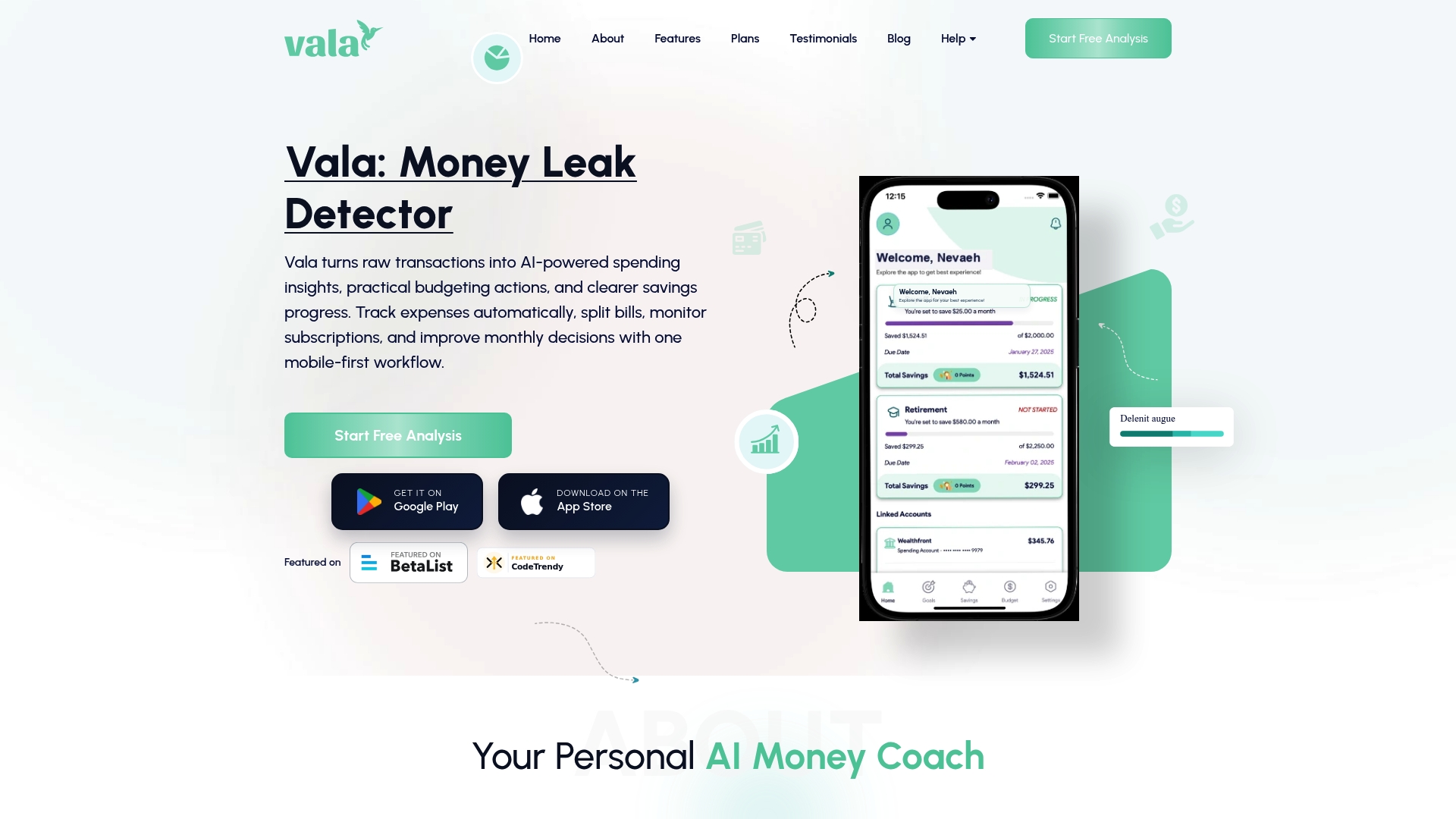
Whether you want to cut subscription costs, track progress toward a savings goal, or simply understand where your money goes each month, Valapoint’s personal finance app gives you the clarity to act with confidence. You can also explore Valapoint’s AI financial intelligence tools to get personalized spending insights built around your actual habits and goals.
FAQ
What are spending insights in personal finance?
Spending insights are the results of analyzing your transaction data to identify patterns, leaks, and budget opportunities. The formal term is spend analysis, and it covers categorization, trend tracking, and forecasting.
How much can spending analysis actually save you?
Structured spend analysis can reduce personal costs by 5–15% by identifying inefficiencies, duplicate subscriptions, and unplanned purchases you would otherwise miss.
What is maverick spending and why does it matter?
Maverick spending refers to small, impulsive purchases made outside your planned budget. These transactions are individually minor but accumulate into significant leaks that quietly undermine your financial goals over time.
How is real-time monitoring different from a monthly budget review?
Real-time monitoring tracks every transaction as it happens and alerts you to budget issues immediately. Monthly reviews are retrospective and miss opportunities to adjust behavior mid-month before overspending occurs.
Do I need an AI app to get useful spending insights?
AI apps make spend analysis faster and more accurate, but the core process works with any consistent tracking tool. AI adds value by automating categorization, detecting anomalies, and generating forecasts that manual tracking cannot match at scale.