
A trip budget planner is a structured financial tool designed to estimate, organize, and track travel expenses like flights, lodging, and activities before and during a trip. In the travel finance world, the recognized term is “travel budget framework,” but “trip budget planner” is how most travelers search for and use these tools in practice. Whether you rely on a Google Sheets template, a dedicated app like YNAB or Travel Spend, or a travel expense calculator, the goal is the same: know where your money is going before it disappears.
What is a trip budget planner and why does it matter?
A trip budget planner is more than a spending record. It is a decision tool that shapes your destination choice, travel timing, and overall style before you book a single flight. That distinction matters. Most travelers treat budgeting as a post-trip accounting exercise. The ones who actually stay on budget treat it as a pre-trip planning document.
Travel strategist Michael Kovnick identifies the most common mistake travelers make: treating all travel spending as one single amount. That approach creates confusion after the trip and makes it nearly impossible to identify where money was wasted. Categorizing your spend by type gives you real visibility and real control.
The core function of any travel budget framework is simple. You set a total spending limit, break it into categories, track actual costs against those categories, and adjust as you go. Tools like Google Sheets, Excel, and apps like Tripcoin or Travel Spend each support this process in different ways.

What should you include in a trip budget?
A complete trip budget covers more than flights and hotels. Leaving out even one category is how travelers end up $300 over budget on a trip they thought was fully planned.
Here are the core categories every travel budget needs:
- Transportation: Flights, trains, buses, rental cars, and local rideshares
- Lodging: Hotels, hostels, Airbnb, or any overnight accommodation
- Food and drink: Daily meals, coffee, snacks, and restaurant dinners
- Activities: Tours, museum entries, national park fees, and entertainment
- Travel insurance: Medical, trip cancellation, and baggage coverage
- Connectivity: SIM cards or eSIM plans for international data access
Beyond those core categories, silent costs like airport transfers, baggage fees, city taxes, and mandatory eSIM costs are the most frequent causes of budget overruns. These expenses are real and predictable, yet most travelers skip them entirely when planning.
Pro Tip: Budget for a travel eSIM data plan as a fixed line item. International roaming charges or last-minute SIM purchases at airports cost significantly more than pre-purchased eSIM plans.
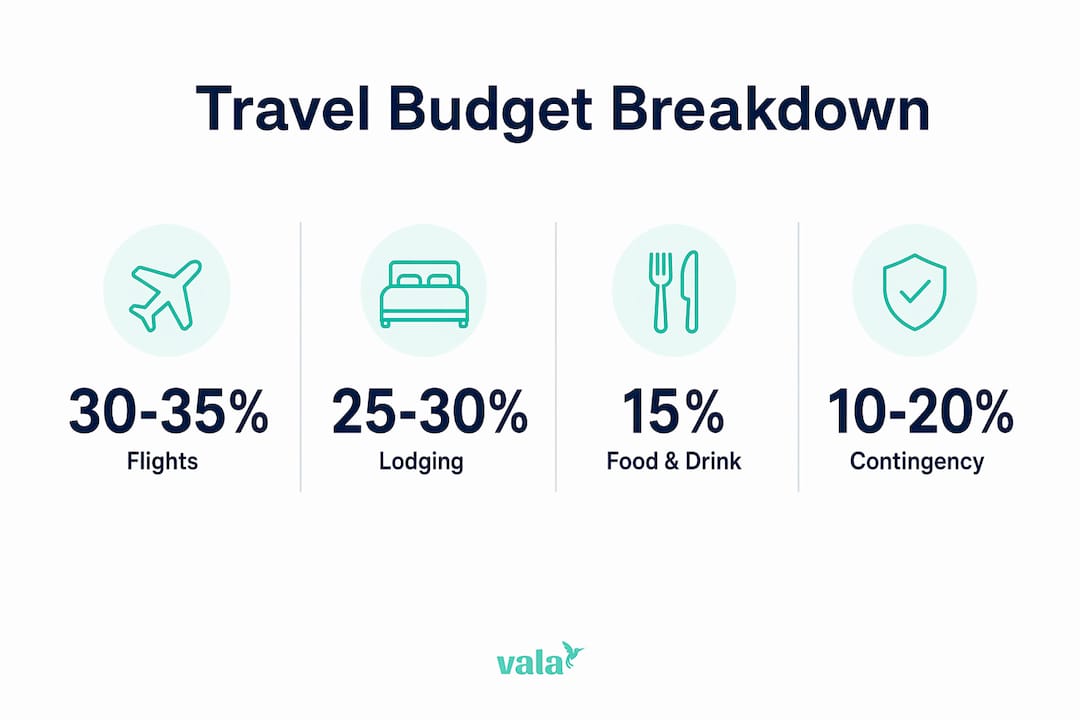
The table below shows a sample budget breakdown for a 10-day international trip at a mid-range spending level:
| Category | Estimated % of Total Budget |
|---|---|
| Flights | 30–35% |
| Lodging | 25–30% |
| Food and drink | 15–20% |
| Activities | 10–15% |
| Transport (local) | 5–8% |
| Contingency buffer | 10–15% |
Travel industry guidance recommends adding a contingency buffer of 10–20% to any travel budget. For complex international trips, 15% is the safest choice. That buffer covers currency fluctuations, price changes, and last-minute itinerary edits.
How do trip budget planners help with solo and group travel?
Solo travel budgeting is straightforward. You track one person’s spending across your chosen categories and adjust when needed. Group travel is a different challenge entirely. Shared expenses like accommodation, rental cars, and group dinners create confusion fast if there is no system in place.
A good travel budget planner for groups does three things:
- Tracks shared costs separately from individual spending so everyone sees what is owed
- Splits expenses fairly based on who paid and who benefited
- Settles balances clearly at the end of the trip or in real time
Apps designed for group expense splitting remove the awkward money conversations that ruin trips. Instead of someone keeping a mental tally, every shared purchase is logged, split, and visible to the whole group.
For couples, the benefit is slightly different. A shared budget view creates financial transparency without requiring constant check-ins. Both people can see the running total, which reduces anxiety and prevents one person from unknowingly overspending.
Pro Tip: Assign one person in the group to log shared expenses daily. Waiting until the end of the trip to reconstruct who paid for what leads to errors and disagreements.
Individual travelers benefit most from expense tracking best practices that focus on daily logging rather than weekly summaries. Small purchases add up fast. A coffee here, a metro ticket there, and a souvenir or two can add $30 to $50 per day that never gets recorded.
What are the best tools for creating a trip budget planner?
The right tool depends on how much control you want and how much setup time you are willing to invest.
| Tool Type | Best For | Key Limitation |
|---|---|---|
| Google Sheets / Excel | Full customization, offline access | Manual data entry, no automation |
| Dedicated apps (Travel Spend, Tripcoin) | Real-time tracking, currency conversion | Limited group features |
| YNAB | Deep budget methodology, category rules | Subscription cost, learning curve |
| AI-powered apps (Valapoint) | Automated tracking, spending insights | Requires account setup |
| Online calculators | Quick estimates before booking | No ongoing tracking |
Google Sheets and Excel templates work well for travelers who want full control over their layout. You can build an overview tab for the total budget and a daily spending tab for real-time logging. Experienced travelers maintain both tabs, logging expenses in local currency daily with current exchange rates. That approach prevents missed small expenses and gives accurate totals at any point in the trip.
Dedicated apps like Travel Spend and Tripcoin handle currency conversion automatically and display running totals by category. They are faster to use on the road than a spreadsheet but offer less flexibility for custom categories.
AI-powered budgeting tools take this further. They analyze your spending patterns, flag unusual expenses, and surface insights you would not catch manually. AI-personalized budgets adapt to your actual behavior rather than forcing you into a rigid template. That is a meaningful advantage for travelers whose spending varies significantly by day or destination.
Flights typically make up 35% of an average traveler’s budget, but booking four months ahead can reduce that share to about 22% of total costs. That kind of saving gives you real room to upgrade other parts of the trip.
How to create a flexible, realistic trip budget
Building a trip budget that actually works requires a specific sequence. Here is the process that holds up in practice:
- Set your total spending limit first. Start with the number you are genuinely comfortable spending, not an aspirational figure. This is your hard ceiling.
- Assign amounts to each category. Use the percentage breakdown from the table above as a starting point, then adjust based on your destination’s cost of living.
- Add a 15% contingency buffer. Calculate 15% of your total and set it aside as a separate line item. Do not fold it into other categories.
- Research actual costs before you finalize. Check current flight prices, hotel rates, and activity fees for your specific destination and travel dates.
- Log expenses daily during the trip. Use a dedicated tab or app to record every purchase in local currency. Weekly logging misses too much.
- Reallocate savings when they appear. If your flights came in under budget, redirect that surplus to activities or a nicer dinner. Do not leave savings idle.
Food budgeting deserves special attention. Assigning spending levels by day type works better than a flat daily food budget. Plan for cheap days (street food, grocery stores), mid-range days (casual restaurants), and one or two splurge meals. That approach matches how people actually eat on trips and prevents the budget failure that comes from fatigue or hunger pushing you toward expensive options.
Pro Tip: A realistic travel budget is a living document. Review it every two to three days during your trip and adjust your remaining categories based on actual spending. This keeps you in control without requiring obsessive daily tracking.
Flexibility is the feature most travelers forget to build in. A budget that has no room to move creates anxiety. A budget with a clear contingency buffer and reallocation rules gives you confidence to spend on the things that matter most.
Key takeaways
A trip budget planner works best when it combines clear category assignments, a 15% contingency buffer, and daily expense tracking rather than a single lump-sum approach.
| Point | Details |
|---|---|
| Define categories upfront | Assign specific amounts to flights, lodging, food, activities, and hidden costs before booking. |
| Add a contingency buffer | Set aside 15% of your total budget for unexpected costs like fees, taxes, and price changes. |
| Track expenses daily | Log purchases in local currency every day to catch small costs before they compound. |
| Reallocate savings actively | Move budget surpluses from underspent categories to upgrade experiences elsewhere. |
| Use the right tool | Match your tool to your trip: spreadsheets for control, apps for automation, AI tools for insight. |
Why I think most travelers budget wrong
Most travelers I have observed make the same mistake: they set a total trip number and then spend without tracking until the money runs out. The budget exists on paper but does nothing during the trip.
The real value of a travel budget framework is not the number you set. It is the category structure underneath it. Treating all travel spending as a blob leads to confusion post-trip and zero ability to course-correct mid-journey. When you know your food category is $40 per day and you have spent $60 today, you make a different choice tomorrow. That is the mechanism that actually keeps you on budget.
The other mistake is treating the budget as a rigid contract. A budget that cannot flex is a budget you will abandon. Build in the contingency buffer, give yourself permission to reallocate savings, and check in every few days rather than obsessing daily. That balance between structure and flexibility is what separates travelers who enjoy their trips from those who spend the whole time anxious about money.
My honest recommendation: start simple. A two-tab Google Sheet with an overview and a daily log beats a complex app you will stop using by day three. Add automation and AI insights once you have the habit of tracking. The tool matters less than the discipline of using it.
— SaverStride
Take control of your travel spending with Valapoint
Planning your next trip is exciting. Watching your budget fall apart mid-trip is not.
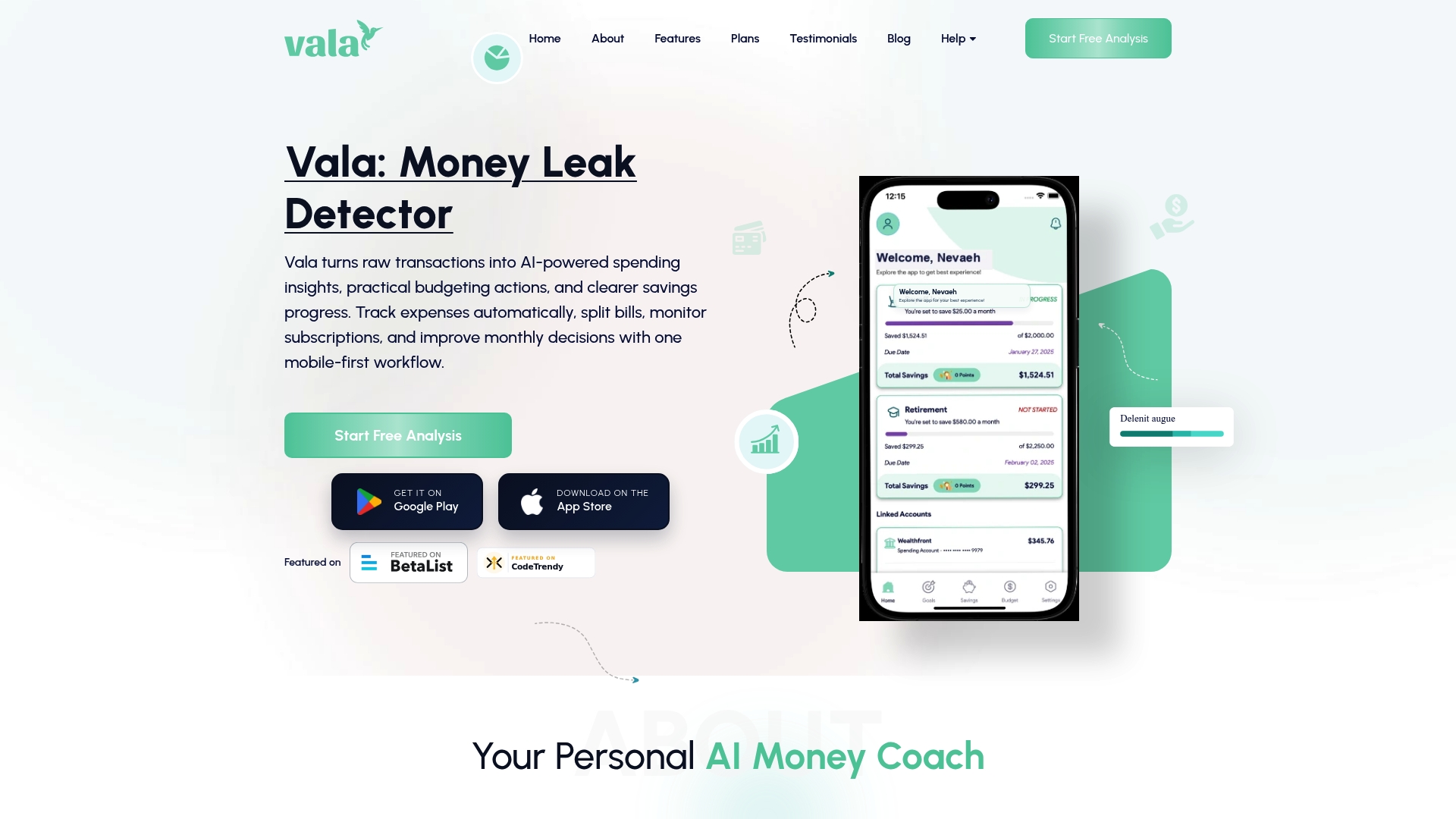
Valapoint is an AI-powered personal finance app built for exactly this situation. You can set a trip budget goal, track every expense by category in real time, and split shared costs with travel partners without the awkward math. Valapoint’s AI surfaces spending patterns you would miss on your own, so you know where your money is going before it is gone. Whether you are traveling solo or with a group, the Vala personal finance app gives you the visibility and control to travel confidently within your budget.
FAQ
What is a trip budget planner used for?
A trip budget planner is a financial tool used to estimate, organize, and track travel expenses like flights, lodging, food, and activities before and during a trip. Its core purpose is to keep total spending within a set limit.
How much contingency should I add to a travel budget?
Travel industry guidance recommends adding a 10–20% contingency buffer to any travel budget, with 15% being the safest choice for complex or international trips.
What expenses do most travelers forget to budget for?
Airport transfers, baggage fees, city taxes, SIM or eSIM costs, and travel insurance are the most commonly overlooked expenses. These silent costs are a leading cause of budget overruns.
Is a spreadsheet or an app better for trip budgeting?
Spreadsheets like Google Sheets offer full customization and work offline, while apps like Travel Spend and Tripcoin handle currency conversion automatically. AI-powered tools like Valapoint add automated tracking and spending insights for travelers who want more than manual logging.
How do I split travel costs fairly in a group?
Use a dedicated group expense tool that logs shared purchases, splits them by person, and tracks running balances. Assigning one person to log shared expenses daily prevents errors and disputes at the end of the trip.