
Digital expense splitting apps are defined as mobile and web tools that automate cost-sharing calculations, track group debts in real time, and settle balances with minimal transactions. The benefits of digital expense splitting apps go far beyond simple math. They remove the social awkwardness of asking friends for money, prevent forgotten expenses, and give every person in a group a clear, auditable record of what they owe. Whether you share rent with roommates, split a road trip with friends, or manage a group gift, these tools turn a stressful process into a straightforward one.

1. Benefits of digital expense splitting apps: eliminating social friction
Shared money is one of the fastest ways to create tension in a friendship. Digital expense splitting apps remove that tension by turning payment requests into objective, automated notifications rather than personal asks.
“Digital splitting apps eliminate awkward conversations and math anxiety by automating calculations and sending objective payment requests. Payment becomes a system event, not a social confrontation.”
The psychological shift is real. When an app sends a payment request, it carries no emotional charge. Nobody feels accused or embarrassed. The group expense tracking process becomes a shared system everyone agreed to, not a favor someone has to chase.
Proportional splitting adds another layer of fairness. A 2004 study found that diners order 37% more food when costs are split equally versus proportionally. That statistic reveals something important: equal splits create hidden incentives to overspend, while proportional splits keep everyone accountable for their own choices.
Key social benefits include:
- Payment requests feel neutral, not confrontational
- Every person sees the same numbers, removing “he said, she said” disputes
- Proportional splits prevent resentment from unequal consumption
- Groups build trust faster when finances are transparent
2. Real-time logging speeds up settlements
Forgetting an expense between the moment you pay and the moment you log it is the biggest failure point in shared finances. Digital apps solve this by letting you log costs the second they happen, directly from your phone.
Users who log expenses immediately report up to twice as fast resolution times compared to manual methods. That speed matters when you have five people waiting to settle up after a weekend trip.
Pro Tip: Log every expense the moment you pay, not at the end of the day. Even a 30-minute delay increases the chance of forgetting details like exact amounts or who was included.
Real-time logging also keeps the underlying debt calculations clean. Immediate expense entry simplifies the debt graph the app maintains, which means fewer errors and faster final settlements. Think of it like keeping a running grocery list versus trying to remember everything at the checkout.
Habits that make real-time logging work:
- Open the app before you put your wallet away
- Use shared group links or chat integrations so everyone can add expenses
- Set a group rule: log within five minutes of paying
- Review the group balance at the end of each day on a trip
3. How debt optimization algorithms minimize your transactions
Most people think of expense apps as simple IOU trackers. The reality is more powerful. These apps function as debt optimization engines that use graph algorithms to minimize the total number of payment transactions in a group.
Here is how it works in practice. Imagine four friends on a trip. Alex owes Ben $20, Ben owes Cara $30, and Cara owes Alex $15. Without an algorithm, that is three separate payments. The app collapses those into a net flow problem and may determine that Alex simply pays Cara $5, settling everything in one transaction.
- The app maps every expense as a directed debt between two people.
- It calculates each person’s net balance across all transactions.
- It finds the minimum number of payments that clears all balances.
- It sends each person a single, clear payment request.
One important detail surprises many users: debt simplification algorithms sometimes route payments between people who never directly transacted with each other. You might pay someone you never bought anything with. That is not an error. It is the algorithm working correctly to minimize total transfers. Understanding this builds trust in the system rather than confusion.
| Settlement method | Transactions needed (5-person group) | Error risk |
|---|---|---|
| Manual cash rounds | 8–10 | High |
| Spreadsheet tracking | 5–7 | Medium |
| App with debt optimization | 2–4 | Very low |
4. Financial accuracy and transparent record-keeping
Automated calculations remove the human errors that are common in spreadsheets or paper tracking. When you type numbers manually, you round, misplace decimals, or forget who was present for a specific expense. Apps handle all of that without mistakes.
Digital apps maintain detailed transaction logs that show who paid what, when, and how much each person owes. That audit trail is useful long after the trip ends. You can review it to understand your spending patterns, confirm a disputed amount, or simply feel confident that the final balance is correct.
Spreadsheets break down quickly when group composition changes. Someone joins the trip late, or one person leaves early. A spreadsheet requires manual restructuring. A dedicated app with a relational design handles group changes automatically, keeping every calculation accurate.
Common use cases where accurate records matter most:
- Shared rent and utilities: Monthly recurring costs need a permanent, reviewable record
- Group travel: Multiple payers across several days create complex webs of debt
- Shared subscriptions: Recurring splits that change when members join or leave
- Group gifts: One-time collections where every dollar needs to be accounted for
The automated calculation advantage also supports personal budgeting. When you can see exactly what you spent on a group trip versus what you owe others, you get a clearer picture of your actual monthly outflows.
5. How apps support your personal budgeting goals
Expense splitting apps do not just settle group debts. They generate spending data you can use to budget better on your own. Every logged expense is a data point that reveals patterns over time.
If you consistently spend more than your share on group dinners, the app’s history shows that clearly. You can then decide whether to adjust your habits or set a personal cap for social spending. That kind of real-time tracking turns group expense data into personal financial insight.
The best digital expense apps also integrate with broader budgeting tools. When your group spending feeds into a single financial dashboard, you stop treating shared costs as a separate mental category. They become part of your full monthly picture, which makes budgeting more accurate and less stressful.
Key Takeaways
Digital expense splitting apps reduce social friction, speed up settlements, and produce accurate financial records that manual methods cannot match.
| Point | Details |
|---|---|
| Social friction drops immediately | Automated payment requests remove the emotional weight of asking friends for money. |
| Real-time logging doubles settlement speed | Users report up to 2x faster resolution when expenses are logged at the point of purchase. |
| Debt algorithms cut transaction count | Graph-based optimization reduces a 5-person group’s payments from 8–10 down to 2–4. |
| Transparent records prevent disputes | Full transaction histories give every group member the same auditable view of costs. |
| Group data improves personal budgeting | Logged shared expenses feed into personal spending patterns, making monthly budgets more accurate. |
My honest take on expense apps after years of group travel
I have used digital expense splitting tools across roommate situations, international trips, and recurring friend group dinners. The single biggest shift I noticed was not in the math. It was in the conversations.
Before using an app, someone always felt like they were nagging. After switching to a digital system, nobody was nagging anymore. The app sent the request. The request was just a fact. That change alone was worth every other feature combined.
The advice I give everyone starting out is simple: pick one app, get the whole group to agree on it before the trip starts, and log expenses immediately. The app only works as well as the group’s commitment to using it consistently. One person logging everything while others forget defeats the purpose entirely.
I have also seen people resist these tools because they do not understand why the app sometimes asks them to pay someone they never bought anything with. Once you explain the debt optimization logic, that resistance disappears. The algorithm is doing you a favor. Fewer payments means less friction and faster closure.
The expense tracking practices that work best are the boring ones: log immediately, review balances daily on trips, and settle at the end of each event rather than letting balances carry over for weeks. Consistency beats any clever feature the app offers.
— SaverStride
Valapoint makes group and personal finance work together
Splitting costs with a group is only half the picture. The other half is understanding how those shared expenses fit into your personal financial life.
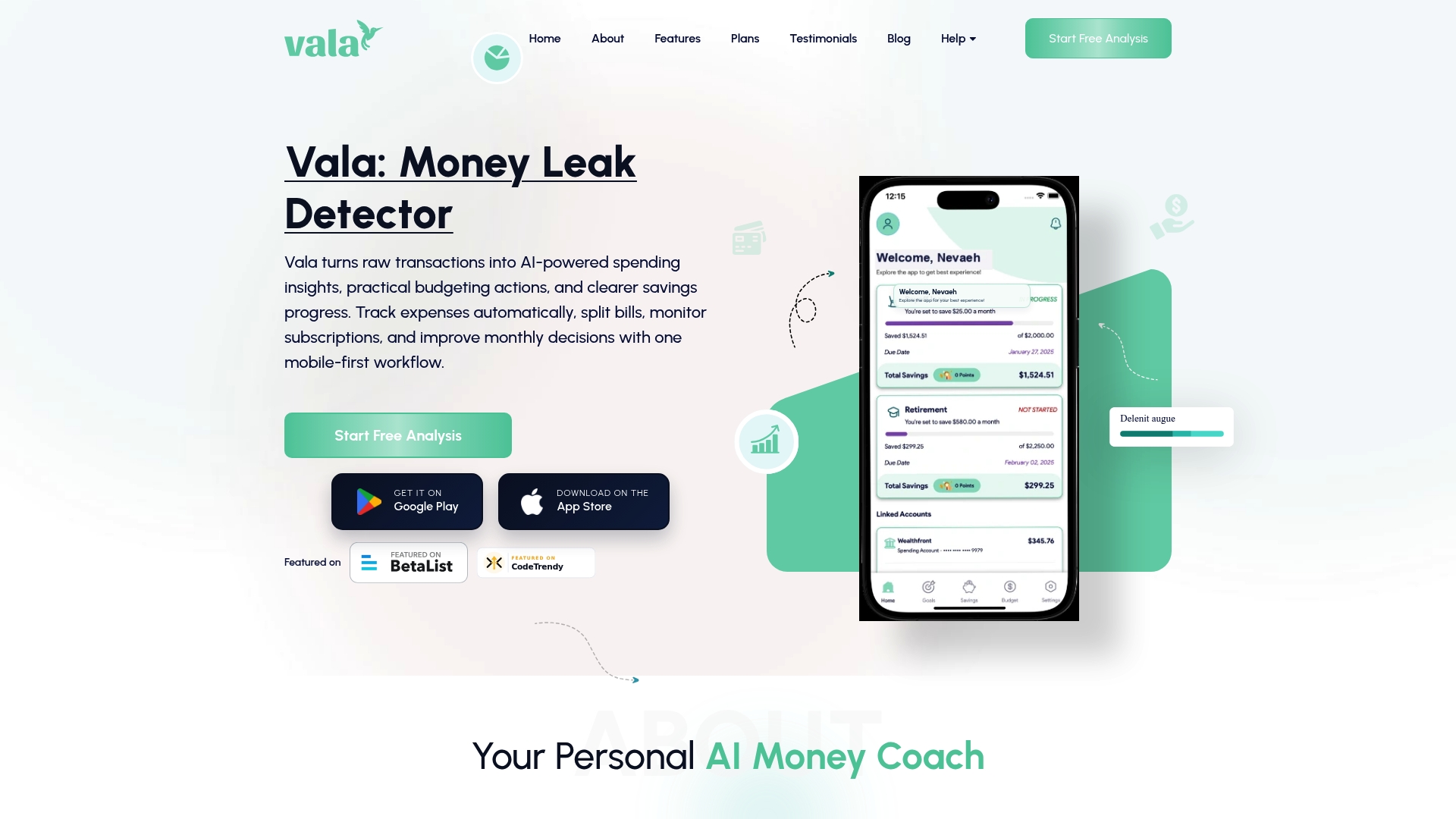
Valapoint’s personal finance app combines expense splitting with full budget tracking, real-time spending insights, and AI-powered analysis of your money habits. You can log group costs, see your share instantly, and watch those numbers flow directly into your personal budget dashboard. Valapoint also surfaces hidden spending patterns that most people never notice until they check their bank statement at month’s end. If you want group expense management and personal budgeting in one place, Valapoint is built for exactly that.
FAQ
What are the main benefits of digital expense splitting apps?
Digital expense splitting apps automate calculations, eliminate math errors, and send objective payment requests that remove social awkwardness. They also maintain full transaction records and speed up group settlements by up to 2x compared to manual methods.
How do expense splitting apps work with debt optimization?
These apps use graph algorithms to calculate each person’s net balance and find the minimum number of payments needed to clear all debts. This means a group of five people might settle everything with just two or three transactions instead of ten.
Why does real-time logging matter for shared expenses?
Forgetting an expense between payment and logging is the most common failure in group finance tracking. Logging immediately keeps the debt graph accurate and prevents disputes over amounts that no one can remember clearly.
Can expense splitting apps help with personal budgeting?
Yes. Every logged group expense becomes spending data you can review to understand your social and travel costs. Apps like Valapoint connect group expense data to personal budget dashboards for a complete financial picture.
Are digital expense apps better than spreadsheets for group costs?
Spreadsheets break down when group membership changes or when multiple people edit the same file. Dedicated apps handle group changes automatically, eliminate version conflicts, and apply debt optimization that no spreadsheet formula replicates.