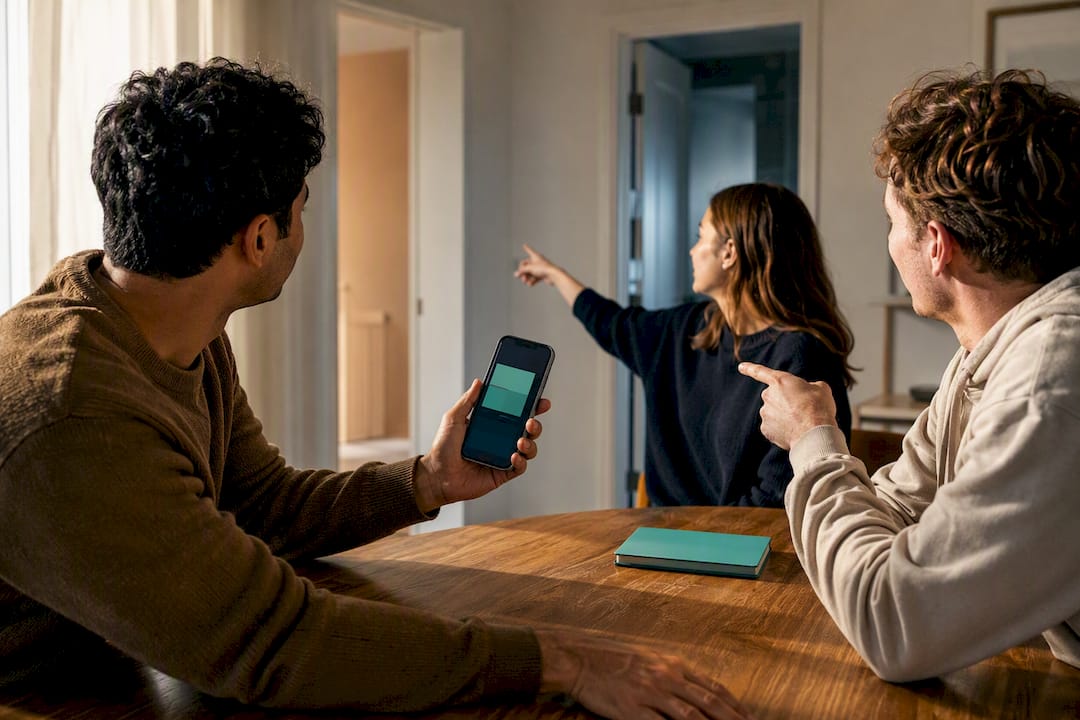
Hidden recurring charges are small, repeated fees billed automatically through platforms like the Apple App Store, payment services like PayPal, or directly by vendors — and most people never notice them until they run a full audit. Reviewing statements over a period longer than a year helps catch both monthly and annual billing cycles that a shorter review might miss.
Your fastest first move: open your Apple App Store or Google Play subscription settings right now and count every active subscription. Then set a calendar reminder to export 14 months of bank statements this weekend. Those two steps alone will surface most of the charges covered below.
- Apple App Store subscriptions continue billing even after you delete the app
- PayPal maintains separate billing agreements that never appear on your card statement
- Valapoint can scan your connected accounts and flag recurring charges automatically
- Comparedge’s SaaS Hidden Costs Report found that most tracked products carried at least one cost that was not listed on the pricing page.
Table of Contents
- What are the most common examples of hidden recurring charges?
- Why do these charges keep showing up on your bill?
- How do you find every hidden recurring charge in under an hour?
- How do you cancel, dispute, and request refunds?
- How do you stop hidden charges from coming back?
- Which tools actually help you track and manage subscriptions?
- Valapoint finds what manual audits miss
- Key Takeaways
- The real cost of not looking
- Useful sources
What are the most common examples of hidden recurring charges?
Hidden recurring charges fall into predictable categories. Knowing each one makes them easy to spot on a statement or app-store screen.
| Category | What it looks like on a statement | Where to check |
|---|---|---|
| App-store billing | “APPLE.COM/BILL” or “Google Play” with no app name | App Store / Google Play subscription settings |
| Trial-to-paid conversion | Same vendor, charge starts 7–30 days after signup | Bank statement + vendor account settings |
| Annual renewal | One large charge, same vendor, once per year | 14-month statement export |
| Metered usage overage | Variable monthly amount from a SaaS vendor | Vendor billing dashboard |
| Seat minimums / block pricing | Fixed charge regardless of actual users | Vendor account or invoice |
| PayPal billing agreement | “PAYPAL *VENDORNAME” or just “PAYPAL” | PayPal → Manage Automatic Payments |
| In-app add-on or upgrade | Small recurring line from a known app | App-store subscriptions + app account |
Usage meters and auto-upgrades are among the most common sources of unexpected cost spikes: a cloud storage plan that auto-upgrades when you hit 15 GB, or an API tool that silently bills per call above a free tier.

Platform-level billing is the trickiest category. Your bank statement shows “APPLE.COM/BILL $12.99” — but which app? You have to open the App Store, tap your profile, and select Subscriptions to see the actual service name. The same masking happens with Google Play: the card charge reads “Google Play” and the real app is buried in device settings.
Trial-to-paid conversions are almost always opt-out by design. You enter a card for a “free” trial, forget to cancel, and the charge appears soon after. Canceling an unused subscription can save a significant amount annually, especially if you have multiple subscriptions running.
Annual renewals are the sneakiest of all. A $99 charge from a vendor you signed up with 13 months ago looks like a new charge, not a renewal. That’s exactly why a 3-month statement review misses them entirely.
Why do these charges keep showing up on your bill?
The short answer: you consented at signup, and the billing platform is designed to keep charging until you actively stop it.
The core problem isn’t fraud — it’s inattention. Financial experts consistently note that most recurring charges persist because consumers never audit them against actual usage. The fix is treating every recurring payment the way you’d treat a quarterly bill: review it, confirm you still want it, and cancel if you don’t.
Recurring billing is legally defined as a merchant-initiated charge on a stored payment method, triggered by a schedule the customer agreed to at signup. That agreement is buried in terms of service, and the default is always “keep billing.”
Platform-level billing compounds the problem. When Apple or Google processes the charge, the merchant name on your bank statement is Apple or Google — not the app. You have to go three layers deep (bank → app store → subscription list) to find the real vendor.
Statistic to know: Comparedge documented 1,355 hidden-cost items across 482 SaaS products, with 88% of those products carrying at least one cost that never appeared on the pricing page. Metered usage and renewal price jumps were the two dominant patterns.
Pro Tip: Set a recurring calendar event titled “Subscription Audit” every 90 days. Treat it like a quarterly bill review — not optional, not skippable.
How do you find every hidden recurring charge in under an hour?
This checklist takes 30–60 minutes and covers every place recurring charges hide. Work through it in order.
- Export 14 months of bank and credit card statements as a CSV. Sort by vendor name, then by amount. Look for any charge that repeats monthly or annually — even small ones like $4.99.
- Search your email for the words “receipt,” “subscription,” “renewal,” and “billing.” Filter by sender. Every confirmation email is a live subscription until proven otherwise.
- Check Apple App Store subscriptions: open the App Store app → tap your profile photo → Subscriptions. Every active subscription is listed with its next billing date.
- Check Google Play subscriptions: open the Play Store → tap your profile → Payments & subscriptions → Subscriptions.
- Check PayPal automatic payments: log in to PayPal → Settings → Payments → Manage automatic payments. PayPal billing agreements are separate from card charges and won’t appear on your bank statement.
- Check connected OAuth apps: in Google Workspace, go to myaccount.google.com/permissions. In Microsoft, go to account.microsoft.com/privacy/app-access. Third-party SaaS tools often bill through these connections.
- Review your card issuer’s recurring payments page: most major U.S. banks (Chase, Bank of America, Capital One) now flag recurring charges in their app under “Subscriptions” or “Recurring transactions.”
For a faster 30-minute recurring-expense audit, Valapoint’s automated detection can pull these patterns from connected accounts in one step.
- Watch for vague merchant names: “DSCRD *NITRO” is Discord Nitro; “AMZN MKTP” is Amazon
- Flag any charge under $10 — small amounts are easy to ignore and easy to multiply
- Note charges that vary month to month from the same vendor (metered usage)
Pro Tip: Search your email for “your subscription has been renewed” — this single phrase surfaces most annual renewals you’ve already paid for and forgotten.
How do you cancel, dispute, and request refunds?
Work through this in three stages: merchant cancel first, then payment-rail stop, then dispute if needed.
Merchant cancellation
Go directly to the vendor’s account settings and cancel. Most SaaS products have a Billing or Subscription page under account settings. If you can’t find it, use this script:
For app-store subscriptions, cancel through the App Store or Google Play — not through the app itself. Deleting the app does not cancel the subscription.
Stopping payment at the source
| Action | How to do it | What it stops |
|---|---|---|
| Cancel PayPal billing agreement | PayPal → Settings → Payments → Manage automatic payments → Cancel | Future PayPal-billed charges |
| Remove card from vendor | Vendor account → Billing → Remove payment method | Future direct card charges |
| Stop ACH debit | Contact your bank and request an ACH stop-payment | Bank-account debits |
| Virtual card expiry | Use a virtual card number for trials; let it expire | Automatic trial-to-paid conversion |
Disputes and chargebacks
Contact your card issuer if a merchant refuses to cancel or you’ve been charged after canceling. Provide the cancellation confirmation email, the charge date, and the amount. U.S. card issuers typically resolve disputes within 30–60 days, and provisional credit is often issued within 5–10 business days. Chargeback success is higher when you have written proof of cancellation.
For professional help reviewing billing agreements, a revenue audit service can identify charges you may have missed and advise on dispute timelines.
How do you stop hidden charges from coming back?
The right system is simple: a monthly quick check, a quarterly review, and a 14-month annual sweep to catch annual renewals.
Pro Tip: Treat every recurring payment like a quarterly bill. Put “Subscription Review” on your calendar every 90 days, and cancel anything you haven’t actively used in the past 30 days.
- Use one dedicated card for all subscriptions. This makes every recurring charge visible in one place and makes it easy to spot new ones.
- Avoid in-app purchases when direct billing is cheaper. App-store billing adds a platform fee that vendors sometimes pass on to you.
- Cap add-on features at signup. Opt out of usage-based upgrades and metered overages wherever the vendor allows it.
- Use a virtual card number for free trials. Set it to expire after 30 days so trial-to-paid conversions fail automatically.
- Set a bill reminder for every annual subscription 30 days before its renewal date.
Which tools actually help you track and manage subscriptions?
Valapoint
Valapoint’s subscription-cost calculator lets you enter your active subscriptions and see their total monthly and annual cost in one view. The app’s recurring-spend detection connects to your accounts and flags charges automatically — no manual CSV sorting required. To use it: connect your bank or card account, open the Subscriptions tab, and review the flagged recurring items.
Apple App Store
Open the App Store → tap your profile photo → Subscriptions. Every active subscription shows its price, billing cycle, and next renewal date. You can cancel directly from this screen.
Google Play
Open the Play Store → tap your profile → Payments & subscriptions → Subscriptions. Same functionality as the App Store: price, cycle, and a one-tap cancel option.
PayPal
Log in → Settings → Payments → Manage automatic payments. This page lists every merchant with an active billing agreement tied to your PayPal account. Cancel any you don’t recognize or no longer use.
Bank CSV export
Most U.S. banks let you export 12–18 months of transactions as a CSV. Open it in Excel or Google Sheets, sort by description, and filter for repeating amounts. This method catches charges that bypass app stores entirely.
Valapoint finds what manual audits miss
Most people spend 2–3 hours on a manual subscription audit and still miss annual renewals buried in old statements. Valapoint’s automated recurring-spend detection does the same work in minutes, flagging every repeating charge across connected accounts and calculating the total annual cost so you know exactly what you’re spending.
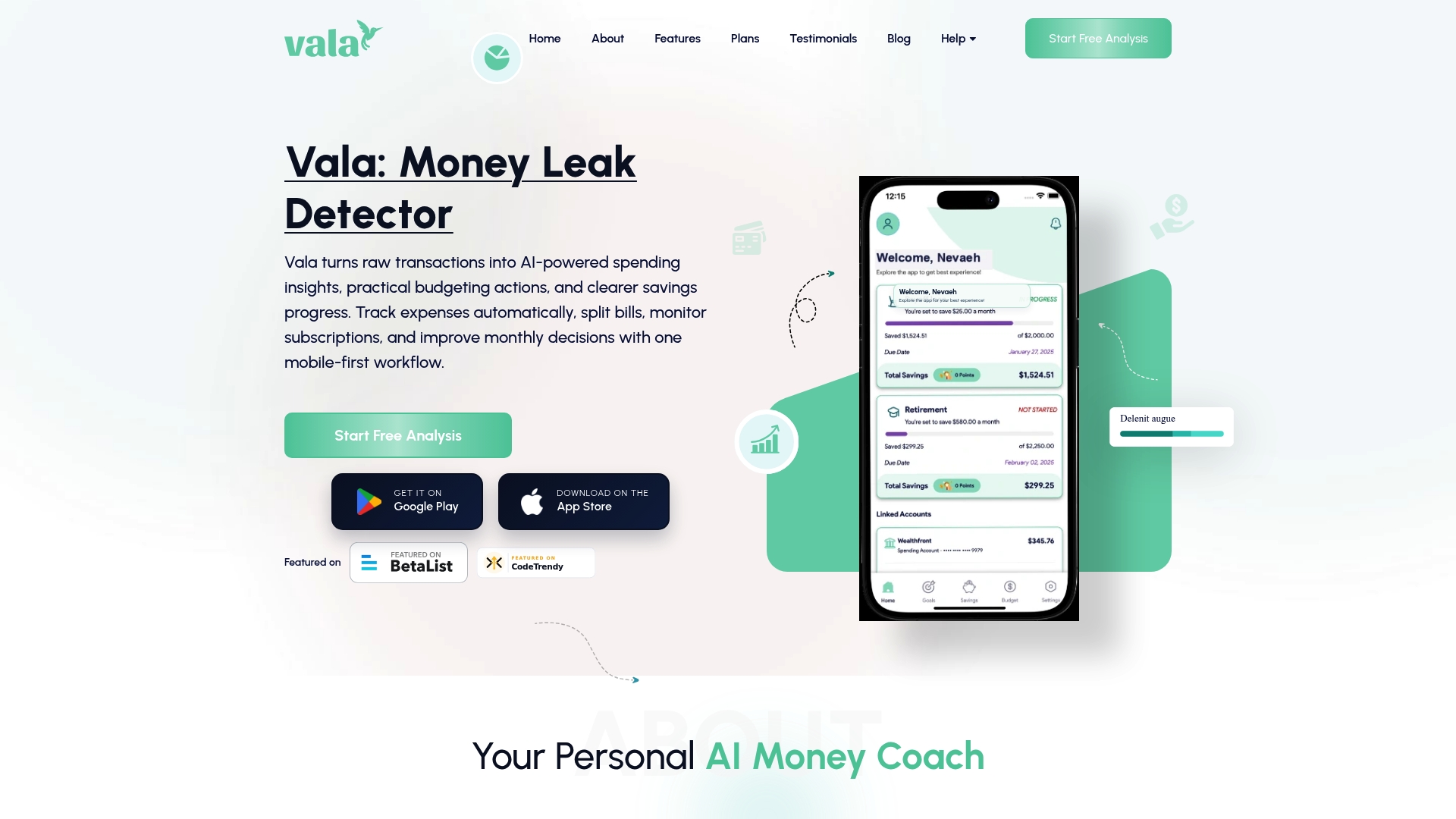
Two features do the heavy lifting: the recurring-spend detector surfaces charges you’ve normalized and stopped noticing, and the subscription-cost calculator shows their combined monthly and annual impact in one number. That number is usually surprising.
Start your free audit with the Valapoint personal finance app and see every recurring charge in your accounts today.
Key Takeaways
Hidden recurring charges are easiest to stop when you audit 14 months of statements, check app-store subscriptions, and cancel PayPal billing agreements before they renew again.
| Point | Details |
|---|---|
| Review 14 months of statements | Annual renewals are invisible in shorter windows; a 14-month export catches every cycle. |
| Check app stores directly | App Store and Google Play subscriptions survive app deletion and must be canceled in settings. |
| PayPal has its own billing layer | Billing agreements in PayPal don’t appear on card statements; check Manage Automatic Payments separately. |
| Cancel unused services | Canceling an unused subscription can save about $300 per year if the monthly cost is $25, and most people have more than one subscription they aren’t using. |
| Use Valapoint to automate detection | Valapoint’s recurring-spend detector and subscription-cost calculator surface and quantify every hidden charge. |
The real cost of not looking
Most hidden recurring charges aren’t scams. They’re services you signed up for, forgot about, and kept paying. That distinction matters because it means the fix is entirely in your hands — no fraud claim needed, no waiting for a refund. You just have to look.
The harder truth is that the billing systems are designed to make not-looking easy. Platform-level billing hides vendor names. Annual renewals arrive when you’ve stopped thinking about the service. Trial periods end on a Tuesday with no reminder. None of that is accidental.
A quarterly audit habit changes the math permanently. Thirty minutes every 90 days is less time than most people spend looking for a lost charger. And the payoff — finding and canceling even two or three forgotten subscriptions — tends to be immediate and concrete.
If you want to start right now: open your Apple App Store subscriptions, count the active ones, and cancel any you haven’t used this month. That’s five minutes and a real result.
Useful sources
- Forgotten subscription costs — Quartz
- Recurring billing: types and benefits — Investopedia
- 12 Examples of Financial Leaks in Everyday Spending — Valapoint Blog
- How to Find Hidden Monthly Spending Leaks Fast — Valapoint Blog
- Benefits of Monthly Budget Audits for Better Finances — Valapoint Blog