Round-up savings rounds each eligible purchase up to the next dollar and moves the difference into a savings account. Buy a $4.35 coffee and 65 cents goes to savings. You do nothing after setup. It’s worth it for most people as a starter habit, as long as you know what it will and won’t do. On its own it adds up slowly, and it can cause overdrafts if your checking account runs thin.
Below you’ll find how it works, what the numbers look like, what to check before you turn it on, and how to pair it with savings that grow faster.
TL;DR
- Round-ups take the spare change from debit card purchases and move it into savings automatically.
- Typical amounts are small. One published estimate puts 50-cent average round-ups at about $276 a year.
- Federal research found that round-type rules save often but tend to build less than fixed, guaranteed transfers.
- Check fees, daily transfer timing and your checking balance first, because transfers can trigger overdraft fees if your account runs low.
- Use round-ups as one layer, alongside a fixed weekly or paycheck transfer and a cleanup of recurring charges.
Table of Contents
- What round-up savings means
- How much can round-ups really add up to?
- Who offers round-ups
- Set it up in five steps
- Fees and overdraft risks to watch
- When round-ups make sense, and when they don’t
- Perspective: where we see the real money
- Build a savings habit beyond spare change
- Find your leaks with Vala
- FAQ
- Sources
What round-up savings means
The idea is simple. Your bank or app watches your eligible debit card purchases, rounds each one up to the nearest dollar, and moves the difference into a savings account. The Consumer Financial Protection Bureau describes it as rounding purchases to the nearest dollar and saving the difference, which adds to your savings without manual effort.
Here is a quick example of one day:
| Purchase | Rounded to | Moved to savings |
|---|---|---|
| $4.35 coffee | $5.00 | $0.65 |
| $12.80 lunch | $13.00 | $0.20 |
| $37.42 groceries | $38.00 | $0.58 |
| $9.99 streaming add-on | $10.00 | $0.01 |
| Day total | $1.44 |
No single transfer feels like anything. That’s the appeal. It works like a digital change jar, and you never have to decide to save.
Some versions round to the nearest dollar only. Others let you multiply the round-up (for example, double it) or round to a larger step like $5. Which options you get depends on the provider.
How much can round-ups really add up to?
Short answer: less than most ads suggest, but more than nothing.
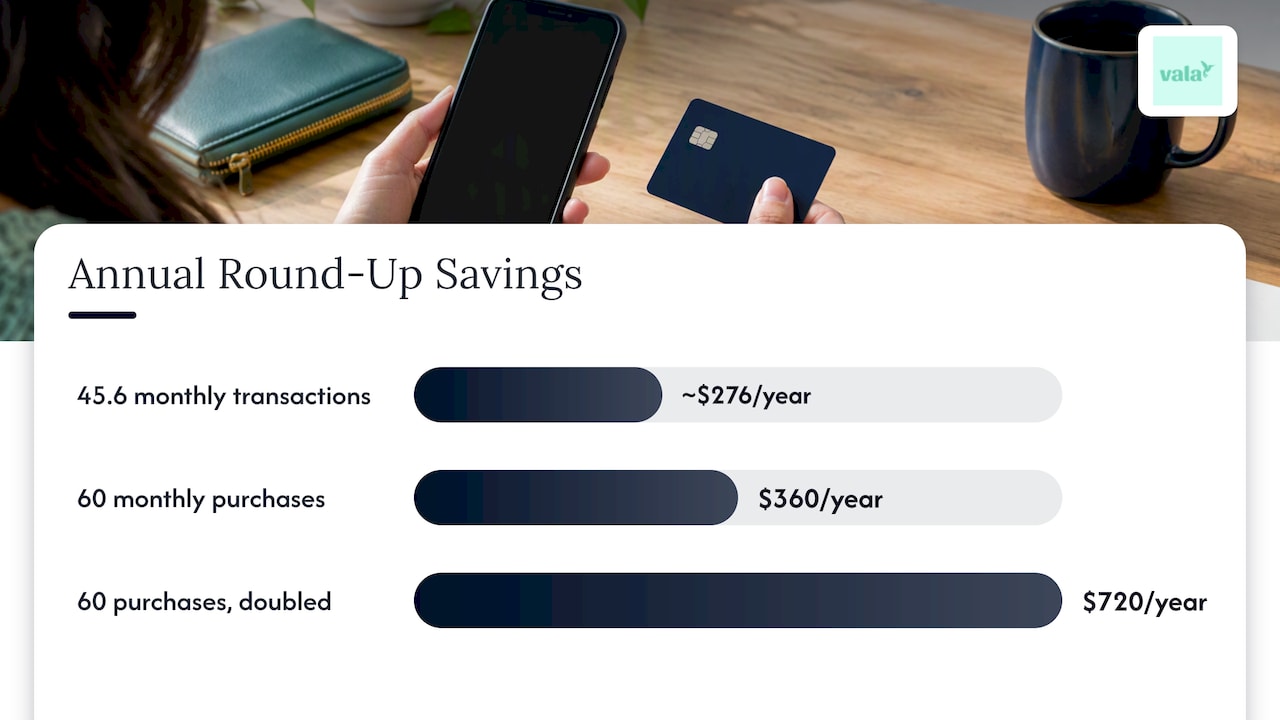
One media estimate from GOBankingRates used 45.6 payment transactions a month and a 50-cent average round-up to reach about $276 saved in a year. Your number depends on three things:
- How often you use your debit card. More swipes means more round-ups. If you pay mostly by credit card, cash or bank transfer, you’ll round up very little.
- The average cents lost per purchase. Over many purchases the average tends toward 50 cents, but it can differ if you buy lots of exact-dollar items.
- Multipliers and minimums. Doubling or tripling round-ups speeds things up, but it also pulls more from checking.
A simple worked example, which is our own illustration and not a study: 60 debit purchases a month at a 50-cent average is $30 a month, or $360 a year. Double the round-up and it’s $720. Neither is life-changing, but both cover a real expense, like a car registration or a flight home.
What federal research says
The CFPB looked at the outcomes of savings app users in a 2022 report on one savings app’s strategies. In it, rules that trigger depending on your spending (called contingent rules) averaged $1.40 per transaction and 58 triggers a month. The report found that guaranteed rules, meaning fixed transfers that happen no matter what, were associated with more savings building up. The CFPB also noted that contingent rules like round-ups make it easy to save often, yet are linked with lower total savings than guaranteed ones.
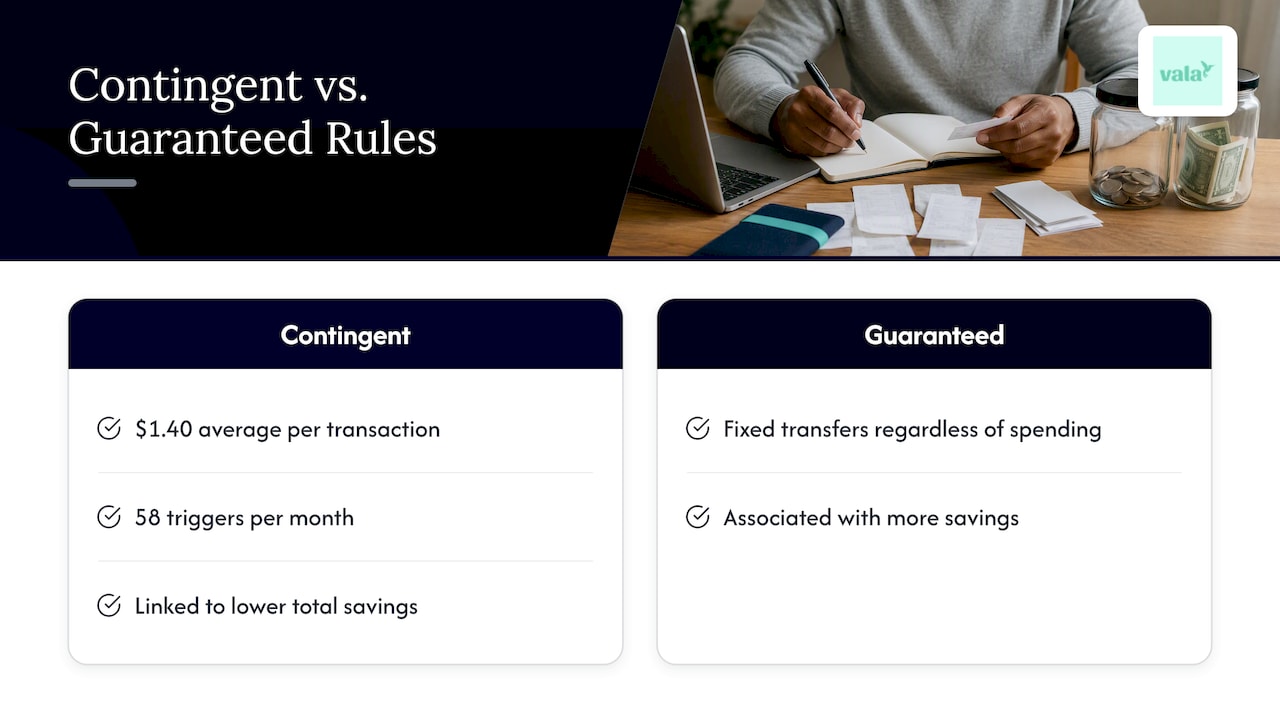
The takeaway: round-ups are great for building the habit. They’re not the fastest way to build a balance. Pair them with a fixed transfer, and you get both.
Who offers round-ups
You have a few places to look, described here by type:
- Banks and credit unions. Some offer a built-in round-up feature tied to your checking account. One example is a regional bank whose Round Up Savings program rounds each debit card transaction up and deposits the total into a savings account you choose, with transfers aggregated at the end of each processing day. Check your own bank’s app or website, since availability varies by institution.
- Savings and budgeting apps. Many apps link to your bank account and let you set round-up rules, then move money into a savings account or a goal.
- Investing apps. Some round-up tools invest your spare change instead of saving it. That’s a different decision, with market risk, so treat it separately.
- DIY. You can round up on your own by logging purchases and transferring the difference weekly. It’s free, but it relies on willpower, which is what automation is meant to replace.
What to check before choosing
Before you pick one, run through these questions:
- Which accounts does it need? Some bank programs require a checking account, a debit card and a separate savings account at the same bank.
- Which purchases count? Often only debit card purchases are eligible. Credit card, bill pay and transfers may be excluded.
- Is there a monthly fee? A fee of a few dollars can eat a large share of a small round-up balance. If you’d save $30 a month, a $3 fee takes 10% of it.
- When do transfers happen? Daily, weekly or when a threshold is reached.
- Where does the money go? A savings account that earns interest and is covered by deposit insurance is a good place for an emergency fund.
- Can you cap or pause it? You should be able to set a limit or switch it off in a tight month.
Set it up in five steps
- Pick your destination. A separate savings account works best, because out of sight helps. Choose one with no monthly fee, and look at the interest rate.
- Check your checking buffer. Look at your lowest balance over the last three months. If you often dip close to zero, build a cushion before you start.
- Turn on round-ups. Find the feature in your bank or app. Start with the standard round-up, not a multiplier.
- Set a goal. Name what the money is for: a $500 starter emergency fund, a trip, or a security deposit. A target keeps you going.
- Review after 30 days. Check how much moved, whether any overdraft or fee hit, and whether you can raise the multiplier.
Fees and overdraft risks to watch
The biggest risk with round-ups is not the feature itself. It’s small transfers leaving a checking account that has little in it. The CFPB advises that when you set up recurring transfers, you should monitor your online account because insufficient funds may lead to overdraft fees.
To stay safe:
- Keep a buffer in checking, even $100 to $200, before you turn on a multiplier.
- Watch the days right before payday, when balances are lowest.
- Ask your bank whether round-ups can overdraw the account, and what happens if they would.
- Turn on low-balance alerts.
If overdrafts are already a worry, read our guides on predicting an overdraft before payday and avoiding overdraft fees with three quick changes first. Then start round-ups once your balance is steady.
When round-ups make sense, and when they don’t
They fit well if you:
- Use a debit card for most daily spending.
- Have never kept up a savings habit and want a painless start.
- Want to save for a small, specific goal.
- Split costs with friends and make many small purchases.
They fit poorly if you:
- Pay mostly with credit cards, so few purchases qualify.
- Run a checking balance close to zero.
- Carry high-interest debt. Paying that down usually beats earning savings interest, so put the extra there.
- Need to build a large amount quickly. Round-ups alone won’t get you there.
The honest limit: round-ups feel like progress because they’re painless, but the dollars are small. If your goal is $3,000 in a year, that’s $250 a month. Spare change won’t do it alone.
Perspective: where we see the real money
We built Vala around a simple observation. For most households, the biggest savings aren’t hiding in coffee change. They’re in recurring charges, subscriptions you forgot, and bills that crept up. Round-ups are a good habit starter, and we like them for that. But a $1.40 transfer can’t compete with a $15 monthly subscription you no longer use.
So our advice is to work from both ends. Let small automatic transfers build the habit. Then look at the leaks that cost you the same amount every month, because stopping one frees up money without any effort at all. When you connect your bank through Plaid, Vala flags recurring charges and sudden bill spikes, so you can see which ones are worth cutting. Then you can send that freed money into a goal on purpose.
If you want to go deeper on automation, our guide to automating personal savings goals and our post on saving automatically with AI insights walk through it step by step.
— SaverStride
Build a savings habit beyond spare change
Round-ups work best as one layer. Here’s how to stack the others.
Add a fixed transfer
Because the CFPB found guaranteed saving rules tied to higher accumulation, set a fixed amount to move on payday. Even $10 or $20 per paycheck works. Increase it when you get a raise.
Cancel what you don’t use
Go through your last three months of statements and list every recurring charge. Cancel the ones you haven’t used in 60 days. Redirect that exact amount into savings, so the saving is automatic. A cancelled $12 subscription is $144 a year, which is more than a lot of people collect in round-ups.
Use small daily choices
Small habits add up too. Our page on penny saver habits that work covers daily moves you can combine with automation.
Keep it all visible
Automation can hide your progress. Check your savings balance once a month and look at the total, not just the transfers. If you’re comfortable connecting accounts, review our five-minute security checklist for budgeting apps first so you know what to look for.
Find your leaks with Vala
If you want to see where your spare dollars are going before you set up round-ups, start with our Money Leak Check. It looks at your subscriptions, recurring charges and bill spikes and shows you what you could recover. Our SaverLite plan is $2.99 per month, and you can see current plan details on the Vala site.
FAQ
Is round-up savings worth it?
For most people, yes, as a first step. It builds a habit with no effort, and a typical estimate of about $276 a year is real money. It’s not enough alone for big goals, so pair it with a fixed transfer.
Do any banks offer round-up savings?
Some do. Certain banks and credit unions have round-up programs that move the difference from debit card purchases into a savings account. Programs and requirements vary, so check your bank’s app or ask a representative about eligibility, fees and transfer timing.
Can round-ups cause overdraft fees?
They can if your checking account runs low, because the transfers still leave the account. The CFPB advises watching your account when you set up recurring transfers. Keep a small buffer and turn on low-balance alerts.
How is a round-up different from a fixed transfer?
A round-up depends on how much you spend, so the amount changes. A fixed transfer moves the same amount on a schedule. Federal research linked guaranteed rules to higher savings, and round-ups to frequent but smaller saving.
Sources
- CFPB: Looking for an easy way to save money? Make it automatic
- CFPB: Consumer Savings App Strategies and Savings Outcomes (2022)
- GOBankingRates: How Rounding Up Your Purchases on Your Own Can Turn Pennies into Dollars
- Atlantic Union Bank: Round Up Savings