
A fun money budget is a set amount you can spend on anything you enjoy, with no guilt and no tracking every purchase against your bills. To set one up, cover your needs and savings first, pick a percentage that fits your income (many people start between 5% and 30% of take-home pay, depending on how much room they have), and move that money into its own account or category each payday. Once it’s gone, it’s gone. Once it’s there, you can spend it freely.
This guide shows you what counts as fun money, how to choose your number, how to line up bills with payday so the money is really free, and how to keep dinners, trips and events with friends inside your own limit.
TL;DR
- Fun money is the part of your wants spending that you set aside on purpose and spend without guilt.
- The CFPB’s 50/30/20 rule gives all wants up to 30% of net income. That is a ceiling for dining, subscriptions and entertainment combined, not a target for fun money alone.
- Fund fun money right after payday and after bills are covered, so you never borrow from rent to pay for a concert.
- Check your recurring charges first. Forgotten subscriptions are often the easiest way to free up fun money.
- With friends, agree on a spending cap before the trip or dinner, and split costs in one shared place.
Table of Contents
- What fun money is, and what counts
- Why a dedicated fun budget works
- How much fun money should you set aside?
- Free up fun money by finding the leaks
- Line up your bills with payday
- Make the system automatic
- Keep fun money intact when you split costs with friends
- Common fun money mistakes
- Perspective
- Find the money for your fun budget
- FAQ
- Sources
What fun money is, and what counts
Fun money is the amount you give yourself permission to spend on things you want but do not need. The Consumer Financial Protection Bureau (CFPB) describes wants as upgrades and extras that are nice to have but not necessary for living, earning income or protecting what you have. Fun money is the portion of those wants you plan for in advance.
The CFPB’s spending tracker gives a useful list of what falls in this bucket: movies or concerts, sporting events and sports fees, books, streaming services and other subscriptions, alcohol, and personal-care items like haircuts. Its monthly household budget worksheet adds cable, pet costs, restaurant meals and coffee to the things people may want.
Not everything on those lists has to be fun money. Here is a simple way to sort it:
- Needs: rent, utilities, groceries, transportation to work, insurance, minimum debt payments.
- Savings: emergency fund, retirement, other goals.
- Fun money: the things you would pick for enjoyment, such as concerts, hobbies, takeout with friends, a new game, a weekend away.
- Gray areas: a gym membership, a phone upgrade, a haircut. Put these where they fit your life. If a gym membership keeps you healthy and you would never cut it, treat it as a fixed cost. If it is one more thing you rarely use, move it to fun money and decide if it earns its spot.
The point is to define fun by what you enjoy, not by a rulebook. One person’s fun is travel, another’s is books or a hobby. Your budget should say so.
Why a dedicated fun budget works
Most budgets fail because they feel like a list of things you cannot do. A fun money line changes that. You decide ahead of time how much is yours to enjoy, so every purchase inside that limit is already approved.
It also makes the rest of the plan easier to keep. If your wants have a clear home, you are less likely to dip into savings or put dinners on a credit card. The FTC’s consumer.gov budgeting guidance says to list your bills and other expenses, including entertainment, subtract them from your monthly income, and make sure the result is above zero. Fun money is that entertainment line, given a number you choose.
How much fun money should you set aside?
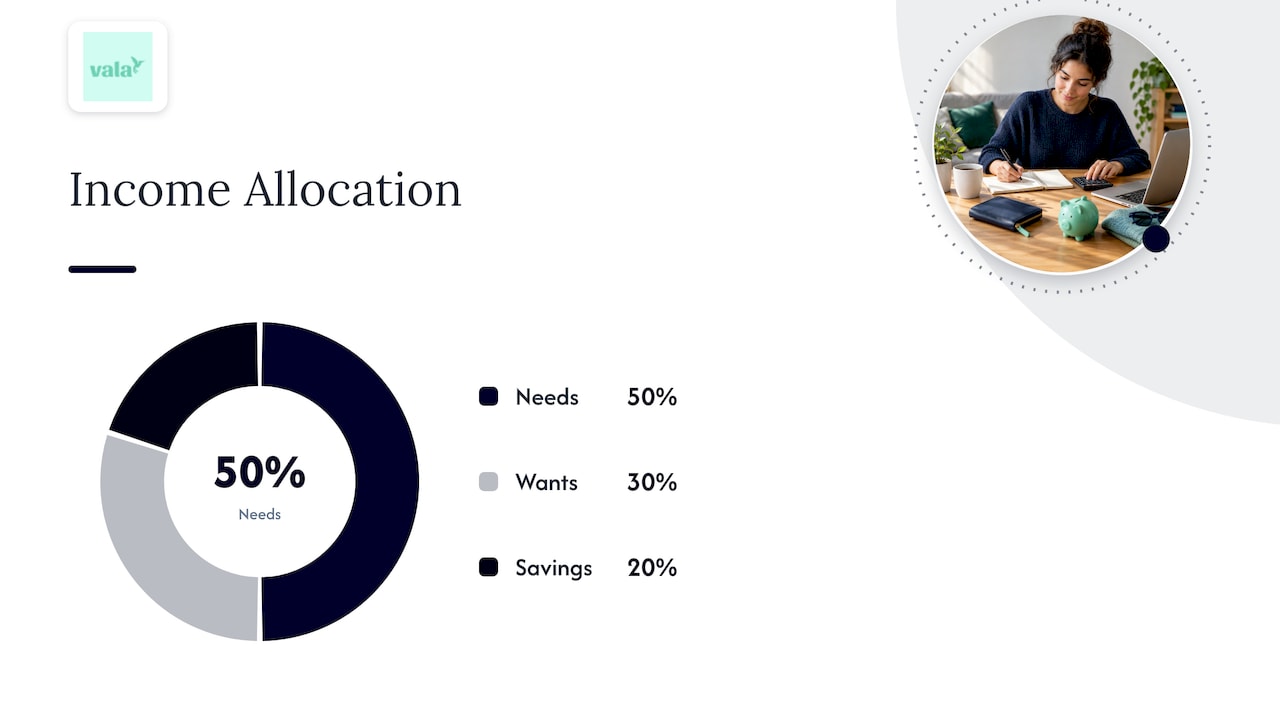
There is no single right amount. The honest answer depends on your income, your bills, your debts and your goals.
Here are the reference points most useful to start from:
| Starting point | What it means | Best for |
|---|---|---|
| 50/30/20 rule | The CFPB presents 50% of net income for needs, 30% for wants and 20% for savings goals | A steady paycheck with moderate bills |
| Fun money as a slice of wants | Use part of the 30% for fun money, and keep the rest for dining, subscriptions and extras | Anyone who already tracks wants |
| A smaller flat amount | Choose a dollar figure you can afford, even $50 or $100, and raise it as bills drop | Students and anyone with tight margins |
The CFPB says to choose a rule that fits your financial situation, and Experian makes the same point: the right discretionary amount depends on your income, expenses and financial goals. Lower income or heavier debt payments may call for trimming discretionary spending, and a 50/30/20 split is a starting framework you can customize.
A worked example
Say you take home $3,600 a month. This is an illustration, not a recommendation.
- Needs at 50%: $1,800
- Savings at 20%: $720
- All wants at 30%: $1,080
Out of that $1,080, you might already spend $45 on streaming and apps, $250 on eating out and $120 on gym and personal care. That leaves about $665 you could call fun money, or you might choose to trim the other lines and give yourself more.
Now say rent and loan payments push your needs to 65%. The same math leaves 15% for wants and savings combined. If you take 5% as fun money, that is $180 a month, and you can spend it with a clear conscience because the essentials are covered.
Start with a number you can keep for three months. You can raise it later. It is much harder to cut a number you set too high, because every cut feels like a penalty.
Think in years for big-ticket fun
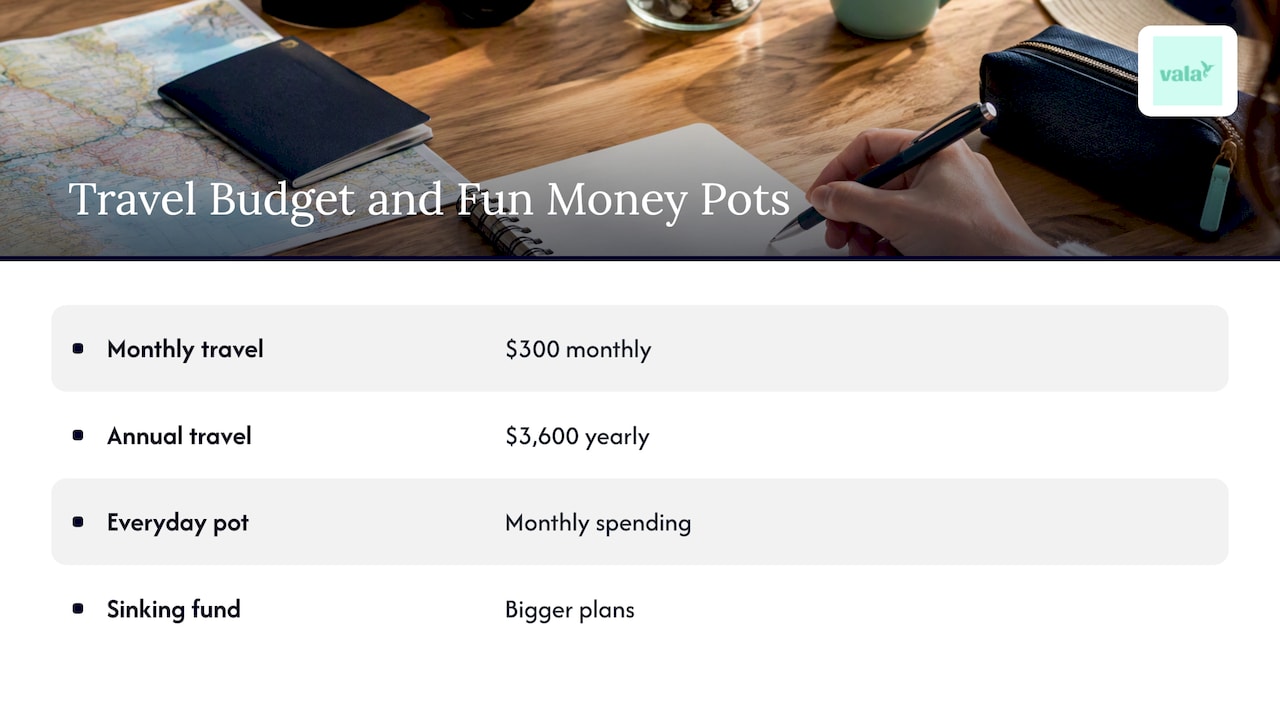
Some fun spending is lumpy: a trip, a festival ticket, a gift for a friend’s wedding. A $300 monthly travel budget is easier to see as $3,600 a year. Splitting your fun money into a monthly pot for everyday spending and a sinking fund for bigger plans keeps one big purchase from wiping out a month.
Free up fun money by finding the leaks
Before you cut a category, look for money that disappears without giving you anything. Forgotten subscriptions, free trials that rolled into paid plans, duplicate streaming services and bills that crept up all drain money that could be yours to enjoy.
A quick audit takes about 30 minutes:
- Pull up the last two or three months of bank and card statements.
- Highlight every charge that repeats.
- Mark each one as use weekly, use sometimes or forgot about it.
- Cancel the third group today, and set a reminder to review the second group in a month.
Our guides on finding hidden monthly spending leaks and reviewing your monthly finances walk through the process step by step. Even a few canceled subscriptions can turn into a nicer fun money line without touching your savings.
Line up your bills with payday
Fun money only feels free when your bills are already safe. Many people get stuck because rent lands on the 1st and the paycheck arrives on the 5th, so fun money quietly turns into rent money.
The CFPB’s bill due date worksheet suggests a bill calendar. List each bill with its due date, list your paydays, and see where they clash. Then do the following:
- Ask for a new due date. Many companies will move a due date to better match your income. The CFPB notes that you do not have a right to choose your date, and some companies may agree as a courtesy while others will not. It is still worth a call.
- Set money aside early. If a date cannot move, put aside part of an earlier paycheck for a bill due later in the month, or pay the bill early when you have the money.
- Fund fun money last, but on payday. Once the bills due before your next paycheck are covered, transfer your fun money to its own place immediately.
Check your weeks, not just your month
A monthly total can hide a tight week. The CFPB’s cash flow budget maps income and expenses week by week. If the ending balance for a week is negative, you do not have enough to cover that week’s spending. The tool suggests balancing it by cutting wants or renegotiating obligations.
In practice, that means a fun money purchase planned for the week before a big bill is risky, even if the month looks fine. Put big fun spending in the weeks after payday, and keep the weeks before a large bill quiet.
Make the system automatic
Willpower runs out. Habits that run themselves do not. Here is a setup that works for most people:
- Separate account or card. Move your fun money to a separate checking account, savings account or prepaid card. When the balance hits zero, you stop.
- Transfer on payday. Schedule it for the day your paycheck lands. A transfer at the end of the month will rarely happen.
- Weekly or biweekly slices. If you get $200 a month, $50 each week stops you from spending it all on the first weekend.
- Roll it over, or don’t. Decide in advance. Letting unspent money roll into next month is good for saving up for something bigger. A reset each month is better if you tend to overspend.
- Review monthly. Ten minutes at month end shows you whether the number was too tight or too loose.
Our monthly budget planner and the guide on automating the 50/30/20 budget give you templates for this.
Keep fun money intact when you split costs with friends
Shared dinners, group trips and event tickets are where fun money gets eaten fastest. The cost is rarely one big purchase. It is a bar tab split in a hurry, a rental house with five people, or a friend who covered tickets and now needs repaying.
A few habits protect your limit:
- Set a cap before you go. Decide what you can spend on the weekend, and say so early. “I’m in for up to $150” is easier to say before the group books the house than after.
- Pick one place to track costs. Use a single shared list or app so everyone sees the same totals. Memory and screenshots of receipts lead to awkward conversations.
- Choose a splitting method that matches the group. An equal split is simple when everyone orders similar things. Itemized splits are fairer when one person skips drinks or an expensive dish. A shared pot, where each person puts in a set amount upfront and one person pays group costs from it, keeps a trip simple.
- Settle quickly. An unpaid IOU from a friend is a hole in your own budget. Pay what you owe within a day or two, and ask kindly for what is owed to you.
- Count the full cost. Rides, tips, parking and the coffee before the event all count against your fun money. Include them when you decide whether to say yes.
- Offer cheaper alternatives. Suggest a potluck, a picnic or a game night when your fun money is low. Good friends usually appreciate the idea.
If your group splits often, a tool that connects shared expenses to your overall budget helps you see what you have left. Our bill splitting and budget planner guide explains what to look for.
Common fun money mistakes
- Starting too strict. A number so low you break it in week one teaches you nothing. Aim for something you can keep.
- Counting needs as fun. Groceries are a need. A restaurant dinner is a want. Mixing them hides real spending.
- Forgetting subscriptions. Streaming, apps and memberships all chip away at the amount you can enjoy. Count them as part of your wants.
- Paying for fun with credit. If you regularly put outings on a card you cannot pay off, the fun money is not real. Shrink the amount until it is.
- Never adjusting. Raises, new bills and new goals change your numbers. Review every few months.
Perspective
At Vala, we see the same pattern again and again: people do not overspend on fun because they love spending. They overspend because their money has no clear lines, so fun, bills and savings blur into one balance.
We believe the fastest way to enjoy your money is to see it clearly first. That is why we focus on money leaks. Subscriptions you forgot, recurring charges that crept up and bills that spiked all take from the same pool as your fun money. Find them, and your fun budget grows without anyone telling you to skip the movie.
We also think budgets should look ahead. Knowing which bills are coming and how your cash flow looks over the next weeks makes it easier to say yes to plans without worry. And when friends split dinners and trips, those shared costs belong in the same picture as your own, not in a separate chat thread you check later.
Our tools are designed to make that simple: secure bank connection through Plaid, a clear view of recurring charges, bill reminders and shared expense splitting in one place.
SaverStride
Find the money for your fun budget
If you are not sure where to find room for fun money, start with the leaks. Vala connects securely to your bank through Plaid and reviews your recurring charges, subscriptions and bill spikes, so you can see what you are paying for and what to cancel.
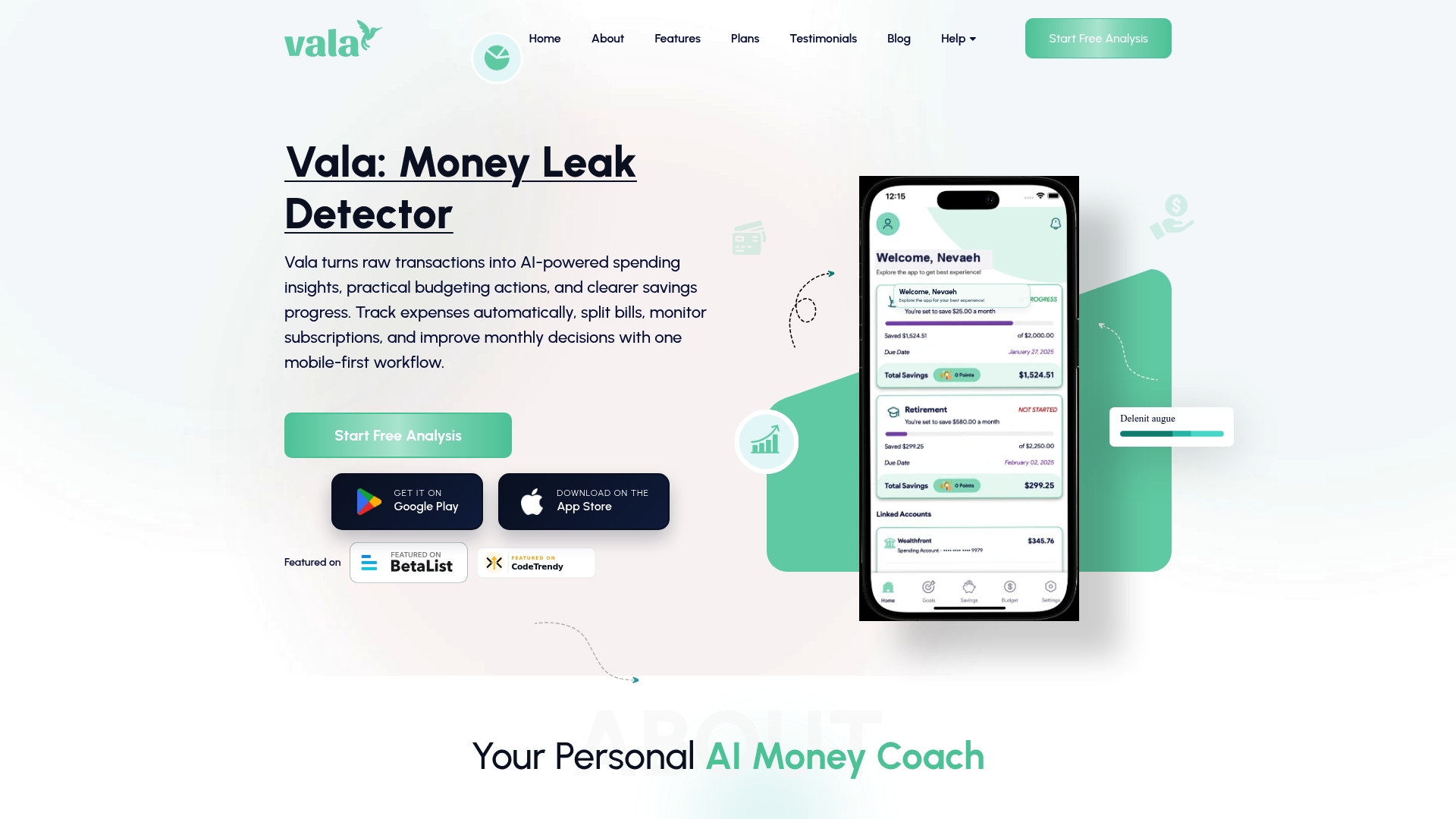
You can run a Money Leak Check to see where your money goes, or try the free Money Leak Calculator for a quick estimate. When you want the full set of tools, such as bill reminders, cash flow planning and shared expense splitting, SaverLite is $2.99 per month. See the plans on the Vala homepage.
FAQ
What is a good percentage for a fun money budget?
There is no single answer. The CFPB presents 30% of net income for all wants as one rule, and says to pick a rule that fits your situation. Fun money is only part of that 30%, so many people give it a smaller share. If your bills or debt payments are heavy, start smaller and raise it as your costs fall.
Should fun money come out before or after bills?
After bills, but on the same day you get paid. Cover the bills due before your next paycheck, then move your fun money into its own account straight away. That way it is protected from rent and utilities, and the rest of your pay is protected from fun.
What if my bills are due before payday?
Try calling the company to ask for a new due date. It is not guaranteed, but some will agree, according to the CFPB. If they will not, set aside money from your earlier paycheck or pay the bill early when you have the funds. A bill calendar makes the gaps easy to spot.
Does fun money include subscriptions?
Usually yes. Streaming, apps and similar memberships are wants, and the CFPB lists them among entertainment spending. Include them in your fun budget, or in the wants total that your fun money comes from. Review them every month, because they are the easiest spending to forget.
How do I keep group costs from blowing my fun money?
Set a cap before you commit, track everything in one shared place and settle up fast. For trips, a shared pot or itemized split often works better than splitting every bill equally on the spot.
Sources
- CFPB: Analyzing budgets
- CFPB: Budgeting for needs and wants
- CFPB: Spending tracker tool
- CFPB: Creating a monthly household budget
- CFPB: Request a change in your bill due date
- CFPB: Cash flow budget
- consumer.gov: Making a Budget
- Experian: How Much Should You Budget for Discretionary Spending?