
Discretionary spending is the money you spend on nonessential wants: dining out, streaming subscriptions, hobbies, travel, and gifts. It’s the flexible slice of your budget you can adjust when priorities shift. The bottom line: track these expenses separately from your fixed bills, set a clear limit (many people use the 50/30/20 rule as a starting point, aiming for around 30% of take-home pay), and let an app automate the categorizing and alerts so you’re not doing it by hand.
Key Takeaways
Discretionary spending is the flexible, nonessential part of your budget, and tracking it separately with a clear percentage target is the fastest way to protect your savings and goals.
| Point | Details |
|---|---|
| Definition matters | Discretionary spending covers wants like dining out, subscriptions, and travel, not fixed essentials. |
| Use a benchmark | Many budgets target around 30% of take-home pay for discretionary spending, per the 50/30/20 rule. |
| Calculate monthly | Subtract non-discretionary costs from take-home pay to find your discretionary income and spending rate. |
| Cut in priority order | Start with quick wins like unused subscriptions before making structural changes. |
| Automate with Vala | Vala’s category tracking, subscription scanner, and shared budgets simplify measuring and reducing this spending. |
Table of Contents
- What Counts as Discretionary vs. Non-Discretionary Spending?
- Why Tracking Discretionary Spending Protects Your Financial Goals
- Is This Purchase a Need, a Want, or a Gray Area?
- What Percentage of Your Budget Should Be Discretionary?
- How to Calculate Your Own Discretionary Spending Percentage
- Practical Tactics to Manage and Reduce Discretionary Spending
- Which App Features Actually Help You Control Discretionary Spending?
- A Practical Mindset for Managing Wants Without Giving Up What Matters
- Try Vala to Automate Your Discretionary Tracking
- Sources
What Counts as Discretionary vs. Non-Discretionary Spending?
Discretionary spending covers the wants that make life enjoyable but aren’t required to keep your household running:
- Dining out and takeout
- Streaming and subscription services
- Travel and vacations
- Hobby purchases and entertainment
- Gifts
Non-discretionary spending, on the other hand, includes rent or mortgage payments, utilities, insurance premiums, basic groceries, and minimum debt payments.
Some purchases sit in a gray zone. Premium groceries, clothing upgrades, and elective health or convenience services can go either way depending on your situation. Ask yourself whether the “premium” version is a want layered on top of a need.
If you’re splitting costs with a partner or roommates, classify group dinners and entertainment as shared discretionary spending, but keep household supplies (cleaning products, toiletries) in the non-discretionary bucket. Mixing the two makes it hard to see where the real flexibility is.
Why Tracking Discretionary Spending Protects Your Financial Goals
When you track this category closely, you see faster savings progress, quicker debt payoff, and a stronger emergency buffer. Cash flow toward specific goals, like a house down payment or a vacation fund, improves almost immediately because you know exactly how much room you have each month.

Discretionary spending is usually the first place to cut when income drops, essential costs rise, or a savings goal is falling behind schedule. It’s the one category you control almost entirely, unlike rent or insurance.
Rule of thumb: many budgeting frameworks peg discretionary spending at around 30% of take-home pay. If you’re consistently well above that, it’s worth a closer look, not necessarily a full overhaul.
- Clearer visibility into savings progress
- Faster debt payoff when you redirect even a small percentage
- A stronger cushion for emergencies
- Better cash flow toward specific goals like travel or a down payment
Is This Purchase a Need, a Want, or a Gray Area?
Before you spend, run the purchase through three quick buckets:
- Need (non-discretionary): Skipping it would disrupt your household or hurt your credit, like rent or a minimum loan payment.
- Want (discretionary): It’s enjoyable but optional, like a concert ticket or a new video game.
- Grey area: Decide based on frequency and impact, like a gym membership you use daily versus one that’s collecting dust.
Ask yourself:
- Will skipping this cause real harm to your household or credit?
- Is it recurring and avoidable, like a subscription you forgot about?
- Does it actually align with your current priorities and goals?
A daily coffee run is discretionary. A gym membership you use four times a week supports a health goal and might earn a pass. A streaming service you haven’t opened in two months is an easy cut.
What Percentage of Your Budget Should Be Discretionary?
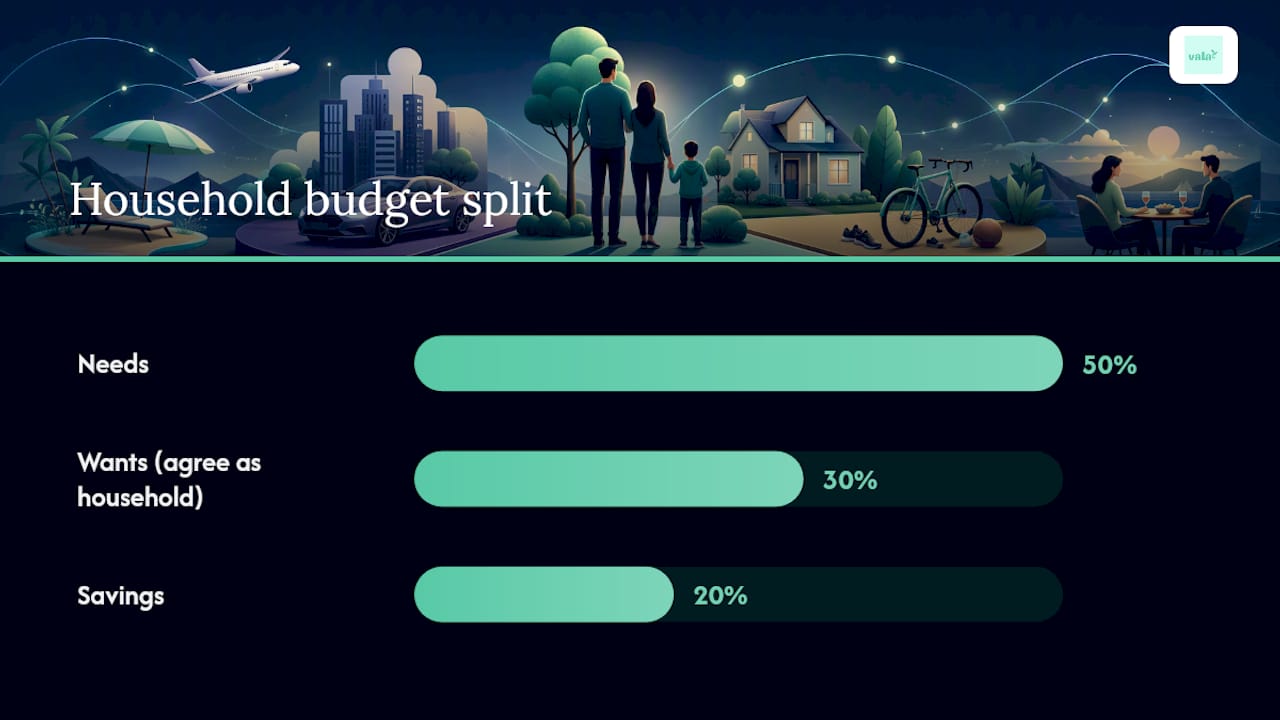
The most common reference point is the 50/30/20 rule: 50% of take-home pay to needs, 30% to wants, and 20% to savings or debt payoff. That 30% figure is where most people anchor their discretionary target, though it’s a guideline, not a legal ceiling.
Other frameworks work better for different priorities. The 50/15/5 rule shifts more toward retirement savings. Zero-based budgeting assigns every dollar a specific job, including a dedicated discretionary line, which forces more intentional tracking than a percentage-based rule ever will.
- 50/30/20: simple, broad guideline for most single earners
- 50/15/5: better fit if retirement savings is the priority
- Zero-based budgeting: most precise, works well for couples who want full agreement on every category
| Approach | Discretionary Target | Best For |
|---|---|---|
| 50/30/20 rule | a commonly cited share of take-home pay | Simplicity, single earners |
| 50/15/5 rule | Lower, savings-heavy | Retirement-focused savers |
| Zero-based budgeting | Set manually per dollar | Couples or groups wanting full control |
Couples and small groups combining incomes should agree on one shared percentage upfront rather than assuming everyone’s comfortable with the same number. As SoFi notes, these rules work best as anchors you adjust to your own household, not fixed limits.
How to Calculate Your Own Discretionary Spending Percentage
Here’s a simple five-step method you can run this month:
- Pick a period. Use one full month for a realistic picture.
- Total your take-home pay. Use the actual amount that lands in your account after taxes.
- List and subtract non-discretionary expenses. Add up rent, utilities, insurance, groceries, and minimum debt payments, then subtract that total from take-home pay.
- What’s left is your discretionary income, the money available for wants once essentials are covered.
- Calculate your discretionary spending percentage. Divide what you actually spent on wants by your total take-home pay, then compare it to the 30% benchmark.
Example: Say your take-home pay is $4,000 a month. Non-discretionary expenses (rent, utilities, insurance, groceries, minimum debt payments) total $2,600. That leaves $1,400 in discretionary income. If you spent $1,300 on dining out, streaming, and hobbies, your discretionary spending rate is 32.5% of take-home pay, slightly above the common 30% guideline.
Pro Tip: Group every small recurring charge, streaming, apps, memberships, into one line item before you calculate. These charges are easy to undercount individually but add up fast when totaled together.
Practical Tactics to Manage and Reduce Discretionary Spending
Start with quick wins, then layer in bigger changes. You don’t need to cut everything you enjoy, just the waste.
Quick wins (this week):
- Cancel subscriptions you haven’t used in 30 days
- Add a 24 hour cool-down period before any non-essential purchase over $50
Medium-term adjustments (this month):
- Set a weekly cap on restaurant spending
- Swap one paid entertainment option for a free alternative, like a library streaming service instead of a paid one
Structural changes (ongoing):
- Open a separate account for discretionary or “fun money” so it’s never mixed with bill money
- Build a sinking fund for irregular but expected costs like holiday gifts or annual trips
Small behavioral changes work well here: a cool-down rule, a written purchase list before you shop, or a shared “fun money” account for couples all reduce impulse spending without eliminating enjoyment. If you’re managing money with a partner or group, agree on check-ins, a quick weekly text about spending keeps expectations aligned without turning into a monthly confrontation.
Automation removes the willpower problem entirely. Set category rules so dining out is capped automatically, turn on spending alerts when you hit 80% of a limit, and use round-up savings to redirect spare change toward a goal instead of your checking account.
Pro Tip: A daily small purchase like coffee can add up noticeably over a month. Brewing at home a few days a week can save a meaningful amount relative to that., redirect that toward your discretionary savings goal without giving up your daily habit entirely.
Which App Features Actually Help You Control Discretionary Spending?
The right features map directly to the steps above. Look for:
- Automated transaction categorization so dining, subscriptions, and entertainment sort themselves without manual entry
- Custom categories and rules so you can set your own definition of “discretionary” for your household
- Alerts and spending limits that flag you before you go over budget, not after
- A subscription scanner that surfaces forgotten recurring charges, often the fastest source of savings since people consistently undercount these
- Shared or group budgets so couples and roommates can agree on one discretionary number instead of guessing
- Savings goals tied directly to whatever you cut from discretionary categories
- Secure, read-only bank linking with bank-level encryption, so tracking never means giving up control of your accounts
A category-based view of your spending often reveals totals that surprise people, subscriptions and small daily purchases rarely feel like much individually but add up fast once they’re grouped. Vala’s approach centers on exactly this: automated categorization, a subscription scanner for quick wins, and shared budgets built for couples and small groups splitting costs.
A Practical Mindset for Managing Wants Without Giving Up What Matters
The most sustainable approach isn’t cutting everything, it’s running small experiments. Try a 30-day subscription audit or a spending watch on one category. Track it, make two changes, then reassess next month.
Try this: Track dining out for 30 days, cut one meal a week, then reassess whether you missed it.
Try Vala to Automate Your Discretionary Tracking
Manually sorting receipts into “want” and “need” columns gets old fast, and it’s easy to lose track of small recurring charges until they’ve quietly eaten your budget. Vala handles that sorting automatically, so you see your real discretionary percentage without spreadsheets.

Three things to do first inside the app:
- Connect your account with secure, read-only access
- Run a subscription scan to catch forgotten recurring charges
- Set a monthly discretionary limit based on your own numbers
Your data stays protected with bank-level encryption, and read-only access means Vala can never move money on your behalf. If you’re ready to see your actual discretionary spending percentage this month, start with the Vala personal finance app and set your first category limit today.
Sources
- What Is Discretionary Spending? – Experian
- What Is a Discretionary Expense? – SoFi
- Discretionary expense definition – Investopedia
Read more: Expense Tracking Best Practices and Cutting Monthly Expenses.