
For most people who pay their card in full every month, the best default is to autopay the statement balance. If you tend to carry a balance, autopay the minimum as a safety net and pair it with an active paydown plan. Either way, keep variable, trial, or disputed charges off unattended autopay and watch them with alerts instead.
TL;DR:
- Paying the statement balance autopay keeps interest at zero and preserves your grace period if you pay in full each month.
- Autopaying the minimum covers your credit history but does not prevent interest or lower reported utilization, which affects your credit score.
- Setting a pre-close payment before the statement date reduces reported utilization but adds operational complexity and risks insufficient funds.
- Monitoring alerts and tracking tools help detect failed payments, overdrafts, and unrecognized charges, minimizing common autopay risks.
- Confirm your autopay setup by checking dates, funding options, and posting confirmation to avoid surprises and ensure reliable payments.
Table of Contents
- Which autopay option should you choose?
- How credit card billing timing actually works
- Common autopay risks and how to avoid them
- How to set up autopay without surprises
- Advanced autopay tactics for utilization and interest
- Keeping autopay safe with alerts and tracking tools
- A practitioner’s honest take on autopay
- Let Vala help you watch autopay and catch money leaks
- FAQ
- Sources
Which autopay option should you choose?
Every issuer offers a few autopay modes, and picking the wrong one can quietly cost you money or protection. Here’s what each one actually does.
Statement balance autopay pays off everything shown on your last statement. If you pay in full each cycle, this keeps your grace period intact and you avoid interest entirely. It’s the simplest “set it and forget it” option for people who don’t carry debt.
Minimum payment autopay only covers the smallest amount due. This protects your payment history, which makes up 35% of a FICO Score, but it does nothing for your grace period or your interest charges. Treat it as a backstop, never a strategy on its own.
Current balance autopay pays whatever you owe as of the payment date, which can differ from your statement balance if you’ve made new purchases. This works well if you want your balance at or near zero constantly, but it can also pull more than you expect if spending spikes.
Fixed amount autopay sends the same dollar figure every cycle regardless of what you owe. This suits people on irregular income who want predictable outflows, but it risks leaving a balance (and interest) if your spending creeps above that number.
Use this quick checklist to match your situation to a mode:
- Pay in full every month: autopay the statement balance.
- Carrying a balance you’re paying down: autopay the minimum, then add manual or scheduled extra payments.
- Unpredictable income: autopay a fixed amount you know you can always cover, then true up the rest manually.
- Multiple small subscriptions on the card: autopay the statement balance so nothing slips through, but review the statement before it closes.
How credit card billing timing actually works
Autopay only works well when you understand the three dates that control it: when your statement closes, when your payment is due, and when your issuer reports your balance to the credit bureaus.
- Statement closing date: this is the snapshot date. Whatever balance you’re carrying at closing typically becomes the number reported to the bureaus and the figure most “statement balance” autopay rules use.
- Payment due date: under CFPB guidance, a payment is generally not late if it’s received by 5 p.m. on the due date in the time zone your statement uses, and the due date is typically at least three weeks after the bill is sent. Weekends and holidays push the deadline to the next business day, so confirm your issuer’s exact cutoff.
- Bureau reporting date: most issuers report your balance around the statement closing date, not the due date. That gap matters: a large purchase made right before closing shows up as high utilization even if you pay it off in full two weeks later.
Paying full in full by the due date generally preserves your grace period and keeps interest at zero, according to CFPB guidance on grace periods. But if you want lower reported utilization, paying before the statement closes, rather than waiting for the due date, is the lever that actually moves the number lenders see.
Common autopay risks and how to avoid them
Autopay removes the risk of forgetting a payment, but it introduces new risks of its own, mostly tied to timing and funding.
Overdraft and returned payments top the list. The FDIC warns that recurring debits can trigger overdraft or non-sufficient funds fees, especially when processing timing is unpredictable and a payment lands before your paycheck does. Keep a cushion in your checking account, and consider a backup funding source for your largest recurring bill.
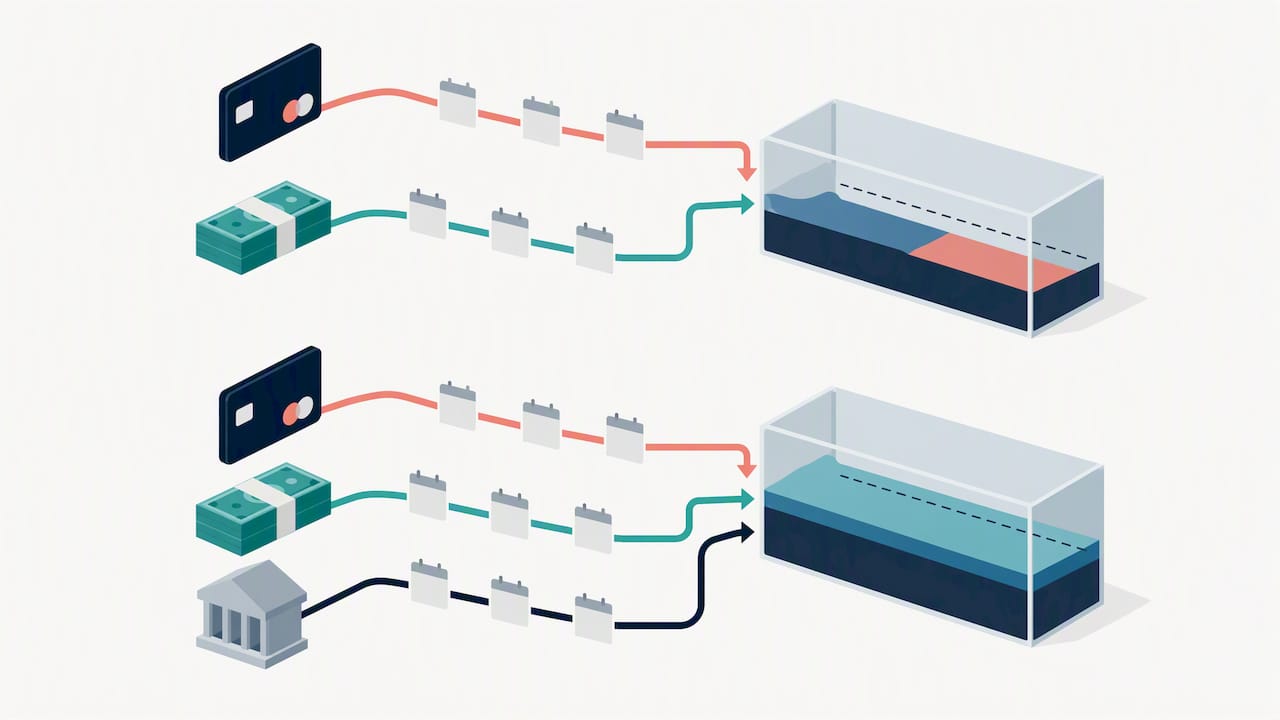
Enrollment failures happen more often than people expect. A confirmation screen is not proof the pull actually went through. Check your transaction history the cycle after you enable autopay to confirm the debit posted, and verify your issuer’s cutoff time so your payment counts as on time under CFPB rules.
Subscription and negative-option traps are a different risk class entirely. The FTC’s guidance on auto-renewals notes that free trials and negative-option subscriptions often continue billing after you think you’ve canceled, since they require active authorization to stop.
To stay protected:
- Save every cancellation confirmation email or screenshot.
- Check your statement line by line each month for charges you don’t recognize.
- Dispute unauthorized or continued charges with your issuer as soon as you spot them.
- Never auto-renew a trial without a calendar reminder a few days before it converts.
Pro Tip: Set a recurring reminder a few days before your statement closes to scan for one-off charges or renewed trials, since that’s the window where surprises are easiest to catch.
How to set up autopay without surprises
Setting up autopay correctly takes about ten minutes, but skipping the verification steps is where most problems start.
- Find your statement closing date and due date in your issuer’s app or online account, and note their stated cutoff time for same-day processing.
- Confirm your payment method options. Some issuers only pull from a linked bank account; others accept debit cards or external transfers, which can affect how fast the payment settles.
- Choose your autopay amount (statement balance, minimum, current balance, or fixed amount) based on whether you pay in full or carry a balance.
- Select your funding account and make sure it has enough buffer to cover the payment even if your schedule shifts by a day or two.
- Submit enrollment and save the confirmation, but don’t treat it as final. Confirmation pages reflect your request, not a guaranteed successful debit.
- Watch your first autopay cycle closely. Check your bank account on the scheduled date to confirm the debit actually posted, and check your card account to confirm the payment applied.
- If a payment fails, contact your issuer immediately, ask about a late-fee waiver (many will grant one for a first-time autopay glitch), and dispute the fee in writing if you believe the failure was on their end rather than yours.
Advanced autopay tactics for utilization and interest
Once your baseline autopay is reliable, a few adjustments can shave down both your reported utilization and your interest costs.
Splitting payments across paydays lowers your average daily balance between statement cycles. Instead of one large payment on the due date, sending two smaller payments, one right after each paycheck, keeps your balance lower for more of the month, which matters since issuers typically calculate interest using a daily periodic rate, as CFPB explains.
Pre-close payments target the specific snapshot your issuer reports to the bureaus. Paying down your balance a few days before the statement closes, rather than waiting for the due date, lowers what’s reported as your utilization, which carries real weight since amounts owed make up 30% of a FICO Score.
- Set a scheduled extra payment two or three days before your statement closes if you want lower reported utilization.
- Keep your due-date autopay as the safety net even if you add pre-close payments.
- Avoid stacking too many manual payments on top of autopay. Every extra transaction is another chance for a timing mismatch or a failed pull.
- Never let a pre-close payment push your checking account into a spot where your due-date autopay might bounce.
The trade-off is operational complexity. Every additional scheduled payment is another point where a funding gap or a bank glitch can cause a missed debit, so weigh the utilization benefit against how closely you’re able to monitor your accounts.
Keeping autopay safe with alerts and tracking tools
Autopay works best when it’s paired with monitoring, not left completely unattended. A few account alerts do most of the heavy lifting.
- Low-balance alerts on your checking account give you a warning before a scheduled debit risks an overdraft.
- Transaction alerts notify you the moment a payment posts, so you catch failures or duplicate charges fast.
- Statement-created alerts flag the exact day your balance snapshot locks in, which is your cue for any last pre-close payment.
Beyond bank alerts, a subscription tracker that flags upcoming renewals helps catch negative-option charges before they hit, and general budgeting and expense-tracking apps give you a fuller view of pending transactions and account buffers so a scheduled payment never catches you off guard. For anyone managing several recurring bills at once, a roundup of free financial wellness tools is a useful starting point if you’re not ready to commit to a paid app.
Some apps build subscription tracking and recurring-charge detection into AI-driven insights, which can help surface charges you’ve forgotten about before they renew on autopay.
A practitioner’s honest take on autopay
Autopay fails for one of three reasons: wrong funding timing, no buffer in checking, or a subscription nobody’s watching. Fix those three and autopay becomes nearly bulletproof. My rule of thumb: automate the bill, never automate the subscription, and always keep a week’s worth of spending as a cushion in checking.
— SaverStride
Let Vala help you watch autopay and catch money leaks
Setting up a reliable autopay strategy handles the “don’t miss a payment” problem. Catching the subscriptions, trials, and forgotten charges that ride along on that same statement is a separate job, and it’s one we built Vala around.
Our Money Leak Check scans your spending for recurring charges you may have missed, the same subscriptions and negative-option renewals that cause the most unwelcome autopay surprises. Beyond that scan, Vala gives you:
- Automated tracking of recurring charges and subscription renewals.
- Real-time alerts when a new or unusual charge shows up.
- Budget views that connect your autopay bills to your overall spending picture.
- A paid plan for deeper AI-driven insights and shared expense tools with current prices available on the pricing page.
If you’ve ever wondered what’s quietly draining your account between statements, our Money Leak Check is a free place to start.
FAQ
Is it a good idea to set up autopay for credit cards?
Yes, for most people, since it protects your payment history, which is the largest factor in your FICO Score. The key is choosing the right autopay amount for your situation and keeping a buffer in your checking account to avoid overdrafts.
What bills should you not put on autopay?
Avoid unattended autopay for variable charges, free trials, and anything you’re actively disputing. The FTC warns that negative-option subscriptions often continue billing unless you actively cancel, so these need manual review rather than a set-it-and-forget-it payment.
What is the best autopay option for a credit card?
If you pay your card in full every month, autopay the statement balance to preserve your grace period and avoid interest. If you carry a balance, autopay the minimum as a safety net and add a separate paydown plan on top of it.
What is the downside of autopay?
The main downsides are overdraft risk if your funding account runs low, and the chance that a subscription or trial keeps charging because nobody’s watching it closely. The FDIC notes that processing timing on recurring debits can create unexpected fees even when you think you have enough funds available.
Sources
- What is a grace period for a credit card? | Consumer Financial Protection Bureau
- Overdraft and account fees | FDIC
- Getting in and out of free trials, auto-renewals, and negative option subscriptions | FTC