Real-time financial planning is bank-connected, AI-enabled money management that updates your budget and savings goals the moment you spend, not weeks later. It works by syncing live transaction data from your accounts, then using AI to categorize purchases, flag waste, and adjust your plan automatically. For individuals, couples, and roommates, that means live budgets, automatic expense tracking, easy cost splitting, and savings that build themselves. Vala is built to deliver exactly that, starting today.
TL;DR:
- Live multi-account sync and real-time transaction updates prevent budgeting blind spots and reflect pending charges on your dashboard instantly.
- Tokenized, API-based bank connections ensure safer data access and faster onboarding, with easy disconnection options and transparent data controls.
- Automated categorization and leak detection help identify forgotten subscriptions and creeping fees, reducing manual review and error propagation.
- Setting up involves simple steps: linking accounts, initial categorization, defining one or two savings goals, and scheduling a review within two weeks for fine-tuning.
- Vala offers key features like automatic expense splitting, savings automation, and AI-driven insights tailored for households managing money together.
Table of Contents
- How Real-Time Financial Planning Actually Works
- What Features Actually Matter in a Real-Time Budgeting App
- Is It Safe to Connect Your Bank to a Budgeting App?
- How Do You Set Up Live Financial Planning?
- Why Vala Fits This Exact Need
- What Real Households Get Wrong About Live Budgeting
- Ready to See Your Money Move in Real Time?
- Sources
How Real-Time Financial Planning Actually Works
Your money app doesn’t magically know your balance. It connects to your bank through one of two methods, and the difference matters more than most people realize.
The old method, screen scraping, logs into your bank using your actual username and password, then reads the page like a robot. The newer method uses tokenized, API based connections. You authenticate once, the bank issues a secure token, and the app never touches your password again. Plaid describes this consent-based flow as the standard for modern account linking, and it’s why disconnecting an app is now usually a single tap instead of a password reset.
Once connected, here’s what your app actually reads and does:
- Transactions and balances, refreshed continuously rather than on a daily batch schedule
- Pending charges, so your budget reflects money that’s about to leave your account
- Categorization, where AI sorts each purchase and learns your specific habits over time
- Anomaly detection, flagging duplicate subscriptions or unusual charges before they drain your account
- Forecasting, projecting your balance forward based on recurring bills and spending patterns
Aggregators like Stripe’s Financial Connections now cover thousands of institutions with hosted linking screens, which is part of why onboarding takes minutes instead of days. Behind the scenes, the industry is shifting from scraping toward tokenized APIs under frameworks like FDX, with the CFPB pushing for more standardized data access. That shift benefits you directly: fewer broken connections, faster updates, and less exposure of your actual login credentials.
What Features Actually Matter in a Real-Time Budgeting App
Not every “real-time” app delivers the same value. Here’s what to check before you commit to one:
- Live multi-account sync. Your checking, savings, and credit cards should update from one dashboard without manual refreshing.
- Dynamic budget categories. Your budget should adjust as you spend, not just show you a static number you blew past on day 12.
- Automatic categorization with leak detection. The app should flag forgotten subscriptions and creeping fees on its own.
- Group and shared-expense tools. Separate logins, shared dashboards, and split-expense tracking matter enormously for couples managing money together.
- Automated savings rules. Look for goal-based triggers, like rounding up purchases or auto-transferring a set amount weekly.
- Alerts and short-term forecasts. You want a heads-up before you overdraft, not a receipt after.
- Transparent pricing for multiple users. Some apps charge per seat; know that before you invite your partner or roommates.
Pro Tip: Test the categorization accuracy in your first week before trusting any AI insight. If it’s miscategorizing your coffee runs as “utilities,” fix the rule immediately, because that error will compound across every forecast the app generates.
Is It Safe to Connect Your Bank to a Budgeting App?
Yes, if the app uses the right connection method. Tokenized, OAuth-style flows are far safer than typing your bank password directly into a third-party app, because the app never sees or stores your actual credentials.
Before you connect anything, check for a few specific things:
- Clear settings for data retention, deletion, and permission revocation
- Multi-factor authentication (MFA) on both your bank and the app itself
- A visible list of connected accounts you can disconnect individually
One tradeoff worth knowing: tokenized connections concentrate your data with a handful of aggregators rather than spreading risk across dozens of scraping tools. That’s generally a safer model, but it also means the security practices of that aggregator matter. Plaid’s consumer controls let you manage and delete connections at any time, which is the kind of transparency worth looking for in whichever app you choose.
How Do You Set Up Live Financial Planning?
Getting started takes less time than most people expect. Follow this sequence:
- Decide your setup. Are you using this solo, with a partner, or with roommates? Invite collaborators before you connect accounts.
- Prep your accounts. Enable MFA on your bank login and list every account you want visibility into.
- Connect through the app’s bank-link flow. Confirm your first week of transactions are categorized correctly.
- Set one or two savings goals and a flexible weekly budget rule to start, rather than a dozen rigid categories.
- Schedule a 7 to 14 day review to fine-tune categories and rules once you see real data.
That short review window matters. Your first automated categories are a guess. Real refinement happens once the app has actual spending data to learn from.
Why Vala Fits This Exact Need
Vala was built around the features that matter most in this category: live bank integration, automatic categorization, shared expense splitting, and savings automation that runs in the background.
Here’s how it maps to what you actually need:
- Money-leak detection that catches forgotten subscriptions and fee creep without you digging through statements
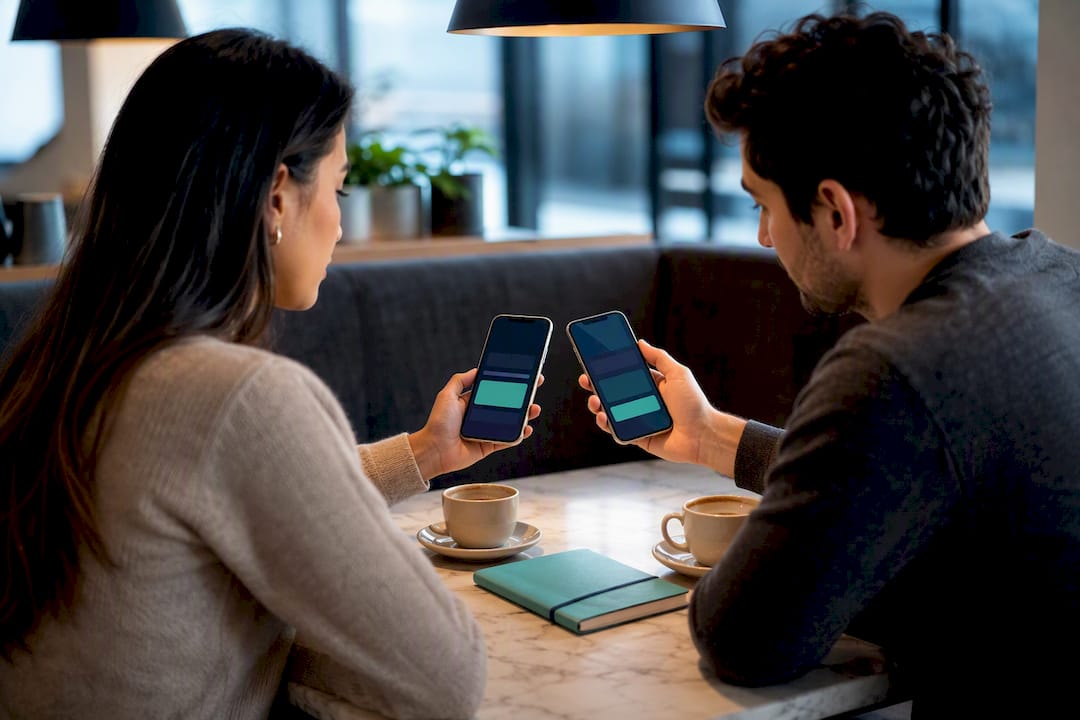
- Shared and group expense splitting, built for couples and roommates who need visibility without micromanaging each other
- Automated savings goals that transfer money based on rules you set once
- AI-driven insights that reduce manual entry, so you’re not spending an hour every Sunday reconciling receipts
You can see the full feature set on Vala’s product page, review budgeting-specific tools, or explore goal tracking features if automated savings is your main priority. If you want a broader look at how AI-driven insights uncover hidden spending patterns, Vala’s blog covers that in more depth.
What Real Households Get Wrong About Live Budgeting
The biggest mistake couples make isn’t picking the wrong app. It’s skipping the setup step where you actually align on categories together. Shared rent and grocery tracking only cuts reconciliation time when both people agree on what counts as a “household” expense versus a personal one from day one.
Automatic subscription detection tends to surprise people the most. Most households find at least one recurring charge they forgot entirely, often a trial that quietly converted to a paid plan months earlier.
Pro Tip: Set a short, recurring review, 10 minutes every other Sunday works well, rather than a monthly deep dive. Small, frequent nudges build habits. A once-a-month reckoning just builds dread.
The tools that succeed long-term aren’t the ones with the most features. They’re the ones that make the five-minute check-in easy enough that you actually do it.
— SaverStride
Ready to See Your Money Move in Real Time?
Vala gives you what a spreadsheet or a once-a-month bank check-in never can: a live view of your money that updates the second you spend, plus the shared-splitting and automated savings tools that generic banking apps skip entirely.
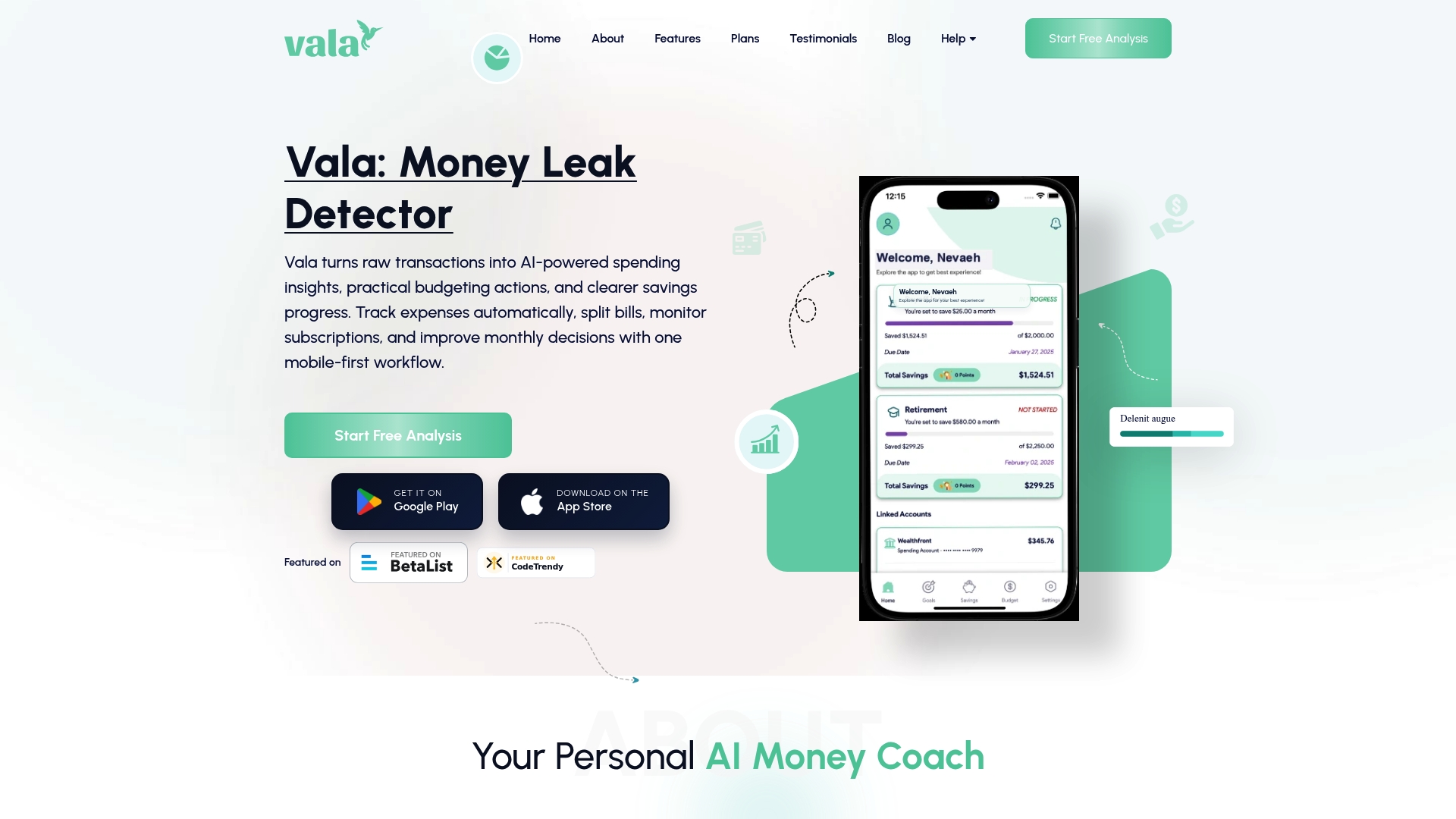
If you’re tired of reconciling shared expenses by hand or watching subscriptions quietly drain your account, Vala’s AI flags those leaks automatically and turns your savings goals into rules that run themselves. Couples get separate logins with shared visibility. Individuals get a categorized, real-time budget without the manual entry. Small groups get split-expense tracking that doesn’t require a group chat full of Venmo requests.
Start with the free plan on Vala’s app page and connect your first account today. You’ll see your categorized spending and your first savings goal set up within minutes, not days.
Sources
- Plaid: How it works for consumers
- Stripe: Bank account linking
- Open banking: How apps actually get your bank data | Dan Holloran
- Best budgeting apps for couples (2026 guide) — The Penny Hoarder