
A spending trigger is any emotional, situational, or environmental cue that prompts you to spend money impulsively or beyond your planned budget. Psychologists classify this behavior under the broader term emotional spending, a well-documented pattern where feelings drive financial decisions rather than need or logic. Understanding what is a spending trigger matters because awareness is the first step toward breaking the cycle. Impulse purchases offer short-lived emotional relief, followed by guilt and financial strain. Recognizing your personal triggers gives you real control over your money.
What causes spending triggers?
Spending triggers have both psychological and environmental roots. Neither is a character flaw. Emotional spending is a physiological response to stress and complex inner experiences, not a sign of weakness or poor character. Psychologist Emma Peterson notes that reducing shame around this behavior actually helps people track and change it more effectively.

The brain’s role in impulse buying
Your brain’s reward system is directly involved every time you feel the urge to buy something unplanned. Anticipating a purchase releases dopamine, the same chemical linked to pleasure and motivation. That anticipatory rush feels good before you even spend a dollar. The problem is that the feeling fades quickly after the purchase, leaving you chasing the next hit.
Present bias, also called hyperbolic discounting, makes this worse. Your brain naturally overvalues immediate rewards and undervalues future consequences. That is why willpower alone rarely stops impulse spending. You are not weak. You are working against a deeply wired cognitive tendency.
How retailers exploit your triggers
Modern retail design is built to lower your resistance. Frictionless checkout tools like one-click purchasing, saved card details, and buy-now-pay-later options reduce the psychological “pain of paying.” When paying feels effortless, spending feels consequence-free. Urgency tactics like countdown timers and “only 3 left” alerts add pressure that bypasses careful thinking.
Common psychological causes of spending triggers include:
- Emotional states: Stress, boredom, loneliness, sadness, and even celebration all activate the urge to spend.
- Cognitive biases: Present bias and justification loops convince you the purchase is logical.
- Retail design: Frictionless payment, limited-time offers, and personalized ads reduce resistance.
- Social pressure: Peer influence, social media feeds, and fear of missing out (FOMO) push unplanned purchases.
Pro Tip: Notice the emotion you feel right before you open a shopping app. Naming the feeling, whether it is boredom or stress, creates a brief pause that can interrupt the impulse.
What are the common types of spending triggers?
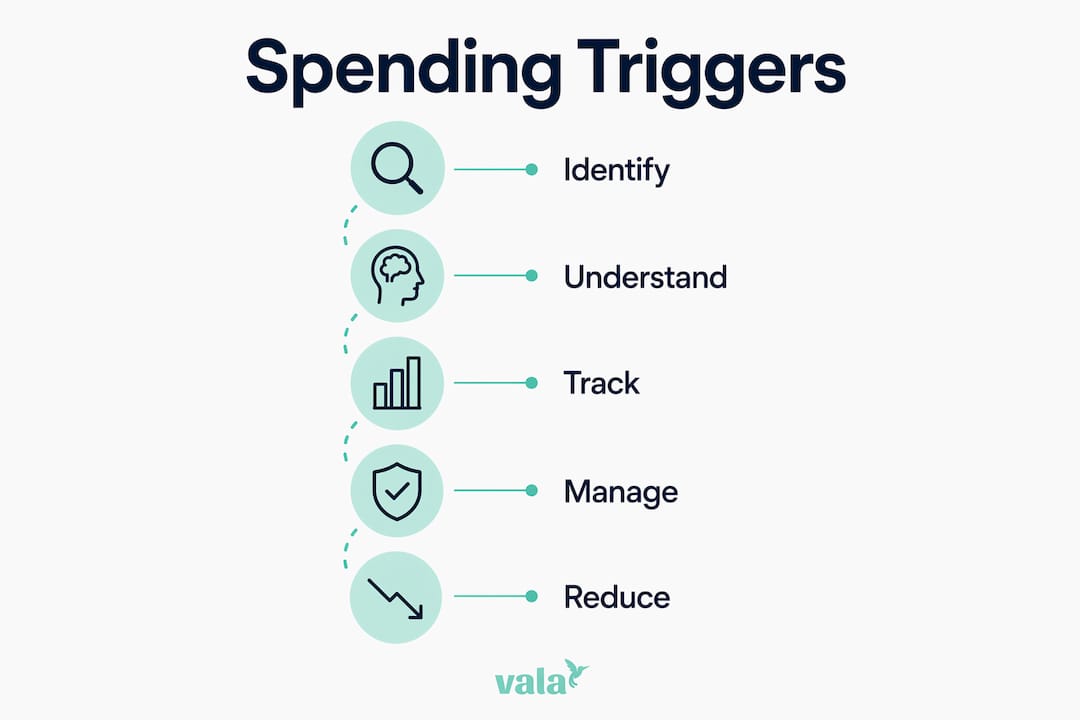
Multiple studies confirm that specific feelings and environmental factors are the most common spending triggers. Recognizing which ones affect you personally is the most practical step you can take.
Four major trigger categories
- Emotional triggers. Sadness, stress, loneliness, boredom, and celebration are the most frequent emotional drivers. Retail therapy is a real phenomenon. Buying something new provides a brief mood lift, but the relief is temporary.
- Social triggers. Seeing a friend’s purchase on Instagram, attending a group outing, or feeling pressure to keep up with peers all qualify. FOMO is a powerful and underestimated financial force.
- Marketing triggers. Flash sales, limited-time discounts, “free shipping over $50” thresholds, and personalized email offers are designed to create urgency. They work because they attach a deadline to your desire.
- Environmental triggers. Location matters. Walking past a coffee shop, browsing a store while bored, or shopping late at night when your judgment is lower all increase vulnerability.
Signs you are in a trigger cycle
Justification loops are one of the clearest signs. You catch yourself thinking “it was on sale,” “I deserve it,” or “I’ll use it eventually.” These mental narratives rationalize the purchase after the emotional impulse has already fired. Another sign is feeling flat or guilty shortly after buying something you were excited about moments earlier.
| Trigger type | Common example | Warning sign |
|---|---|---|
| Emotional | Stress shopping after a hard day | Buying things you don’t need to feel better |
| Social | Purchasing after seeing a friend’s post | Spending to match others, not your own goals |
| Marketing | Buying during a flash sale | Purchasing items not on your list |
| Environmental | Impulse buys while bored or tired | Shopping at night or in low-energy states |
Pro Tip: Track your spending for two weeks and note the time, location, and emotion for each unplanned purchase. Financial experts recommend this two-week journal approach to surface your personal trigger patterns.
How do you manage and reduce spending triggers?
Effective impulse spending management requires environmental changes and behavioral strategies, not willpower alone. The goal is to create distance between the trigger and the purchase decision.
Practical strategies that work
- Add friction deliberately. A 24-hour waiting period before any unplanned purchase over a set amount is one of the most effective tools available. Adding purchasing friction interrupts the impulse cycle and raises your awareness before you spend.
- Remove saved payment methods. Deleting stored card details from shopping sites makes every purchase require a conscious action. That extra 30 seconds is often enough to reconsider.
- Unsubscribe from marketing emails. If you never see the flash sale, you cannot be triggered by it. Reducing your exposure to marketing triggers is a direct environmental fix.
- Build alternative coping habits. If stress is your primary trigger, identify a non-financial response. A short walk, a phone call to a friend, or a 10-minute break can address the emotional need without the financial cost.
- Budget for celebration spending. Pre-planned spending buffers for birthdays, holidays, and milestones remove guilt and reduce the likelihood of overspending. When celebration spending is expected, it stops being impulsive.
Pro Tip: Set a specific “impulse budget” each month, a small, guilt-free amount for unplanned purchases. Knowing you have permission to spend a little removes the all-or-nothing pressure that often leads to bigger splurges.
Tracking emotions alongside expenses
Tracking your spending and emotional state together is more powerful than tracking dollars alone. When you log a purchase and note that you were stressed or bored at the time, patterns emerge quickly. Those patterns tell you which emotions cost you the most money each month.
| Approach | What it addresses |
|---|---|
| 24-hour wait rule | Interrupts impulse at the moment of trigger |
| Remove saved cards | Reduces frictionless checkout vulnerability |
| Spending and emotion journal | Reveals personal trigger patterns over time |
| Alternative coping habits | Meets emotional needs without spending |
| Pre-planned celebration budget | Removes guilt and controls festive overspending |
How does technology help you identify spending triggers?
Apps that log expenses alongside feelings and context provide the clearest picture of your spending triggers. Manual tracking works, but technology makes the process consistent and easier to maintain over time.
What to look for in a finance app
The right app does more than record transactions. It surfaces patterns you would not notice on your own. Key features that support trigger management include:
- Emotion and context logging. The ability to tag a purchase with a mood or situation turns raw data into behavioral insight.
- AI-driven pattern detection. AI analyzes transaction data to flag clusters of impulsive purchases, often tied to specific times, categories, or emotional states.
- Real-time notifications. Instant alerts when you approach a budget limit create a pause point before overspending happens.
- Category breakdowns. Seeing that you spend significantly more on food delivery on Sunday evenings, for example, points directly to a time-based environmental trigger.
- Automated tracking. When logging is automatic, you get a complete picture without relying on memory or discipline.
Combining technology with behavioral techniques produces the best results. An app can show you the pattern. The behavioral strategy tells you what to do about it. Neither works as well without the other.
Key Takeaways
Spending triggers are emotional, situational, and environmental cues that drive impulsive purchases, and managing them requires awareness, environmental changes, and consistent tracking rather than willpower alone.
| Point | Details |
|---|---|
| Definition matters | A spending trigger is any cue, emotional, situational, or environmental, that drives an unplanned purchase. |
| Psychology is the root cause | Present bias and dopamine responses make impulse spending a brain-wiring issue, not a discipline failure. |
| Four trigger types exist | Emotional, social, marketing, and environmental triggers each require a different management strategy. |
| Friction is your best tool | A 24-hour wait rule and removing saved cards interrupt the impulse cycle before money leaves your account. |
| Technology accelerates awareness | Apps that log expenses with emotional context surface trigger patterns faster than manual tracking alone. |
Why spending triggers deserve more respect than they get
Most personal finance advice treats impulse spending as a discipline problem. Pay off debt, stick to your budget, stop buying coffee. That framing misses the point entirely.
Spending triggers are a normal human response to emotional needs. Every person reading this has bought something to feel better, to fit in, or to reward themselves after a hard week. That is not a flaw. It is biology and social conditioning working exactly as designed.
What I have found is that the people who make the most lasting progress with their finances are not the ones with the most willpower. They are the ones who get curious about their own patterns. They ask “why did I buy that?” without judgment, and they use the answer to build a system that works with their behavior, not against it.
The two-week spending journal is genuinely underrated. Most people who try it are surprised by what they find. Not the amounts, but the timing and the feelings attached. That information is worth more than any budgeting rule.
Self-compassion is not soft advice. It is practical. Reducing shame around emotional spending makes it easier to track honestly, which makes it easier to change. Judgment shuts the process down before it starts.
— SaverStride
Valapoint helps you spot the patterns behind your spending
Knowing your triggers is one thing. Seeing them clearly in your own data is another. Valapoint’s personal finance app tracks your expenses automatically, categorizes your spending, and surfaces the patterns that point directly to your financial triggers.
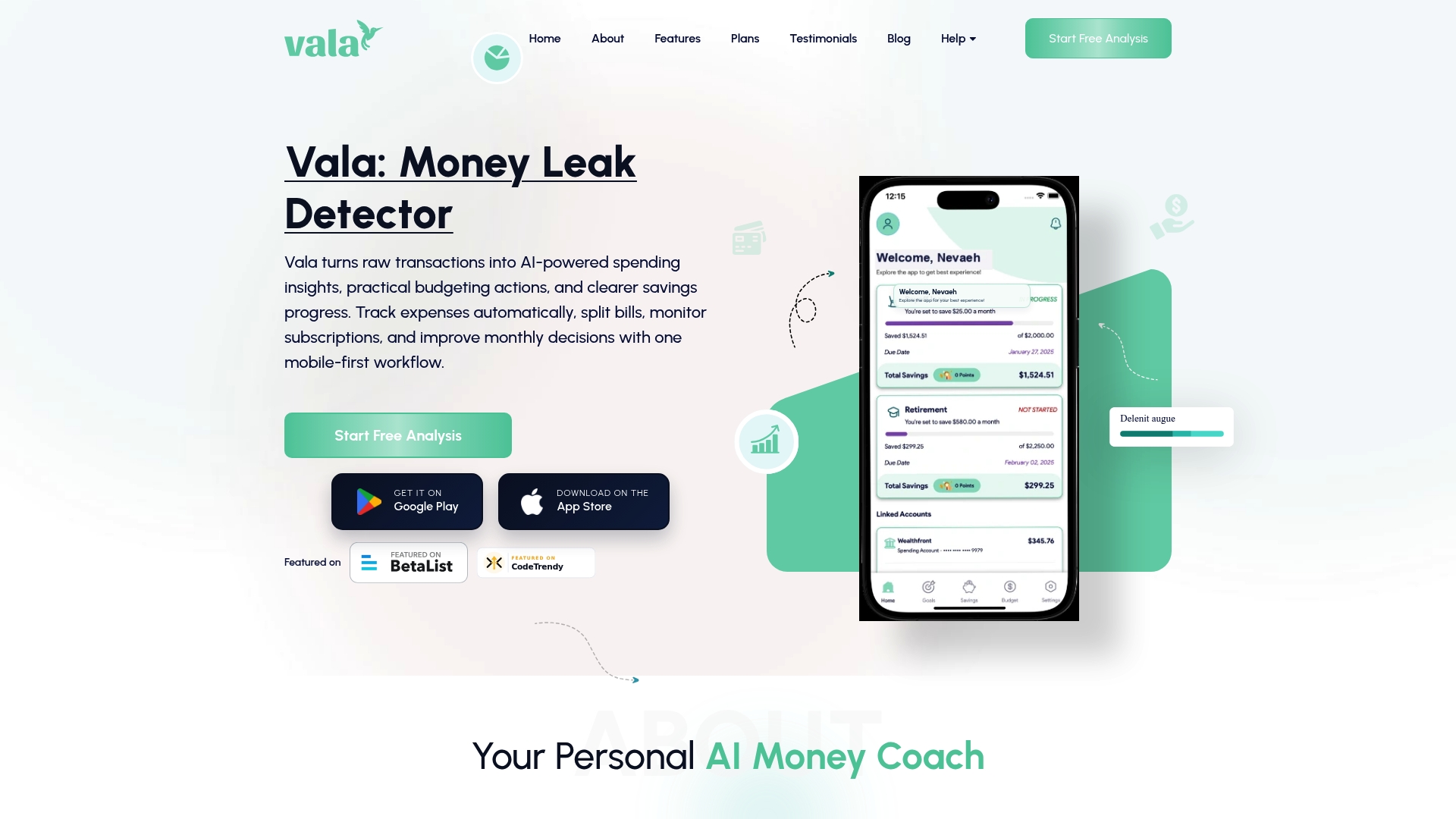
With Valapoint, you can set budgets by category, receive real-time alerts before you overspend, and use the budget goal tracker to stay aligned with your financial goals. The app is built for people who want clarity without complexity. If you are ready to see your spending patterns in full, the Vala personal finance app gives you the tools to track, plan, and save with confidence.
FAQ
What is a spending trigger in simple terms?
A spending trigger is any emotion, situation, or environment that causes you to spend money without planning to. Common examples include stress, boredom, social pressure, and marketing tactics like flash sales.
Are spending triggers the same as impulse buying?
Spending triggers are the cause. Impulse buying is the result. A trigger, such as feeling lonely or seeing a limited-time offer, activates the urge, and an impulse purchase is the action that follows.
How do I identify my personal spending triggers?
Track your spending for two weeks and note the time, location, and emotion for each unplanned purchase. Patterns in that data reveal your specific triggers.
Can spending triggers be positive emotions?
Yes. Celebration, excitement, and reward are common positive triggers. Buying something to mark an achievement or a birthday is still a spending trigger if it leads to unplanned or excessive spending.
Does willpower alone stop impulse spending?
Willpower alone is not enough. Present bias is a cognitive tendency that makes immediate rewards feel more important than future financial goals. Environmental changes, like removing saved cards and adding wait periods, are more reliable than relying on self-control.