
You can stay in budget by tracking every dollar, cutting predictable leaks, automating essentials, and protecting a small emergency fund. Start today with these five steps:
- Track every expense for about a week, even small ones.
- List all fixed and recurring charges (subscriptions, bills, memberships).
- Automate bill payments and a small weekly savings transfer.
- Pause any subscription you haven’t used in the last 30 days.
- Set a realistic weekly spending limit for discretionary categories.
An app like Vala can automate the tracking and alert you the moment a category runs over.
Pro Tip: The fastest single win is canceling one unused subscription today. Most people find at least one within five minutes of checking their bank statement.
Key Takeaways
Staying in budget comes down to three consistent actions: track every dollar, automate what you can, and audit recurring costs at least once a month.
| Point | Details |
|---|---|
| Track before you plan | Pull three months of statements to get honest spending averages before setting category limits. |
| Automate savings first | Move your savings amount out of checking on payday so you spend only what remains. |
| Audit recurring costs monthly | A 15-minute bank statement review typically uncovers at least one forgotten charge to cancel. |
| Build a recovery plan | Use a 30/90/180-day checkpoint sequence to stabilize, adjust, and rebuild after a shortfall. |
| Use Valapoint’s Vala app | Vala automates categorization, detects recurring charges, and alerts you before a category runs over. |
Table of Contents
- Why staying on budget actually changes your financial life
- How to create a budget you can actually stick to
- Practical tactics that keep you inside your budget daily
- How to audit and cut recurring costs that drain your budget
- Which tools and templates help you stay on track automatically
- What to do when you still come up short
- Why the automation-first approach works for real people
- Vala makes it easier to stay on budget from day one
- Sources
Why staying on budget actually changes your financial life
A budget isn’t a restriction. It’s a clear picture of where your money goes, and that picture is what lets you stop overdraft fees, build savings, and make real progress toward goals.
FDIC’s Money Smart resources reinforce that auditing your accounts regularly and understanding your cash flow are the foundational steps to protecting your balance and avoiding unnecessary fees. Small, consistent daily savings also add up faster than most people expect. Fidelity notes that saving $5 to $14 a day accumulates materially over a year, which makes even modest habit changes worth starting now.
Key stat: Saving a small amount daily adds up to a few thousand dollars over the course of a year, without any change to your income.
Following the steps in this guide gives you a working monthly budget, a set of habits to keep you inside it, and a clear path back when you fall short.
How to create a budget you can actually stick to
The simplest method that works for most people is a three-step sequence: capture what comes in, list what goes out, and assign every dollar a job before the month starts.
Step-by-step budget setup
- Capture your net income. Write down every income source after taxes: salary, freelance, side income, benefits. Use your lowest recent month if income varies.
- List fixed expenses. Rent or mortgage, car payment, insurance premiums, loan minimums. These don’t change month to month.
- List variable expenses. Groceries, gas, dining out, entertainment, clothing. Pull three months of bank statements to get honest averages.
- Categorize and set limits. Group expenses into buckets: housing, transportation, food, personal, savings, debt. Assign a realistic dollar limit to each.
- Allocate for goals and your emergency fund. Treat savings as a fixed expense. Even $25 a week toward an emergency fund builds a buffer over time.
- Add irregular and seasonal expenses. Annual subscriptions, car registration, holiday gifts, back-to-school costs. Divide the annual total by 12 and add that amount as a monthly line item.
- Schedule a monthly review. Block 20 minutes at the end of each month to compare what you planned against what you actually spent.
Fidelity’s financial planning framework recommends starting with a cash-flow analysis and using percentage-based targets to allocate income across essentials, extras, and savings. That said, the right split depends on your income and cost of living, so treat any framework as a starting point, not a rule.
Budgeting frameworks at a glance
| Framework | Best for | Complexity | Control level |
|---|---|---|---|
| Percent-based (e.g., 50/30/20) | Most people starting out | Low | Moderate |
| Zero-based budgeting | Detail-oriented planners | Medium | High |
| Envelope/cash method | Discretionary overspenders | Low | High |
A simple monthly template to recreate:
- Income: Total net monthly income
- Fixed expenses: Rent, insurance, loan payments
- Variable expenses: Groceries, gas, dining, personal care
- Savings and emergency fund: Weekly or monthly transfer amount
- Goals: Vacation fund, debt payoff, down payment
- Irregular/seasonal: Monthly reserve for annual costs
Starting conservative gives you room to breathe without feeling like you failed.*
Practical tactics that keep you inside your budget daily
The most effective single habit is automating your essentials and building friction into discretionary spending. When the right money moves happen without you thinking about it, you’re protected from the moments when willpower runs low.
Automate the basics
Set up auto-pay for every fixed bill. Then automate a small transfer to savings on payday, even if it’s $10. Behavioral research from the SSA’s Choose Work program confirms that keeping your budget accessible and planning purchases in advance are two of the most reliable everyday tactics for staying on track.
Pay yourself first: move your savings amount out of your checking account before you spend anything else. What’s left is your spending money for the month. This one shift removes the temptation to “save what’s left over,” which rarely works.
Build friction for discretionary spending
Remove saved card details from shopping sites. Use a separate card or cash envelope for categories like dining and entertainment, and stop when it’s gone. For any purchase over $50, apply a 24-hour cooling-off period before buying. AARP’s expense-cutting guidance points out that gym memberships, brand-name groceries, and in-store impulse buys are among the most common budget drains, and simple behavioral shifts like shopping with a list cut those costs without much effort.

Meal planning and grocery batching
Plan your meals for the week before you shop. A weekly meal plan typically cuts both food waste and impulse purchases at the register. The USDA’s ShopSimple tool helps you build lower-cost grocery lists around what’s already on sale or in season. Batch cooking on weekends also reduces the temptation to order delivery on busy weeknights, which is one of the most common places variable food budgets blow up.

One overlooked cost is convenience. A cheaper grocery store across town might cost you more overall once you factor in gas and time. The true cost of convenience is worth calculating before assuming the “cheaper” option saves money.
Pro Tip: Split your paycheck mentally across pay cycles. If you’re paid biweekly, assign half your monthly fixed bills to each paycheck. This prevents the common trap of spending freely after payday and scrambling before the next one.
How to audit and cut recurring costs that drain your budget
Recurring costs are the most common budget leak, and they’re usually the easiest to fix. Most people are paying for at least one service they’ve forgotten about.
Your recurring cost audit checklist
- Subscriptions: List every streaming service, software subscription, news site, and app with a recurring charge.
- Bank fees: Check for monthly maintenance fees, ATM fees, and overdraft charges.
- Phone and internet: Compare your current plan against current offers from your provider and competitors.
- Insurance: Auto, renters, and health insurance premiums can often be reduced by adjusting coverage or shopping for new quotes annually.
- Memberships: Gym, warehouse clubs, professional associations. Ask when you last used each one.
- Extended warranties and protection plans: Often auto-renew and go unnoticed.
The CFPB’s cutting-expenses tool provides a household-level checklist for identifying and reducing these exact costs, and it also walks you through checking eligibility for assistance programs that can reduce essential bills. Fidelity’s expense-cutting guidance adds negotiating service plans and canceling unused subscriptions as high-return, low-effort moves.
Worth knowing: Unused subscriptions are one of the most frequently cited sources of budget leakage. A 15-minute audit of your last two bank statements is usually enough to find at least one charge you’d forgotten.
Audit action steps
| Audit step | Who to contact | Expected outcome |
|---|---|---|
| Cancel unused subscriptions | App or website directly | Immediate monthly savings |
| Negotiate phone/internet plan | Call provider’s retention line | Lower rate or added features |
| Request fee waiver on bank account | Your bank’s customer service | Reduced or eliminated monthly fee |
| Get new insurance quotes | Comparison site or broker | Potential premium reduction |
| Check assistance program eligibility | Benefits.gov or CFPB tool | Reduced utility or healthcare costs |
Which tools and templates help you stay on track automatically
Automation and timely alerts cut the friction of staying on budget. When your app flags an overage before you’ve spent the full category, you can course-correct in real time instead of discovering the problem at month’s end.
A simple weekly and monthly template
Weekly check (10 minutes):
- Review transactions from the past 7 days.
- Flag any uncategorized or unexpected charges.
- Check remaining balance in your highest-risk variable categories (dining, entertainment, personal care).
Monthly review (20 minutes):
- Compare actual spending to your planned limits in each category.
- Adjust next month’s limits based on what you learned.
- Confirm your emergency buffer transferred and your savings goal is on track.
Manual vs. app vs. hybrid: what works for whom
| Approach | Best for | Key trade-off |
|---|---|---|
| Manual (spreadsheet) | Detail-oriented, privacy-focused | High control, high time cost |
| App with bank link | Busy people who want automation | Low effort, requires bank connection |
| Hybrid (app + manual review) | Most people | Balances automation with awareness |
The features that matter most in any budgeting app: automatic transaction categorization, recurring charge detection, category alerts, goal-tracking buckets, and bank account integration. Free budgeting tools are a good starting point if you want to test the habit before committing to a paid plan.
What Valapoint’s Vala app provides
- Auto-categorization: Every transaction is sorted automatically, so you’re not manually tagging purchases.
- Recurring subscription detection: Vala surfaces charges that repeat monthly so you can review and cancel what you don’t need.
- Real-time alerts: Get notified when a category is approaching its limit, before you go over.
- Goal-tracking buckets: Assign money to specific goals (emergency fund, vacation, debt payoff) and watch progress update automatically.
- Shared expense splitting: Useful for couples or roommates managing a joint budget. See the couples budgeting guide for how this works in practice.
Pro Tip: Enable two automations first: transaction alerts for your top variable category and a recurring-charge detection review once a month. Those two alone catch the majority of budget surprises.
What to do when you still come up short
Coming up short doesn’t mean the budget failed. It means you have new information. Here’s how to respond quickly.
Immediate triage steps
- Pause all discretionary spending for the remainder of the pay period. Dining out, entertainment, and non-essential shopping stop first.
- Cover essentials first. Rent, utilities, groceries, and minimum debt payments take priority over everything else.
- Contact creditors early if you can’t cover a minimum payment. Many lenders offer hardship programs or short-term deferrals when you call before missing a payment.
- Reduce variable expenses fast. Swap a restaurant meal for a home-cooked one. Delay a non-urgent purchase by one pay cycle.
- Tap your emergency buffer if you have one, and plan to replenish it over the next 1–3 months.
- Check for short-term income options. A few hours of gig work, selling unused items, or picking up an extra shift can close a small gap without touching savings.
Recovery timeline
- Days 1–30: Stabilize. Cover essentials, pause discretionary spending, and identify the specific category that caused the shortfall.
- Days 31–90: Adjust. Revise the budget category that broke down. If it was food, try meal planning. If it was an unexpected bill, add a monthly reserve for that category.
- Days 91–180: Rebuild. Replenish any emergency fund you tapped. Confirm the adjusted budget held for two full months before calling it fixed.
For hardship assistance with utilities, food, or healthcare costs, Benefits.gov and the CFPB’s cutting-expenses tool both list eligibility-check resources. The overdraft prediction guide on the Valapoint blog also walks through how to spot a shortfall before payday so you can act before a fee hits.
Why the automation-first approach works for real people
Most budgeting advice fails not because the math is wrong, but because it assumes you’ll remember to check your budget every day. You won’t. Life gets busy, and the gap between intention and action is where budgets collapse.
The approach in this guide is built around reducing that gap. Automating savings and bill payments removes the decisions that are easiest to skip. Building friction into discretionary spending slows down the purchases that feel harmless in the moment but add up fast. And scheduling a short weekly check keeps you aware without making budgeting feel like a second job.
The America Saves resource center reinforces this: small, realistic goals paired with accountability tend to stick far better than ambitious overhauls. A budget you check for 10 minutes a week is more effective than a perfect spreadsheet you abandon after two months.
Habit formation takes time. Most people need 6–8 weeks of consistent tracking before the new behavior feels automatic. The first month is the hardest. After that, the patterns become familiar and the mental load drops significantly.
Vala makes it easier to stay on budget from day one
Knowing what to do and actually doing it consistently are two different things. Vala closes that gap by handling the tracking, alerts, and subscription reviews automatically, so you spend less time managing your budget and more time benefiting from it.
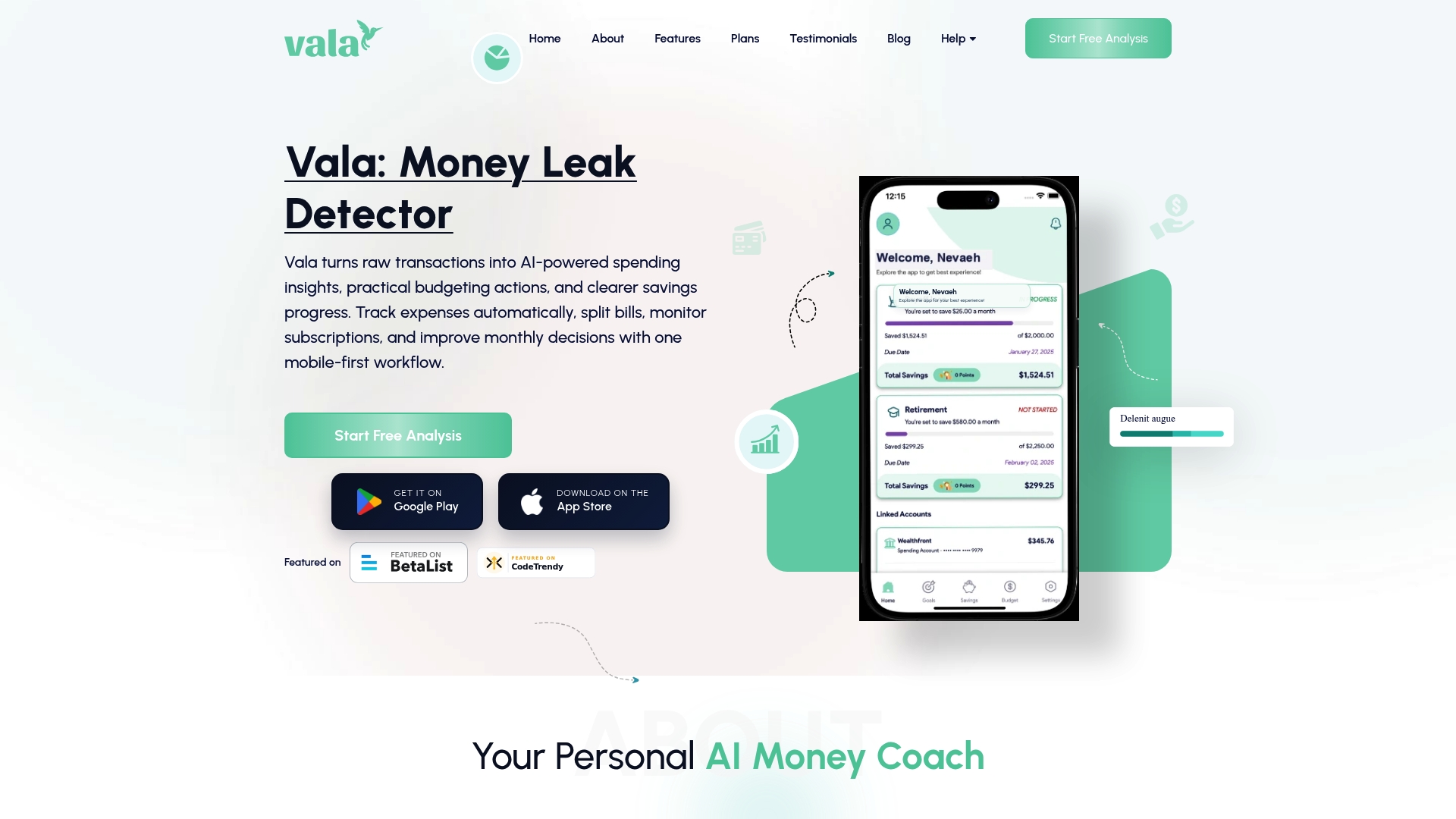
With Vala, you get real-time transaction categorization, recurring charge detection, and category alerts that fire before you overspend, not after. The goal-tracking feature lets you assign money to your emergency fund, a debt payoff target, or a savings goal and watch it grow with every paycheck. Couples and roommates can split shared expenses without the awkward math. The free tier covers core tracking; the premium subscription unlocks AI-driven spending insights, advanced subscription management, and full bank integration.
Start with the free plan on the Vala personal finance app and run your first subscription audit today. You can also explore personal finance tools and calculators to map your budget before you connect an account.
Sources
These official and research-backed resources support the guidance in this article. Each one offers free tools, checklists, or stepwise guidance you can use alongside your budget.
- Cutting expenses | CFPB
- How to cut expenses | AARP
- 5 Tips on How to Stick to Your Budget
- Money Smart | FDIC
These sources were selected for their official standing, practical checklists, and research-backed guidance, making them reliable references for anyone building or refining a personal budget.
This article is general information, not a substitute for advice from a qualified financial advisor. Consult a qualified financial professional about your own circumstances before acting on anything here.