
A practical household budget always includes income, fixed expenses, variable expenses, debt repayment, savings, sinking funds for irregular bills, and a discretionary category. As Dollar Professor explains, every budget ultimately boils down to three core parts: income, expenses, and savings. The components of a budget work together in a simple flow: your net income comes in, predictable obligations get covered first, savings and debt payments follow, and whatever remains funds your everyday wants.
Here’s a quick look at what belongs in every budget:
- Income (take-home pay, side gigs, benefits)
- Fixed expenses (rent, insurance, loan payments, subscriptions)
- Variable expenses (groceries, utilities, gas, entertainment)
- Debt repayment (minimums plus any extra payments)
- Savings (emergency fund and goal-based accounts)
- Sinking funds (car registration, annual bills, home repairs)
- Discretionary money (fun spending, personal allowance)
Key Takeaways
A complete household budget covers seven components: income, fixed expenses, variable expenses, debt repayment, savings, sinking funds, and discretionary spending. Every dollar should have a clear assignment before the month begins.
| Point | Details |
|---|---|
| Start with net income | Use take-home pay, not gross, as your monthly baseline to avoid overspending from day one. |
| Emergency fund target | Aim for 3–6 months of living expenses in a liquid account before funding other goals. |
| Convert irregular bills | Divide any annual cost by 12 and contribute that amount monthly as a sinking fund. |
| Review monthly, adjust often | Compare actuals to your plan each month and revise allocations to stop recurring leaks. |
| Valapoint tracks it all | Vala maps each component into automated workflows: categorization, sinking funds, bill reminders, and subscription audits. |
Table of Contents
- 1. What counts as income in your budget?
- 2. Fixed expenses: the obligations you cover first
- 3. Variable expenses: where your budget flexibility lives
- 4. Debt and debt repayment: minimums first, then strategy
- 5. Savings: emergency funds and goal-based accounts
- 6. Sinking funds: planning for the bills that don’t come monthly
- 7. Discretionary money: why “fun” spending belongs in your budget
- 8. How to categorize, track, and keep your budget working
- 9. A simple monthly budget example you can use right now
- 10. How budgeting apps map these components into real workflows
- The part of budgeting most guides skip
- Vala helps you put every component to work
- Sources
1. What counts as income in your budget?
Your budget starts with one number: your net income. That’s your take-home pay after taxes, Social Security, Medicare, and any employer deductions like health insurance or a 401(k) contribution. Using gross income instead of net is one of the most common budgeting mistakes, and it leads to overspending from day one.
Net income includes more than your paycheck. Count every regular source: salary, hourly wages, freelance or side gig earnings, rental income, alimony, child support, and any government benefits you receive. Each source needs its own line so you can see your true monthly baseline.
Irregular income is trickier. If your pay varies by season or project, use a conservative floor: average your three lowest recent months and budget from that number. Any income above the floor becomes a bonus you can direct toward savings or debt. This approach keeps your core budget stable even when your earnings fluctuate.
Pro Tip: Set your income floor before allocating anything to discretionary spending or long-term savings. If your floor is $3,200 and you earn $3,800 this month, the extra $600 goes toward a goal, not lifestyle creep.
2. Fixed expenses: the obligations you cover first
Fixed expenses are the costs that stay the same every month regardless of what you do. Rent or mortgage, car payments, student loans, insurance premiums, and recurring subscriptions all fall here. Because these amounts don’t change, they’re the easiest to plan for and the first allocation after your net income lands.
Common fixed expenses include:
- Rent or mortgage payment
- Renter’s or homeowner’s insurance
- Car loan or lease payment
- Auto insurance
- Health, dental, and vision insurance (if not payroll-deducted)
- Minimum loan payments
- Streaming, software, or membership subscriptions
Find the exact amounts from your most recent statements or bank history. For bills paid annually or quarterly, divide the total by 12 to get a monthly equivalent. A $720 annual car registration becomes $60 per month in your budget, even if you only write the check once a year.
Pro Tip: Set autopay for every fixed expense that allows it. Then use a bill-reminder feature in your budgeting app to flag anything that isn’t automated. Missed payments cost you in late fees and can hurt your credit score.
3. Variable expenses: where your budget flexibility lives
Variable expenses shift month to month. Groceries, utilities, gas, dining out, clothing, and entertainment all belong here. Unlike fixed costs, you have real control over these numbers, which makes them the fastest place to find savings when you need to cut.
Before setting any limits, track what you actually spend. Pull three months of bank and credit card statements and average each category. That gap is where the opportunity lives.
Tracking tactics that work:
- Check your spending totals weekly, not just at month-end
- Use consistent category names so transactions don’t drift between buckets
- Flag any subscription charges that appear in variable spending (they may belong in fixed)
For a deeper look at how to identify and manage these costs, Valapoint’s guide to variable expenses walks through common categories and practical reduction strategies.
Pro Tip: Run a subscription audit every quarter. Recurring charges under $15 are easy to forget, but three or four of them add up to a meaningful monthly drain.
The Federal Reserve Education’s budgeting lesson draws a useful distinction: fixed expenses stay constant, variable expenses fluctuate, and irregular costs (like annual bills) should be converted into monthly sinking-fund contributions. That framework keeps all three types manageable.
4. Debt and debt repayment: minimums first, then strategy
Every debt in your household needs a line in your budget. Start by covering the minimum payment on every account, every month. Missing a minimum triggers late fees, damages your credit score, and can trigger penalty interest rates. Minimums are non-negotiable.
Once minimums are covered, you can apply extra money to accelerate payoff. Two strategies dominate:
- Debt snowball: Pay minimums on all accounts, then throw extra money at the smallest balance first. When that’s paid off, roll its payment to the next smallest. The psychological win of eliminating accounts keeps motivation high.
- Debt avalanche: Pay minimums on all accounts, then direct extra money to the highest-interest balance first. This approach saves the most in total interest over time.
| Debt Snowball | Debt Avalanche | |
|---|---|---|
| Speed to first payoff | Faster (smallest balance) | Slower (highest rate first) |
| Total interest paid | Higher | Lower |
| Psychological benefit | Strong (quick wins) | Moderate |
| Best for | Motivation-driven payers | Math-driven payers |
Steps to set up your debt repayment plan:
- List every balance, interest rate, and minimum payment
- Confirm all minimums fit within your monthly budget
- Choose snowball or avalanche based on your personality
- Automate the minimum payments; manually direct any extra funds
5. Savings: emergency funds and goal-based accounts
Savings belong in your budget as a fixed line, not as “whatever’s left over.” Pay yourself first by transferring to savings the same day your paycheck arrives.
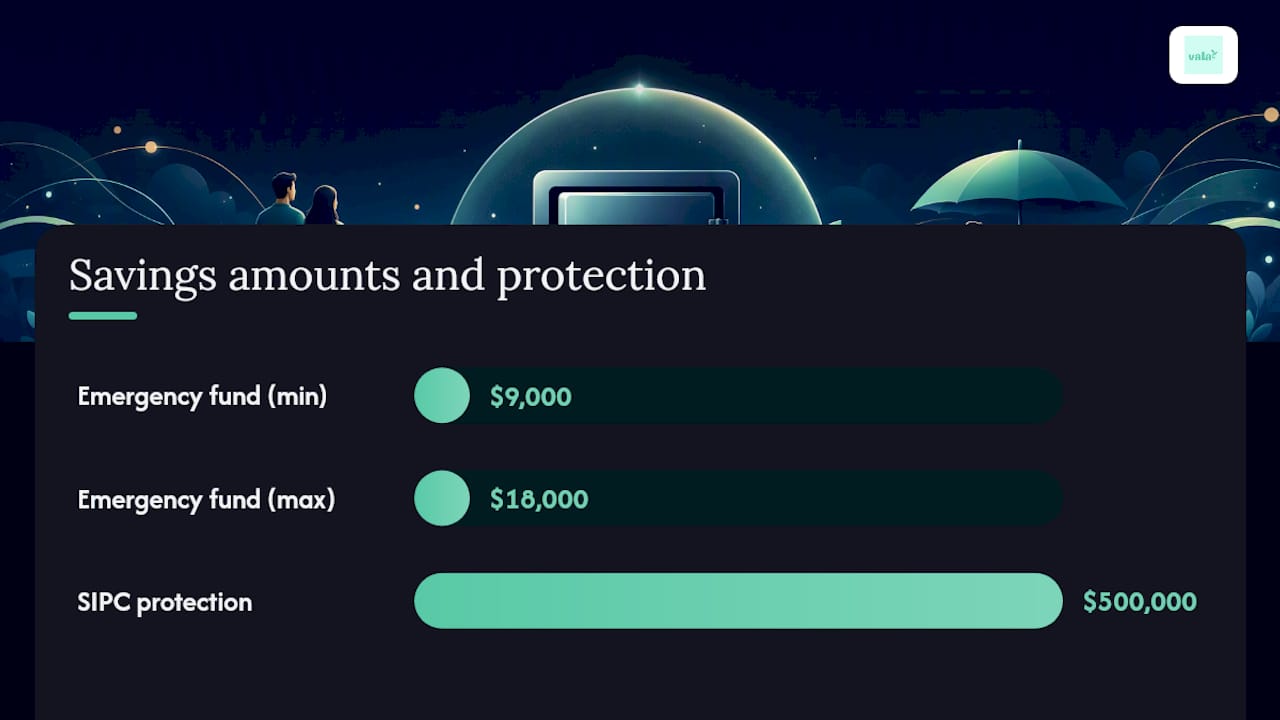
Your first savings priority is an emergency fund. Standard guidance targets a sufficient emergency fund to cover several months of typical living expenses held in a liquid, accessible account. If your monthly expenses run $3,000, that means $9,000–$18,000 set aside before you focus heavily on other goals. Raisin’s budgeting guide confirms this range as the standard household benchmark, alongside frameworks like 50/30/20 and zero-based budgeting as practical starting structures.
Beyond the emergency fund, goal-based saving works best in separate buckets:
- Short-term goals (under 12 months): vacation, new appliance, holiday gifts
- Medium-term goals (1–5 years): down payment, car replacement, home renovation
- Long-term goals (5+ years): retirement, college funding, financial independence
For retirement accounts held in brokerage or IRA structures, SIPC provides protection on eligible securities up to $500,000 if a member firm fails. That’s worth knowing as your long-term savings grow.
Pro Tip: Open a separate high-yield savings account for each major goal and automate a transfer on payday. When the money moves before you see it, you stop treating it as available to spend.
6. Sinking funds: planning for the bills that don’t come monthly
A sinking fund is a dedicated savings pool for a predictable but irregular expense. You contribute a fixed amount each month so the money is ready when the bill arrives. No scrambling, no credit card, no raiding the emergency fund.
Common sinking fund categories:
- Vehicle registration and tags
- Annual insurance premiums (if paid in a lump sum)
- Holiday and gift spending
- Home maintenance and repairs
- Medical or dental out-of-pocket costs
- Back-to-school supplies
The math is simple. Take the annual cost and divide by 12. A $600 car insurance renewal means $50 per month into a sinking fund. A $1,200 holiday budget means $100 per month starting in January.
Steps to build your sinking funds:
- List every irregular expense you can predict over the next 12 months
- Estimate the annual cost for each
- Divide each by 12 to get the monthly contribution
- Open a labeled savings bucket or sub-account for each
- Automate the monthly transfer
The Federal Reserve Education lesson on budgeting specifically recommends converting annual irregular costs into monthly amounts to prevent shortfalls. Sinking funds do exactly that, and they protect your emergency savings from being spent on predictable costs.
7. Discretionary money: why “fun” spending belongs in your budget
Discretionary spending is everything you want but don’t strictly need: dining out, hobbies, entertainment, personal care beyond basics, and impulse purchases. Leaving it out of your budget doesn’t make it disappear. It just makes it invisible, which is how budgets fail.

Giving discretionary spending its own category does two things. First, it sets a clear limit so you know when to stop. Second, it removes the guilt from spending within that limit. Both outcomes improve long-term adherence.
That’s a guideline, not a rule. If your fixed expenses are high or you’re aggressively paying down debt, your discretionary percentage will be lower.
Pro Tip: Give discretionary spending its own account or app category and treat it as a weekly allowance. Once it’s gone, it’s gone. Spending from a capped bucket feels very different from spending from a general checking account with no visible limit.
8. How to categorize, track, and keep your budget working
A budget you set up once and never revisit stops working within weeks. Consumer treating budgeting as an iterative process: monitor spending regularly, compare actuals to your plan each month, and revise allocations to stop recurring leaks.
Your monthly budget routine:
- Confirm your net income for the month (or use your conservative floor)
- Subtract all fixed expenses to see what remains
- Fund each sinking fund contribution
- Allocate variable expense budgets by category
- Confirm savings and debt repayment contributions
- Assign the remainder to discretionary spending
For categorization, consistent naming matters. Valapoint’s spending category guide explains how clear category definitions reduce “drift,” where transactions end up in the wrong bucket and distort your picture of where money is going. Pick a category name and stick with it across every transaction.
Weekly habits that keep the budget on track:
- Spend five minutes reviewing new transactions and confirming categories
- Flag anything that looks miscategorized and correct it immediately
- Check variable category totals against your monthly limits
Pro Tip: Schedule a recurring monthly budget review on the same date each month, ideally a day or two after your last paycheck of the month. Treat it like a standing appointment. Fifteen minutes of review prevents weeks of drift.
9. A simple monthly budget example you can use right now
Here’s a realistic one-month sample for a household with $4,500 in monthly net income. The numbers are illustrative, but the proportions reflect common household allocations.
This is a zero-based budget: every dollar has a job, and the total allocated equals net income. If income varies in a given month, adjust the discretionary and extra debt payment lines first before touching savings or fixed obligations.
For a ready-to-use template, Valapoint’s free budgeting tools include worksheets and starter templates that match this structure.
10. How budgeting apps map these components into real workflows
Understanding the components of a budget is step one. Automating them is what makes the system stick. A good budgeting app handles the mechanical work so your monthly routine takes minutes instead of hours.
Here’s how a typical app workflow maps to the components above:
- Link your accounts so transactions import automatically and get categorized in real time
- Set recurring transfers for sinking funds and savings goals so contributions happen on payday without manual action
- Automate minimum debt payments through your bank or lender, then track the confirmation in the app
- Schedule monthly review reminders so you never skip the reconciliation step
Security is a reasonable concern when linking bank accounts. Reputable apps use read-only connections through established aggregators, meaning the app can see your transactions but cannot move money without your explicit action. Look for apps that use bank-level encryption and clearly state their data practices.
Valapoint’s Vala app maps directly to these workflows. Budget templates align with the component structure above, automatic sinking-fund tracking keeps irregular contributions visible, and a subscription audit feature surfaces recurring charges you may have forgotten. The Principles of Accounting overview of master budgets notes that linking budget elements electronically and testing assumptions is what separates a functional budget from a static spreadsheet. An app does that linking automatically.
Pro Tip: Turn on spending alerts for your variable categories.
The part of budgeting most guides skip
Most budgeting articles focus on the mechanics: list your income, subtract your expenses, save the rest. That’s accurate, but it misses the behavioral side entirely.
The components of a budget aren’t just accounting categories. They’re a decision framework. When you automate a $75 monthly transfer to a holiday sinking fund in January, you’re not just saving money. You’re removing a future decision under pressure. December arrives and the money is already there. No credit card, no stress, no regret.
The same logic applies to discretionary spending. Giving “fun money” its own category isn’t a concession to weakness. It’s a design choice that makes the rest of the budget more durable. People who allow zero discretionary spending tend to abandon their budgets entirely after one bad week. People who budget for wants alongside needs tend to stay consistent for months.
The real shift happens when you stop treating a budget as a restriction and start treating it as a plan you built on purpose. The components don’t limit you. They tell you exactly how much freedom you have in each area, which is a very different feeling.
Vala helps you put every component to work
Vala gives you a clear, connected view of every budget component in one place: income tracking, automatic expense categorization, sinking-fund management, bill reminders, and a subscription audit that surfaces charges you’ve stopped noticing.
You don’t need to build the system from scratch. Vala’s budget templates follow the same component structure outlined in this guide, and automated transfers handle sinking funds and savings goals on payday. The result is a budget that runs with minimal friction and a monthly review that takes fifteen minutes instead of an hour.
Start with the Vala personal finance app to connect your accounts, set up your component categories, and see where your money actually goes.
Sources
- MPFD Lesson 5A: Making a Budget—It Is All Spending!
- Consumer
- Important Components of Budgeting: A Complete Guide | Raisin
- Principles of Accounting — Components of a master budget
- The Three Parts of Every Budget: Income, Expenses and Savings – Dollar Professor
This article is general information, not a substitute for advice from a qualified financial advisor. Consult a qualified financial professional about your own circumstances before acting on anything here.