
If you see a duplicate charge, check whether the second entry is a pending hold or an actual posted charge, then call the merchant and your card issuer right away. For credit cards, federal rules treat being billed twice as a billing error, and you have 60 days from the statement date to send a written dispute. Debit cards follow different, faster-moving rules, especially if fraud is involved.
TL;DR:
- Most duplicate charges are caused by merchant retries, billing errors, or refund postings, not intentional fraud, and comparing posting dates helps identify genuine issues.
- Disputing a credit card billing error must be done in writing within 60 days of the statement showing the error, with investigations completed within 90 days.
- For debit card errors, liability depends on how quickly you report, with a $50 cap if reported within two business days and potentially unlimited liability if delayed.
- Acting promptly and documenting evidence with screenshots and receipts significantly increases the chances of resolving disputes quickly.
- Using monitoring tools can automate detection of duplicate charges and subscriptions, helping you catch errors before they escalate.
Table of Contents
- Quick checklist: 6 things to do now
- Why duplicate charges happen
- Step-by-step dispute process for credit cards
- Duplicate debits and suspected fraud: different rules and faster actions
- If the issuer won’t fix it: escalation steps and complaint channels
- How to detect duplicates faster and prevent them
- Author perspective: why acting fast wins disputes
- How Vala helps find duplicate charges and simplify recovery
- FAQ
- Sources
Quick checklist: 6 things to do now
Speed protects your rights and your money. Work through these steps as soon as you spot a charge that looks off:
- Check your account for pending versus posted entries and screenshot both along with your receipt.
- Call the merchant, ask for a reversal, and write down the representative’s name, the date, and any confirmation number.
- Contact your card issuer the same day and ask for the billing-inquiries address you will need for written notice.
- If the charge looks unauthorized, lock or replace your card and watch for more suspicious activity.
- Send a written dispute for credit-card billing errors within 60 days of the statement that first showed the error.
- Start a dispute file: dates, names, screenshots, and confirmation numbers all in one place.
Pro Tip: Take a screenshot the moment you spot the issue. Pending charges can disappear from your banking app within a day or two, taking your evidence with them.
Why duplicate charges happen
Not every double entry is a mistake. A pending authorization hold often shows up alongside the final posted charge, especially at gas stations, hotels, and restaurants that estimate a tip. The hold usually drops off within a few days once the real charge posts.
Actual duplicate charges tend to come from a smaller set of causes:
- A payment terminal times out, the merchant retries the transaction, and both attempts go through.
- A merchant submits the same batch of transactions twice by mistake, an issue explained with practical reconciliation workflows in Stripe Payment Reconciliation for Finance Teams.
- A subscription service bills you on the wrong cycle or charges you after a failed renewal attempt also succeeded.
- A refund posts as a separate line instead of reversing the original charge, making it look like you were charged twice.
Small timing gaps and slightly different merchant descriptors can make two charges look unrelated when they are actually the same transaction, or look identical when they are not. Comparing the posting dates and transaction status before you escalate saves you a dispute you did not need to file. When two confirmed posted charges hit for the same amount, same merchant, and nearly the same time, that pattern points to either a merchant processing error or, less often, a compromised card.
Step-by-step dispute process for credit cards
A duplicate charge on a credit card is a billing error under the Fair Credit Billing Act, which gives you real leverage: you do not have to prove fraud, only that you were billed for something you did not authorize twice. That protection is why acting through the proper channel matters more than just complaining to customer service.
Your written dispute should include:
- Your name and account number.
- The exact dollar amount and date of the duplicate charge.
- A short, clear explanation of what happened.
- Copies of receipts, screenshots, or order confirmations.
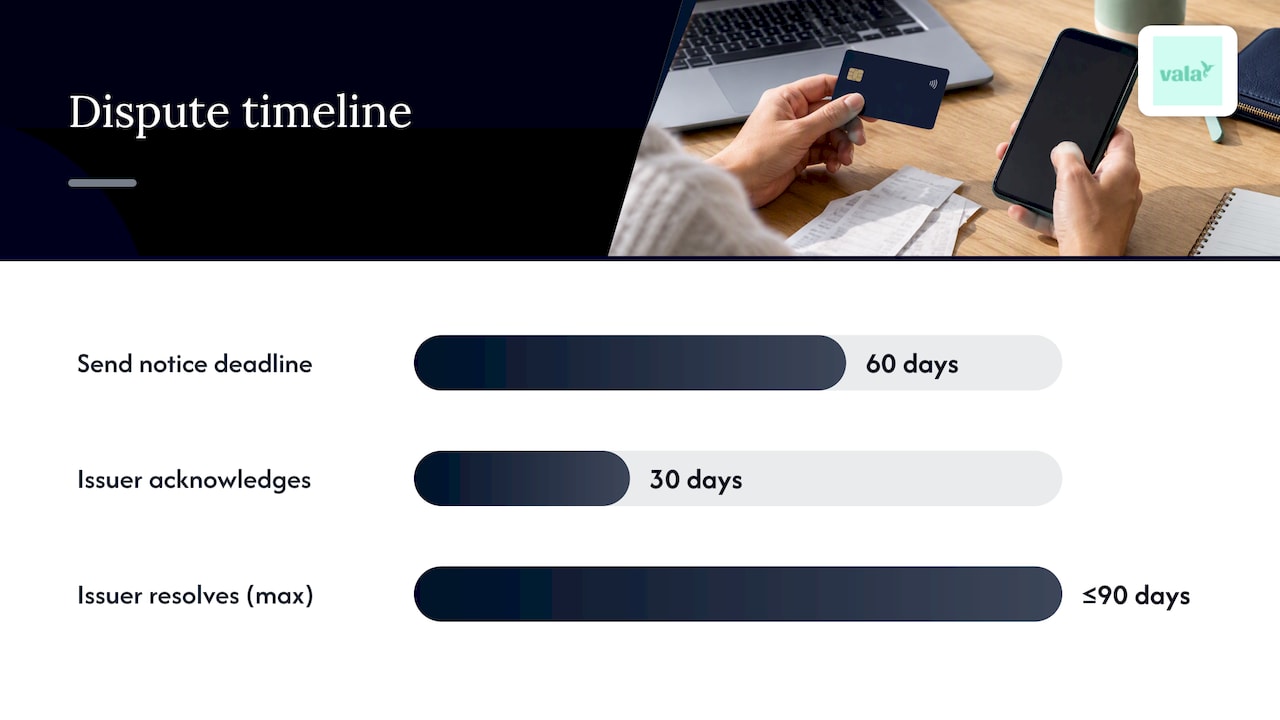
You have 60 days from the date of the first statement showing the error to send that notice. The FTC’s sample dispute letter walks through exactly what to include and recommends sending it to the billing-inquiries address, not the payment address, by certified mail so you have proof of delivery.
Once your issuer receives your letter, it must acknowledge the dispute within 30 days and resolve the investigation within two billing cycles, never more than 90 days. During a valid investigation, you can withhold payment on the disputed amount and any related finance charges, and you can request copies of whatever documents the issuer used to make its decision.
Duplicate debits and suspected fraud: different rules and faster actions
Debit card disputes follow the Electronic Fund Transfer Act and Regulation E, not the Fair Credit Billing Act, and the stakes around timing are higher. Your liability for an unauthorized debit depends heavily on how fast you report it: generally capped at $50 if you notify your bank within two business days, up to $500 if you wait longer, and potentially unlimited if you let 60 days pass after your statement arrives without reporting it.
If you suspect fraud rather than a simple merchant error:
- Lock or freeze your card immediately through your banking app, then call your bank to replace it.
- Follow up any phone report with written notice, since oral notice alone may not fully protect you.
- Watch your account closely for a few days in case more unauthorized charges appear.
- Visit IdentityTheft.gov if you think your card number or personal information was stolen rather than just double-billed.
If the issuer won’t fix it: escalation steps and complaint channels
If your card issuer denies the dispute or drags its feet, ask for the specific documents it relied on to make that decision. Look for gaps: did it actually compare posting dates and merchant descriptors, or just note that you shop there regularly?
You can usually reassert your dispute once with new evidence, like a merchant email confirming a double charge, but repeated reassertions without new facts rarely change the outcome. If that still does not resolve things:
- File a complaint with the CFPB, including dates, screenshots, and copies of all correspondence with your issuer.
- Keep a clear timeline so the complaint reviewer can see exactly when you reported the issue and when you sent written notice.
- Consider small claims court or a consumer attorney if the disputed amount is significant and the issuer still refuses to budge after a CFPB complaint.
How to detect duplicates faster and prevent them
Catching duplicates early starts with a habit: reconcile your statement against your actual receipts at least once a month, matching amounts, dates, and merchant names line by line. Set up alerts for repeat charges at the same amount from the same merchant within a short window, since that pattern is the clearest sign of a billing glitch.
A few practical habits make detection much easier:
- Review pending and posted transactions separately instead of only glancing at your running balance.
- Set alerts for same-amount, same-merchant repeats within a day or two of each other.
- Watch for merchant descriptors that look slightly different but clearly reference the same business.
- Keep an eye on subscriptions and recurring charges that tend to double up after a failed renewal.
A good monitoring tool should flag duplicate-looking transactions automatically, track your subscriptions in one place, and walk you through reconciling your statement before you decide whether to escalate to a full dispute.
Pro Tip: Keep one folder, digital or physical, for every dispute. When you need to escalate, having everything dated and in order can be the difference between a quick resolution and weeks of back and forth.
Author perspective: why acting fast wins disputes
Most people lose dispute leverage by waiting. They expect the merchant to notice and refund the charge on its own, or they call once and assume the issue is handled. Weeks pass, the 60-day window closes, and the written dispute never gets sent.
A simple file with dated screenshots, receipts, and a one-line call log almost always leads to faster, cleaner resolutions than memory and good intentions. Most duplicate charges get fixed when you document them right away and put your dispute in writing before the clock runs out.
— SaverStride
How Vala helps find duplicate charges and simplify recovery
Catching a duplicate charge usually means scrolling through statements line by line, which is tedious and easy to put off. Our Money Leak Check scans your connected accounts for exactly this kind of pattern, flagging repeat charges, mismatched amounts, and recurring subscriptions that may have billed you twice.

Instead of manually cross-referencing receipts, you get a clear view of what looks off and the details you need to start a dispute right away.
- Our detection tool surfaces duplicate and suspicious charges automatically, so you are not relying on catching them by eye.
- A subscription plan adds deeper tracking and subscription review on top of the free detection.
- Having your transaction history organized in one place makes building your dispute file faster when you do need to escalate.
If you want a clearer picture of where duplicate charges and other money leaks might be hiding, start your free analysis with Vala and see what turns up in your own accounts.
This article is general information, not a substitute for advice from a qualified financial advisor. Consult a qualified financial professional about your own circumstances before acting on anything here.
FAQ
I’ve been charged twice for the same transaction. What should I do?
Check whether the second entry is a pending hold or a fully posted charge, then call the merchant and your card issuer the same day. If it is a credit card billing error, send written notice within 60 days of the statement that first showed it.
Is a double charge on a credit card legal?
No, a merchant or processor charging you twice for the same purchase is a billing error under federal law, not a legitimate charge you owe twice. The FTC specifically lists being billed twice as an example of a billing error you can dispute.
What should I do if a transaction gets processed twice?
Contact the merchant first to ask for a reversal, since many duplicate transactions are quick fixes on their end. If the merchant does not resolve it, contact your card issuer and follow up with a written dispute within the required window.
I was charged twice on my credit card. What should I do?
Gather your receipt or order confirmation, then send a written dispute to your issuer’s billing-inquiries address within 60 days of the statement showing the error. Your issuer must acknowledge the dispute within 30 days and resolve it within two billing cycles, no more than 90 days total.
How is a duplicate debit card charge different from a credit card one?
Debit card disputes fall under Regulation E rather than the Fair Credit Billing Act, and your liability depends on how quickly you report the problem. Reporting within two business days keeps your potential loss capped at $50, while waiting longer can raise that cap significantly.