
Tracking bills, managing subscriptions, and splitting expenses without clear, unified tools is confusing for many household budgeters. Many personal finance apps make users handle too much manual entry or lock shared budgeting behind costly plans. This comparison covers subscription tracking, bill reminders, and shared expense features so you can match the right app to your group’s workflow.
Table of Contents
Vala
At a Glance
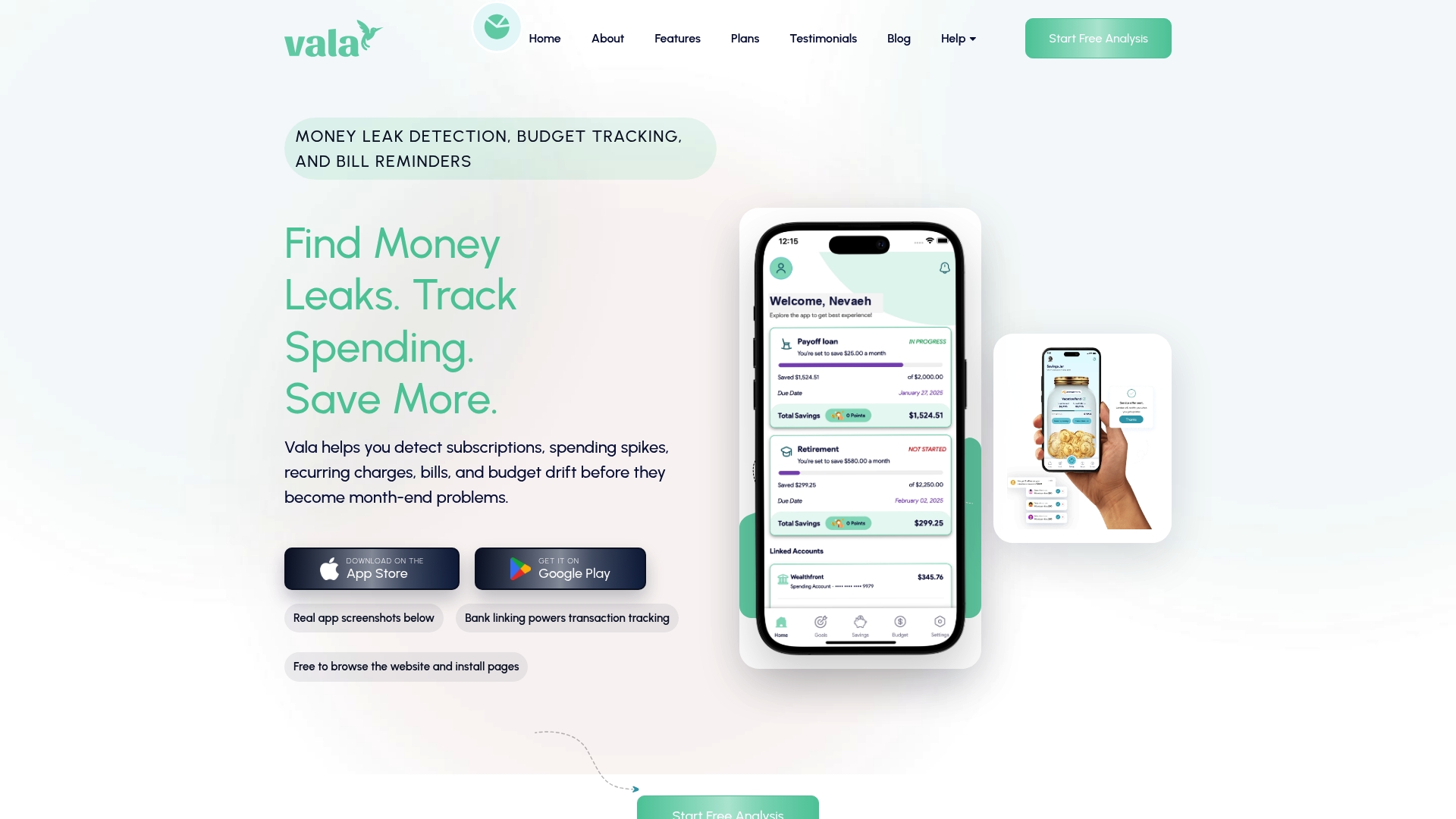
Vala lets you browse educational content and subscription comparisons without an account. Bank linking powers automatic transaction syncing and track savings goals savings so recurring charges appear without manual entry. The app concentrates on household money leaks, bill timing, and shared expense splitting for families and groups.
Core Features
Vala uses bank linking to pull transactions and produce spending and budget insights that highlight subscription overlaps and sudden spending spikes. It offers subscription review and management, bill reminders with due date visibility, track savings goals savings, and tools for splitting shared expenses among household members. Users can set budget goals, browse help content, and upgrade for deeper insights or more advanced reminders.
Key Differentiator
Vala focuses specifically on household money leaks and the timing of recurring charges rather than investment tracking or tax reporting. The interface highlights next due dates and duplicate subscriptions so you can correct cash flow before a bill arrives. The vendor also publishes clear explanations of data handling so privacy conscious householders understand how account linking works.
Pros
The interface makes it easy to spot repeated charges and subscriptions, which helps households stop small leaks before they add up. Automatic transaction syncing and track savings goals savings reduce manual entry and nudge steady saving without extra effort. Clear data handling explanations build trust for people cautious about connecting bank accounts. The shared expense tools let couples and groups split costs and track who owes what each month.
Cons
- Features may be basic for advanced budgeters or those needing detailed financial analysis.
Who It’s For
Household budgeters, couples, and small groups who want a focused view of recurring charges will find Vala useful. People who prefer simpler tools instead of complex financial modeling will value bill timing visibility and shared expense splitting. Advanced investors or professional financial planners will likely need more powerful analytics.
Unique Value Proposition
Browse without logging in to preview educational guides and subscription comparisons before you connect accounts. That reduces friction for cautious householders and helps you decide which subscriptions to investigate. After you link accounts, automatic syncing and track savings goals features run quietly to surface leaks and upcoming bills so you can act earlier.
Real World Use Case
A family links two checking accounts and a credit card to track recurring charges and upcoming utility bills. Vala flags a duplicate streaming subscription, sends a bill reminder, and shows how track savings goals savings feed a vacation goal. The family splits grocery costs and sees who still owes money at month end.
Pricing
You can browse the app for free and access educational content without creating an account. Premium upgrades unlock deeper insights, advanced reminders, and expanded features; pricing tiers are not publicly listed.
Website: https://valapoint.com
YNAB
At a Glance
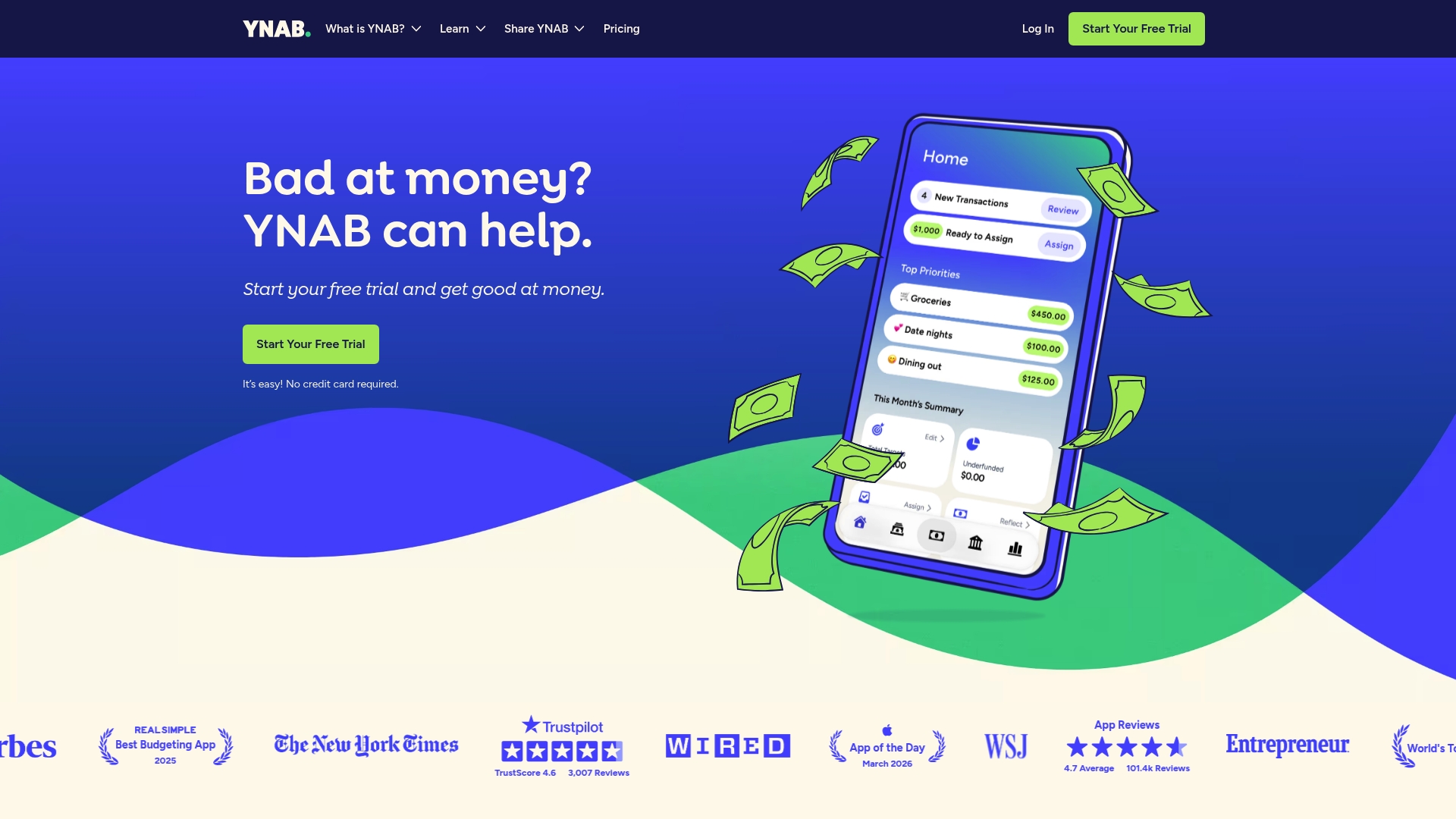
YNAB offers a free 34 day trial with no credit card required. The trial lets you test budgeting tools and real time device sync before committing. Many users praise the focus on practical budget habits rather than strict rules.
Core Features
YNAB centers on the concept Give every dollar a job, which makes allocating income explicit and trackable. It supports real time account linking and transaction import so your balances update across devices. The app includes debt payoff tools, goal tracking, reporting with net worth and spending charts, subscription sharing for up to six people, educational workshops, and an ad free, bank grade security experience.
Key Differentiator
YNAB stands out for its budgeting method that forces allocation of every dollar and combines that method with ongoing learning resources. The emphasis on active money assignment changes how people prioritize spending and saving. Real time syncing and group subscription sharing make that approach usable for couples and families.
Pros
YNAB helps many people reduce financial stress and accelerate debt payoff through disciplined budgeting and visible progress. The interface is simple and flexible, which lowers friction when you start assigning dollars to categories. Community support and practical workshops provide ongoing help for new users. The product offers a free 34 day trial so you can evaluate whether the method fits your household before paying.
Cons
- Price may be a barrier. The annual and monthly plans sit above some simpler budgeting apps, which matters for tight budgets.
- Limited multi currency support outside supported regions. That makes it a poor choice for frequent travelers or expatriates.
- Learning curve at the start. Assigning every dollar takes a habit shift and some initial manual categorization.
- Feature updates and support are ongoing. Some users report waiting for requested refinements.
When It May Not Fit
If you need native multi currency handling across many countries, this app will feel constrained. If you prefer a free forever tool without subscription costs, the price may not match your needs. If you want automated investment tracking or advanced tax reporting, the focus on hands on budgeting may feel narrow.
Who It’s For
Individuals and families who want a disciplined, hands on approach to budgeting will get the most value. People committed to paying down debt and tracking short term goals will benefit from the method and debt tools. Couples who want shared budgeting and clear money roles will find the group features useful.
Real World Use Case
A family links checking and credit accounts, assigns each paycheck to spending and savings categories, and sets a vacation goal. They use the debt payoff tools to schedule extra payments and watch net worth charts monthly. Within a year they reduce credit balances and build a dedicated travel fund.
Pricing
YNAB charges $109 USD per year or $14.99 USD per month, plus tax where applicable, after the free trial. The model is subscription based and includes syncing, reporting, and educational content. A free trial period lets you test the workflow before subscribing.
Website: https://ynab.com
PocketGuard

At a Glance
PocketGuard reports connectivity with over 18,000 financial institutions for real time transaction updates. The app groups transactions automatically and shows monthly leftovers to help you spot spare cash. It pairs budgeting, goal tracking, and net worth monitoring in one mobile and web experience.
Core Features
PocketGuard offers budgeting with custom categories, rollovers, and cash flow monitoring that highlights how much you can safely spend each month. It includes SMART criteria for goal setting and pace monitoring to prevent overspending before month end. Automatic categorization, debt payoff plans, bill and subscription management, and financial calculators complete the core toolset.
Key Differentiator
That figure on connectivity makes PocketGuard strong at automated transaction tracking and near real time net worth updates. The app focuses on live account sync so your balances and alerts reflect recent activity. This approach suits people who want low maintenance account tracking rather than manual ledger work.
Pros
According to the company, the app has more than one million members in the US, UK, and Canada. Automated organization and timely alerts reduce the time you spend categorizing transactions and checking balances. Monthly snapshots and leftovers calculation give clear guidance on how much you can spend without breaking your budget.
Cons
-
Some users find the interface complex initially and report a learning curve.
-
Premium subscription required for full features and advanced tools.
-
The free version limits transactions and omits several advanced features.
-
The app depends on bank connectivity quality and that connection can affect accuracy.
When It May Not Fit
If you do not want to link bank accounts this app will not fit because it relies on account connections. If you need every feature without paying you will find the free tier limiting. New budgeters may find the interface initially complex and need time to learn the workflows.
Who It’s For
This app fits personal finance enthusiasts and budget conscious individuals who prefer automated tracking. It works well for people managing multiple accounts and subscriptions who want clear alerts for bills and fees. Financial coaches can use it to monitor client goal progress and shared budgets.
Real World Use Case
A user connects checking and credit card accounts, sets monthly spending goals, and watches transactions categorize automatically. The app calculates leftovers and notifies the user when spending pace risks exceeding the budget. This keeps bills and debt payoff plans visible without manual updates.
Pricing
PocketGuard uses a freemium model with optional paid plans. Paid plans start at $6.25/month or $74.99/year for premium features.
Website: https://pocketguard.com
Comparison of alternatives
Managing personal finances efficiently is more straightforward than ever with applications tailored to distinct styles and circumstances.
Household-oriented features
Vala’s focus on shared expense tracking and subscription management allows households to gain insights into recurring expenditures. YNAB offers a structured approach to budgeting with its “Give Every Dollar a Job” philosophy, ideal for those aiming for a proactive budget. In contrast, PocketGuard’s real-time account management and automated categorization excel for those seeking out instant tracking with minimal manual intervention.
Connectivity and automation
PocketGuard supports a wide range of banking institutions, enabling accurate and real-time financial data synchronization. Vala achieves a balance by encouraging savings through features like track savings goals habits. YNAB emphasizes user experiences guided by manually-applied budget rules, which some may find more effort-intensive but ultimately rewarding.
Best fit
- Household budgeters looking for tools focused on managing shared expenses and optimizing recurring charges should consider Vala.
- Budgeters interested in a disciplined system that fosters proactive spending decisions would find value in YNAB.
- Those desiring a tool with extensive financial institution connections and transaction updates would benefit from PocketGuard.
Our pick
Vala remains the top choice for household budgeters seeking simple, effective tools to enhance savings and reduce financial waste. If you prefer advanced budgeting philosophies or real-time synchronization, consider YNAB or PocketGuard, respectively.
Compare these personal finance apps based on their features, key differentiators, pricing, and limitations.
| App Name | Core Feature | Key Differentiator | Pricing | Notable Limitation |
|---|---|---|---|---|
| Valapoint | Bank linking with transaction syncing | Focuses on household money leaks and shared expenses | Price not published | Basic features for advanced budgeters |
| YNAB | Real-time account linking and debt payoff | “Give every dollar a job” budgeting methodology | $109/year or $14.99/month | Higher price point; lacks multi-currency support |
| PocketGuard | Budgeting with automated categorization | Connectivity with 18,000 financial institutions | $74.99/year or $6.25/month | Learning curve for new users; dependent on bank sync quality |
How to Find a Better Fit Among Banktivity.com Alternatives
Choosing a tool that fits your household budgeting style can be tough. Many want clear visibility into recurring charges and group expense splitting without complicated setup. Valapoint targets these needs by using AI to track expenses, spot hidden subscription leaks, and simplify shared costs for families and couples.
Valapoint offers:
- Access without mandatory signup to review helpful educational guides
- Automatic bank syncing with real-time bill reminders
- Built-in savings nudges and budget goal tracking
If you want to stop small money leaks before they grow and manage your household’s bills with ease, see how Valapoint can fit your needs. Visit Valapoint to browse details and start tracking your money more clearly today.
FAQ
What is Valapoint’s approach to recurring charges and household money leaks?
Valapoint focuses on identifying recurring charges and household money leaks, providing features like bill reminders and subscription management. Its emphasis on spotting repeated charges helps households control their finances effectively. You can rely on Valapoint to continue tracking expenses and alert you about upcoming bills.
How does Valapoint compare to YNAB for budgeting methods?
YNAB is known for its budgeting method that requires users to assign every dollar a job, which can help change spending priorities effectively. Valapoint, on the other hand, simplifies the process by focusing on bill timing and shared expense splitting rather than strict budgeting rules. Choose Valapoint if you prefer a less intensive approach to manage recurring payments.
Which platform offers better subscription management features, PocketGuard or Valapoint?
PocketGuard excels in automated transaction tracking and gives real-time insights into overall cash flow, making it great for budget-conscious individuals. Valapoint aligns more with households looking to manage subscriptions alongside bill reminders and shared expense tools. If managing recurring charges is your main focus, Valapoint will suit you better.
Can I use Valapoint without linking my bank accounts?
You can browse educational content and subscription comparisons on Valapoint without linking your bank accounts. This feature allows cautious households to explore the app’s capabilities before committing to account connections.
How does Valapoint support shared expenses among household members?
Valapoint provides tools for splitting shared expenses, making it easier for couples and groups to track who owes what. This feature enhances collaboration in financial management, allowing better visibility of recurring costs and shared bills.