You can stop impulse buying right now with four moves: pause before purchasing, add friction to the checkout process, redesign your environment to reduce temptation, and budget intentionally for treats you actually want. That’s the whole system. Everything else is detail.
Here’s what you can do in the next 10 minutes:
- Delete your saved card details from your top two shopping sites or apps.
- Screenshot the item you want, then close the app or browser tab entirely.
- Move your phone away from your desk or put it in another room for 15 minutes.
- Unsubscribe from one marketing email sitting in your inbox right now.
- Add the item to a wishlist instead of your cart, and set a calendar reminder to revisit it in 48 hours.
Pro Tip: When the urge to buy hits, name it out loud or in a note: “I feel the urge to buy this.” Rating its intensity from 1 to 10 and watching it for 10–15 minutes is a CBT-derived technique called urge surfing that lets the craving peak and fall without you acting on it.
Key Takeaways
Stopping impulse buying comes down to five consistent moves: pause before you purchase, add friction to the checkout process, redesign your environment, budget intentionally for joy, and track your spending with tools that surface leaks automatically.
| Point | Details |
|---|---|
| Pause before every purchase | Use the 48-hour rule and wishlist method to let urges peak and fall before spending. |
| Add friction to checkout | Remove saved card details and uninstall retail apps to slow the buying sequence. |
| Redesign your environment | Unsubscribe from marketing emails, mute notifications, and curate social feeds to cut trigger exposure. |
| Budget for intentional joy | Allocate a monthly “joy” amount per value category so planned treats replace impulsive ones. |
| Track with Valapoint | Use Valapoint’s AI-driven insights and budget categories to detect leaks and reinforce non-spending wins. |
Table of Contents
- Why do you keep impulse buying? Emotional and situational triggers explained
- How to stop impulse buying with pause-and-wait tactics
- How to redesign your shopping environment to reduce temptation
- Build a value-based budget so spending feels intentional, not guilty
- What tools and systems actually help you curb impulse spending?
- When impulse buying is more than a habit and where to get help
- What to do right after an impulse purchase
- How long does it take to see real results?
- Valapoint makes it easier to stay on track
- Sources
Why do you keep impulse buying? Emotional and situational triggers explained
Impulse purchases rarely happen because you need something. They happen because you feel something. Stress, boredom, anxiety, and even celebration all activate the brain’s reward system, and shopping delivers a fast dopamine hit that temporarily soothes the discomfort. The problem is that the relief fades quickly, and the purchase stays on your credit card statement.
Research and practitioner commentary consistently show that impulse buying spikes during periods of social stress or economic uncertainty, precisely when budgets are already under pressure. Recognizing your personal triggers is the first line of defense.
The most common triggers include:
- Stress or anxiety: Shopping feels like control when everything else feels chaotic.
- Boredom: Scrolling a retail app fills idle time and produces small excitement hits.
- Celebration: “I deserve this” spending after a win or a hard week.
- Hunger: Shopping while hungry, especially for food-adjacent or comfort items, amplifies impulse decisions.
- Notifications and urgency cues: Flash sales, countdown timers, and “only 2 left” alerts are engineered to bypass deliberate thinking.
- FOMO: Seeing others buy or post about products on social media creates social pressure that feels like need.
To find your top two or three personal triggers, ask yourself: What was I feeling in the hour before my last three impulse buys? Where was I? What had just happened? A pattern usually appears within minutes of honest reflection. You can also take Valapoint’s Financial DNA Test to get a clearer picture of your spending style and the behavioral tendencies driving it.
How to stop impulse buying with pause-and-wait tactics
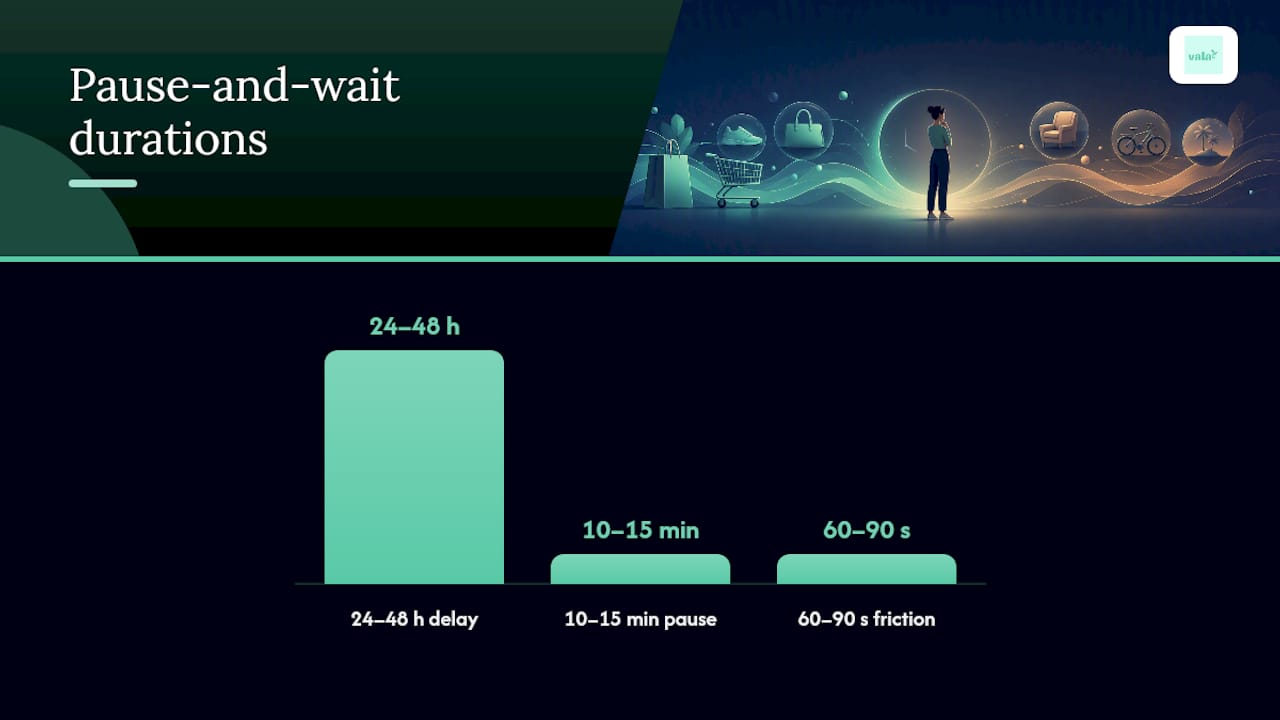
The single most reliable tactic is creating a gap between the urge and the purchase. That gap is where the impulse dies. U.S. Bank’s financial education guidance specifically recommends the 24–48 hour rule and removing saved payment data as friction tools that reduce emotionally driven purchases.
Here’s how to build that gap deliberately:
- Add the item to a wishlist, not your cart. A wishlist has no checkout button. The act of saving it satisfies the urge to “do something” without spending.
- Set a 48-hour reminder. Put it in your phone calendar. If you still want the item in two days and it fits your budget, buy it guilt-free.
- Remove stored payment details. Typing in your card number manually adds 60–90 seconds of friction. That pause is often enough to break the emotional momentum.
- Take a 10–15 minute urge-surfing pause. Step away from the screen. Rate the urge’s intensity. Watch it drop. CBT guides from the Beck Institute confirm that urges peak and recede naturally within this window when you don’t feed them.
- Use the screenshot method. Consumer finance guides widely recommend taking a screenshot of the item and closing the app. The image stays; the checkout pressure disappears.
Why does each of these work? Impulse buying relies on a tight loop: trigger, craving, action, reward. Breaking the loop at the action stage weakens the habit over time. Every time you delay and don’t buy, the neural pathway linking that trigger to that purchase gets a little thinner.
Pro Tip: Use if-then planning to make delay automatic: “If I feel the urge to buy something unplanned, then I will add it to my wishlist and close the app.” Writing this down once makes it far easier to execute under emotional pressure.
How to redesign your shopping environment to reduce temptation
You can’t rely on willpower alone when your environment is designed to sell to you. The fix is to reduce exposure before the urge even starts.
Start with this checklist:
- Uninstall retail apps from your phone. Browsing friction on a mobile browser is significantly higher than tapping an app icon.
- Mute or turn off push notifications from every shopping platform, including food delivery apps.
- Unsubscribe from marketing emails. Use a tool like Unroll.Me or simply hit unsubscribe on the next five promotional emails you receive.
- Remove saved card details from browsers and retail accounts (this doubles as a pause tactic).
- Install an ad blocker such as uBlock Origin on your desktop browser to cut retargeting ads that follow you after browsing.
- Curate your social media feeds. Unfollow or mute accounts that consistently trigger purchase urges, whether that’s influencer hauls, flash-deal accounts, or brand pages.
Social spending deserves its own rule. If group outings or shared purchases tend to push you into unplanned spending, set a personal cap before you go. Decide the number in advance, not in the moment when social pressure is highest.
Build a value-based budget so spending feels intentional, not guilty
A budget that bans all fun spending doesn’t work. Financial therapists are clear on this: removing all discretionary spending creates deprivation, and deprivation leads to rebound binges that cost more than the original treats would have. The goal is to make your spending intentional, not to eliminate enjoyment.
Here’s how to build a values-based budget in three steps:
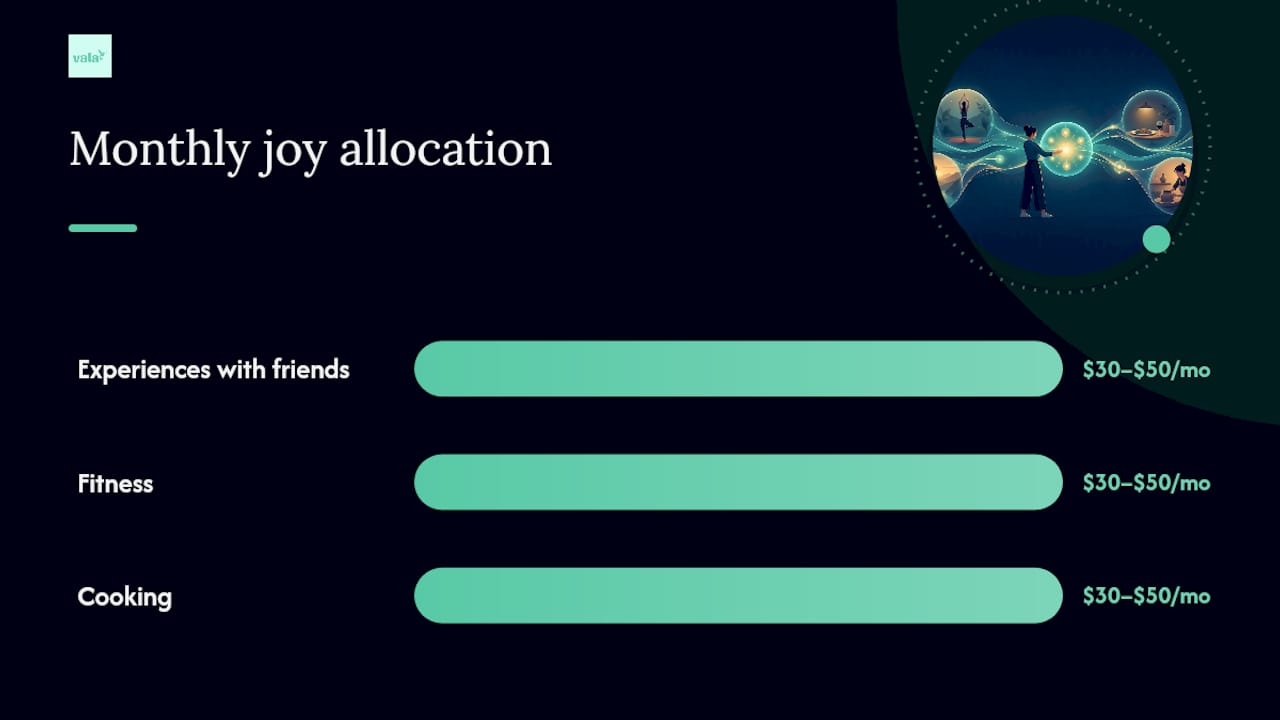
- Identify your top two or three genuine value categories. These are the areas where spending actually makes you happy: experiences with friends, fitness, cooking, books. Not the categories where you spend by default.
- Allocate a monthly “joy” amount to each. Even $30–$50 per category is enough to satisfy the urge to treat yourself without blowing your budget.
- Rename the categories with goal language. Instead of “fun money,” label it “Weekend Hikes Fund” or “Cookbook Collection.” Specific labels reduce the chance of raiding the category for unrelated impulse buys.
Use this mini-worksheet as a starting point:
Automation makes this stick. U.S. Bank recommends scheduling automatic transfers to savings on payday, before discretionary money is available to spend. When the “hot” money moves to a separate account immediately, the temptation to spend it drops sharply. Categorizing past spending by copying bank statements into labeled buckets, as The Guardian’s personal finance reporting describes, also reveals exactly where small leaks are hiding. You can use Valapoint’s personal finance tools and calculators to set up these allocations and run the numbers quickly.
For readers who prefer a spreadsheet approach, an AI-powered Excel budget template can help you build and automate these category allocations without starting from scratch.
What tools and systems actually help you curb impulse spending?
Tech should do one thing for impulse control: make not buying feel easier than buying. The best tools automate friction, surface spending leaks you can’t see manually, and reward restraint by showing your savings grow.
Here’s how to set up a practical system:
- Budgeting app (Valapoint): Connect your accounts and let Vala’s AI-driven insights flag small recurring leaks, categorize discretionary spending automatically, and alert you when a category is running hot. The spending insights feature is particularly useful for spotting patterns you’d never notice from a bank statement alone.
- Card controls: Most U.S. banks and credit unions let you set spending limits by category or merchant type directly in their app. Use this to cap retail or food delivery spending at your budgeted amount.
- Subscription managers: Review recurring charges monthly. Valapoint’s subscription review feature surfaces charges you may have forgotten, which are often the result of past impulse sign-ups.
- Notification managers: iOS Screen Time and Android Digital Wellbeing both let you set app limits and schedule downtime for shopping apps during high-risk hours (late evenings, lunch breaks).
- Browser extensions: uBlock Origin blocks retargeting ads. The Honey extension, used carefully, can also delay purchases by surfacing coupon codes, which adds a small pause to the checkout flow.
Pro Tip: Set up Valapoint’s budget goal tracker with a “Joy Fund” category and a monthly cap. Every time you check the app and see the balance unspent, that visual feedback reinforces the habit of not buying. Saving money automatically through AI insights works the same way: watching a savings balance grow is a reward that competes with the dopamine hit of buying.
Privacy matters when connecting financial accounts. Valapoint uses secure bank integration with read-only access, so your credentials stay protected while the app reads your transaction data.
When impulse buying is more than a habit and where to get help
Most people can curb impulse spending with the tactics above. But for some, the behavior is driven by deeper emotional patterns that habit changes alone won’t fix. Peer-reviewed research links trait impulsivity and specific decision-making patterns to compulsive purchasing behaviors, and clinical interventions address those underlying traits directly.
Seek professional support when you notice:
- Chronic overdrafts or carrying debt specifically from discretionary purchases
- Hiding purchases from a partner, family member, or roommate
- Buying items and returning them repeatedly without using them
- Sleep disruption or persistent anxiety tied to spending guilt
- Relationship conflicts caused by financial secrecy or overspending
- Feeling unable to stop even when you genuinely want to
Where to find help:
- CBT therapist: Search the Beck Institute’s therapist directory or Psychology Today’s filter for financial or behavioral issues.
- Financial therapist: The Financial Therapy Association (financialtherapyassociation.org) lists credentialed practitioners who combine money coaching with emotional support.
- Debtors Anonymous: Free peer-support meetings available online and in person across the U.S. at debtorsanonymous.org.
What to do right after an impulse purchase
Acting quickly after an unplanned purchase limits the financial damage and, more usefully, turns the event into data you can use.
- Check the return window immediately. Most U.S. retailers offer 14–30 days. Open the confirmation email now and note the deadline in your calendar.
- Consider resale if returning isn’t possible. Platforms like Facebook Marketplace, eBay, and Poshmark let you recover most of the cost on clothing, electronics, and home goods.
- Log the trigger. Write one sentence in a notes app: what you were feeling, where you were, and what prompted the purchase. This is your urge journal entry. Behavioral money coaches recommend urge logs as one of the most effective tools for breaking the cycle.
- Adjust next month’s budget. Move the amount spent from your “joy” category or flag it as an overage. Don’t punish yourself; just rebalance.
- Reward the next non-purchase. The next time you face the same trigger and don’t buy, transfer $5 or $10 to savings. Small positive reinforcement builds the new habit faster than guilt ever does.
One-week rapid reset: On day one, return or list the item. Days two through four, log every urge without acting on it. Day five, review your trigger journal and identify the pattern. Days six and seven, set one new environment change (delete an app, unsubscribe from one email list) based on what you found.
How long does it take to see real results?
Small wins appear fast. Measurable budget changes follow within weeks. Habit stabilization takes longer, but the financial impact compounds steadily. USA Today’s consumer reporting notes that impulse buying rises during tight-budget periods, which means the payoff from building these defenses is highest exactly when you need it most.
| Tactic | Short-Term Result (Days 1–14) | Medium-Term Result (Weeks 3–4) |
|---|---|---|
| Urge surfing (10–15 min pause) | Fewer same-session purchases | Reduced frequency of strong urges |
| 24–48 hour rule | Immediate drop in spur-of-moment buys | Wishlist items often go unbought |
| Environment redesign | Less exposure, fewer trigger moments | Lower baseline temptation |
| Value-based budgeting | Clearer category limits | Visible rebalancing of discretionary spend |
| App-based tracking (Valapoint) | Leaks identified within first review | Consistent category awareness month over month |
To track your own progress, measure these each week:
- Number of impulse purchases made (aim to reduce week over week)
- Total discretionary spending versus your budgeted amount
- Number of urges logged versus urges acted on
- Wishlist items added but not purchased (this is a win worth counting)
Progress is rarely a straight line. A stressful week will produce more urges. That’s normal. What changes over time is how often those urges turn into purchases.
What these tactics feel like when you actually use them
The first week is the most friction-heavy. You’ll feel the pull to check a retail app and realize you deleted it. You’ll start to type your card number and stop halfway through. Those moments of mild annoyance are the system working. By week two, the wishlist fills up with things you no longer want. By week three, checking your Valapoint budget and seeing a category with money still in it starts to feel genuinely satisfying. One planned treat per month, something you actually chose rather than grabbed impulsively, feels better than five unplanned purchases combined.
Progress isn’t linear. Some weeks you’ll slip. The recovery checklist above handles that. What compounds over months is the growing gap between what you earn and what you spend without thinking, and that gap is where financial confidence lives.
Valapoint makes it easier to stay on track
Knowing the tactics is one thing. Having a system that enforces them automatically is what makes the difference between a good week and a lasting habit.
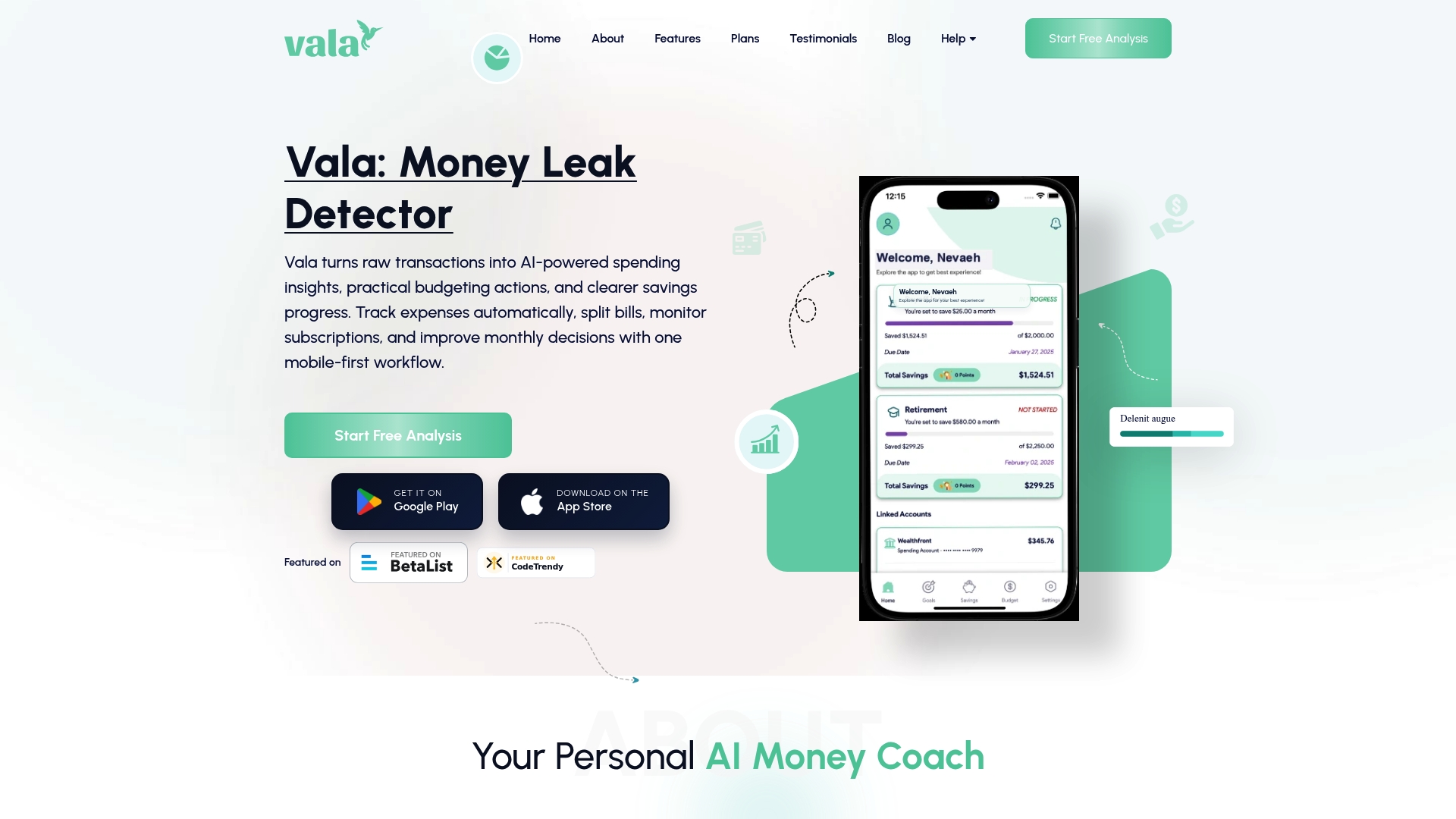
Valapoint’s AI-powered finance app detects the small recurring leaks that manual budgeting misses, flags when discretionary categories are running over, and surfaces spending patterns before they become problems. Set up a “Joy Fund” budget bucket with a monthly cap, connect your accounts securely, and let the app’s real-time alerts create the friction that keeps impulse spending in check. The subscription review feature catches forgotten sign-ups, and the budget goal tracker turns every unspent dollar into visible progress toward something you actually care about.
Start with the free plan and see your spending patterns clearly within the first week. Download the Valapoint personal finance app and run your first spending analysis today.
Sources
These are the primary sources used in this article, each worth bookmarking for deeper reading:
- Break the impulse buying habit with CBT techniques | Beck Institute Cares
- How to stop impulse buying | U.S. Bank
- Strategies to curb impulse spending | AAA Club Alliance
- I couldn’t stop impulse buying – but these ‘buy less’ tricks helped me save hundreds | The Guardian
- PubMed article 22977265
This article is general information, not a substitute for advice from a qualified financial advisor. Consult a qualified financial professional about your own circumstances before acting on anything here.