
What are variable expenses and how do they work?
Variable expenses are costs that change from month to month based on your choices, habits, and circumstances. Unlike fixed expenses, which stay the same every billing cycle, variable costs shift depending on how much you use, consume, or spend. Many Americans feel unprepared for these fluctuations, which is exactly why understanding them matters.
Common variable expenses include:
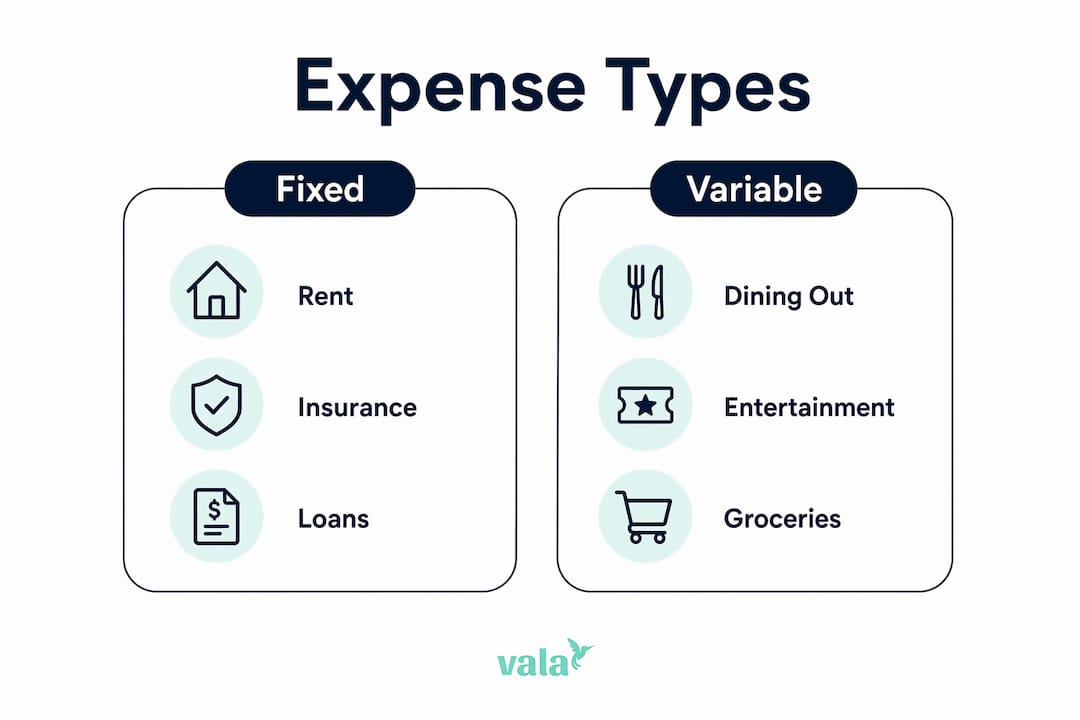
- Groceries — prices shift with seasons, store choices, and family size
- Utilities — electric and gas bills rise in summer and winter
- Gasoline — tied to commute habits and fuel prices
- Dining out and food delivery — driven by social plans and convenience
- Entertainment — events, streaming, and hobbies vary month to month
- Medical copays — unpredictable based on health needs
- Clothing and personal care — discretionary and lifestyle-driven
The good news: because variable expenses respond to your behavior, you can actually control them. That flexibility is what makes them different from rent or a car loan.
Table of Contents
- How do variable and fixed expenses differ?
- How variable expenses affect your monthly budget
- Strategies to track and manage your variable costs
- Why ongoing budget review keeps variable expenses in check
- Key Takeaways
How do variable and fixed expenses differ?
Fixed expenses are predictable, recurring costs that stay the same each month. Think rent, mortgage payments, insurance premiums, and minimum loan payments. You know exactly what they cost, so budgeting for them is straightforward.
Variable expenses work the opposite way. The amount changes, sometimes significantly, from one month to the next.
Key differences at a glance:
- Predictability: Fixed costs are certain; variable costs require estimates
- Control: You can’t easily cut your rent mid-month, but you can skip a restaurant dinner
- Budgeting approach: Fixed costs carry over unchanged; variable costs need averaging and monitoring
- Flexibility: Variable expenses offer the most immediate opportunity to save money
Fixed expenses form your budget’s foundation. Variable expenses are where your real financial choices live.
How variable expenses affect your monthly budget
Untracked variable expenses are one of the most common reasons budgets fall apart. A $15 lunch here, a $40 impulse purchase there — individually small, collectively significant. Without visibility, these costs quietly push you past your monthly limit.

Behavioral factors make this worse. Stress, social pressure, and convenience all drive variable spending upward. Dining out increases when you’re busy. Entertainment spending spikes around holidays. Utility bills climb in extreme weather.
Separating needs from wants within your variable costs is a useful starting point:
- Needs: Groceries, utilities, gas for commuting, basic personal care
- Wants: Dining out, streaming subscriptions, entertainment, clothing beyond essentials
The 50/30/20 rule offers a practical framework: 50% of take-home income toward needs, 30% toward wants, and 20% toward savings and debt. Variable expenses appear in all three categories, which is why tracking them specifically matters.
Pro Tip: Set a category cap for your top two or three variable spending areas. If dining out is your weak spot, a firm $150 monthly limit creates a clear boundary before the month begins, not after.
Strategies to track and manage your variable costs
The most effective way to manage variable expenses is to stop guessing and start measuring. Reviewing three to six months of past bank and credit card transactions gives you a realistic average for each category. Without that data, most people underestimate their dining and entertainment spending significantly.
Practical strategies that work:
- Average your history. Add up three months of spending in each variable category, divide by three, then add a 10% buffer for seasonal spikes.
- Use sinking funds. Set aside a small amount monthly for irregular variable expenses like car repairs, holiday gifts, or annual subscriptions. This converts unpredictable costs into planned ones.
- Meal plan and buy in bulk. Grocery spending drops noticeably when you shop with a list and reduce impulse purchases.
- Check in weekly, not just monthly. A quick weekly review lets you course-correct before overspending compounds.
- Use real-time tracking tools. Apps that send spending notifications alert you the moment a category runs high, not at the end of the month when it’s too late.
Automation helps too. Hyper-automation in finance is making it easier to categorize and monitor flexible spending without manual effort.
Pro Tip: Keep your budget categories broad at first. Five to eight categories are easier to maintain than twenty. Complexity kills consistency.
Why ongoing budget review keeps variable expenses in check
A budget you set once and ignore is just a wish list. Monthly reviews let you catch overspending early, redirect surplus toward savings, and adjust for life changes like a new commute or a growing grocery bill.
Weekly check-ins serve a different purpose: they give you mid-month visibility so you can slow down spending before you hit your limit. Together, weekly and monthly reviews create a feedback loop that makes budgeting actually work.
Benefits of staying consistent with reviews:
- Spot rising costs before they become habits
- Redirect unspent variable budget toward savings or debt payoff
- Align bill due dates with your paydays to avoid cash flow gaps
- Build an emergency fund faster by capturing monthly surpluses
- Reduce financial stress by replacing surprises with a clear plan
Variable expenses will always fluctuate. What changes with regular review is your ability to respond before the damage is done.
Valapoint’s personal finance app tracks your variable and fixed expenses in real time, categorizes your spending automatically, and sends alerts when you’re approaching a limit. You get a clear picture of where your money goes, every week, without the spreadsheet headache.

Key Takeaways
Variable expenses are the most controllable part of your budget, and tracking them consistently is the single most effective habit for improving your financial health.
| Point | Details |
|---|---|
| Variable vs. fixed | Variable costs fluctuate monthly; fixed costs stay predictable and consistent. |
| Average your spending | Review three to six months of history to set realistic category budgets. |
| Use sinking funds | Set aside small monthly amounts for irregular costs like repairs or gifts. |
| Review weekly and monthly | Weekly check-ins catch overspending early; monthly reviews reset the plan. |
| Align income and bills | Match bill due dates to paydays to prevent cash flow shortfalls. |