
Money recovery means finding and reclaiming wasted or lost personal funds and stopping the leaks that caused them. Start with a 15 to 30 minute audit of your last two bank statements, flag anything that looks unauthorized, and note any large fees or subscriptions you forgot about. If you spot fraud, call your bank the same day. Regulation E gives you a limited window to act, and every day you wait shrinks your odds of a full refund.
TL;DR:
- Regularly reviewing two to three months of bank statements can uncover forgotten subscriptions, duplicate services, and small recurring charges that add up over time.
- Disputing credit card charges is often more favorable than debit refunds, and filing complaints with the CFPB can speed up unresolved disputes.
- Canceling subscriptions requires identifying the billing source and sending written requests; disputing fraudulent or withheld refunds should be directed to your card issuer.
- Automated expense management tools can prevent future leaks through subscription detection, low-balance alerts, and scheduled quarterly audits, saving time and money annually.
Table of Contents
- What Is a Fast Money Audit and How Do You Run One?
- How Do You Get Money Back From an Unauthorized Bank or Card Charge?
- How Do You Cancel Subscriptions and Get Merchant Refunds?
- How Can an Expense App Stop Future Money Leaks?
- A 20-Minute Audit That Found Over $200
- Let Vala Handle the Recovery Legwork for You
- Where to Go for Official Dispute Help
- Sources
What Is a Fast Money Audit and How Do You Run One?
A money audit is a focused sweep of your spending, not a full budget overhaul. You’re hunting for anything that shouldn’t be there: charges you don’t recognize, fees you didn’t expect, and subscriptions you forgot to cancel.
Pull your last 60 to 90 days of bank and credit card statements. That window is long enough to catch quarterly subscriptions but short enough that you won’t drown in data.
Work through your statements in this order:
- Scan for unauthorized transactions first. Anything unfamiliar gets flagged immediately, even if the amount is small.
- Look for large one-off fees: overdraft charges, wire fees, late fees, or ATM surcharges that stack up.
- Search for recurring charges under names you don’t recognize. Streaming bundles, app-store subscriptions, and “membership” services often disguise themselves under a parent company’s billing name.
- Check for duplicate services, like two cloud storage plans or overlapping meal-kit subscriptions.
- Note anything that seems small but repeats monthly. A $4.99 charge you missed for a year adds up to almost $60.
Once you have your list, prioritize by what’s actually recoverable:
- Unauthorized charges and bank fees, because they carry legal recovery timelines.
- Recurring subscriptions you’re not using, because canceling them stops the bleeding immediately.
- Small one-off refunds, because they matter but rarely need urgent action.
This is exactly the kind of scan an expense-tracking tool speeds up, since it groups transactions automatically instead of making you scroll through a PDF statement line by line. You can also check common examples of hidden recurring charges to know what to look for before you start.
How Do You Get Money Back From an Unauthorized Bank or Card Charge?
The first hour after you spot fraud matters more than almost anything else you’ll do. Freeze or replace the affected card, change your online banking password, and write down the exact date you noticed the problem. That date starts the clock on your legal protections.
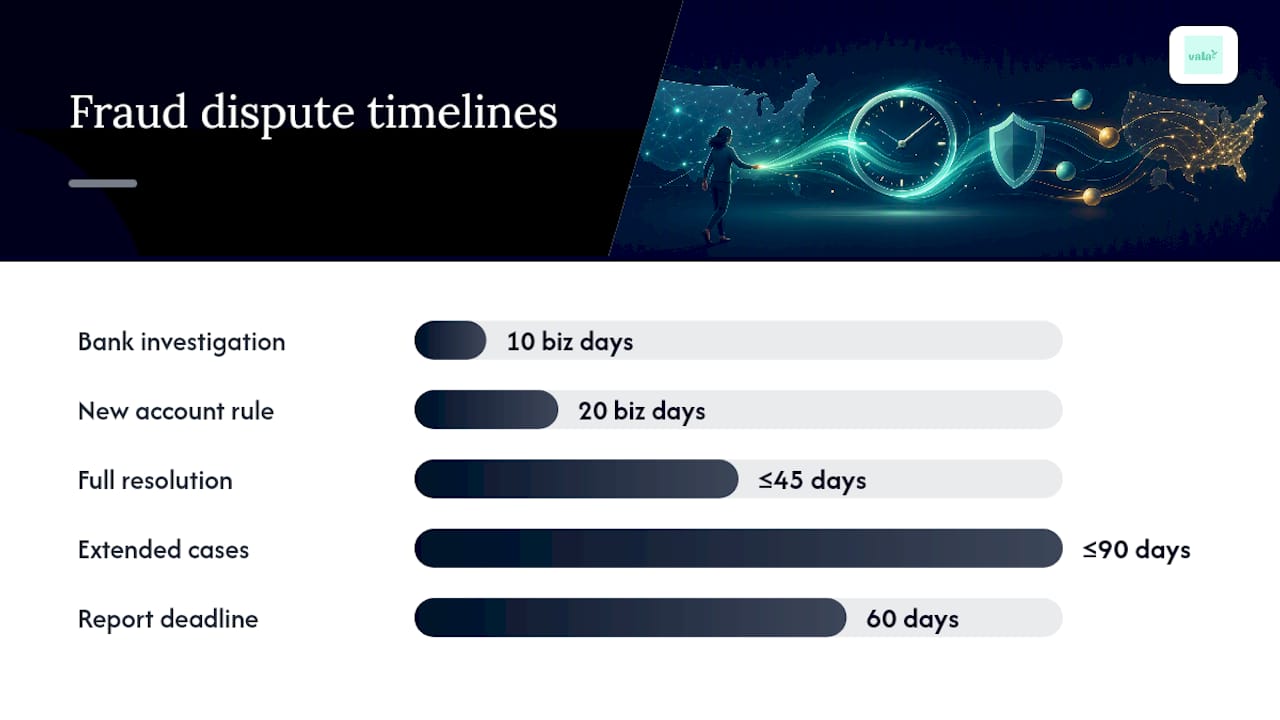
Under Regulation E, your bank generally has 10 business days to investigate an unauthorized transaction (20 if the account is less than 30 days old). If the bank needs more time, it must issue provisional credit while it finishes the review, and full resolution can take up to 45 days, or 90 days in certain cases. You must report the error within 60 days of the statement that shows it, or you risk losing those protections entirely.
Credit card disputes work differently and often favor you more. The Fair Credit Billing Act lets you withhold payment on a disputed amount while the issuer investigates, and you’re not out real cash the way you are with a debit card pull from checking. That’s one reason many financial experts recommend routing recurring payments through credit rather than debit whenever possible.
When you file a dispute, include:
- The exact date and amount of the charge
- A short, factual description of why it’s unauthorized
- Any supporting statements showing the fee cascade it triggered (overdrafts caused by fraud should be reversed too)
If your bank drags its feet or denies a legitimate claim, file a complaint with the CFPB. It forwards your complaint directly to the bank and forces a response within 15 days, which tends to move things along faster than a phone call ever will.
Pro Tip: Keep a simple timeline document, just the date, the action, and who you spoke with. If your case escalates to a CFPB complaint, that log becomes your strongest piece of evidence.
How Do You Cancel Subscriptions and Get Merchant Refunds?
Before you can cancel anything, you need to know where the charge originated. Check whether it’s billed through your bank directly, through an app store like Apple or Google, or through the merchant’s own account portal, because the cancellation path is different for each one.
- Log into the account tied to the charge and look for a cancellation or subscription-management page first.
- If you can’t find one, check your app store’s subscription settings, since many recurring charges route through Apple or Google billing even when the app itself is a smaller company.
- Send a written cancellation request if there’s no clear button. Something as simple as “Please cancel my subscription effective immediately and confirm in writing” creates a paper trail.
- Call and ask directly for a supervisor if the company stalls. This is common enough that consumer reporting has documented the pattern of companies making cancellation intentionally slow.
- If the merchant refuses a fair refund, or you never received what you paid for, dispute the charge with your card issuer instead of continuing to argue with the merchant.
The FTC requires sellers to ship within the promised time or refund you, and you’re never obligated to pay for unordered merchandise that shows up unexpectedly.
Pro Tip: If a company only offers cancellation by phone, call first thing in the morning. Hold times are shortest right when call centers open.
How Can an Expense App Stop Future Money Leaks?
Recovering money once is useful. Stopping the next leak before it starts is what actually protects your budget long term.
The most effective prevention tools automate the boring parts:
- Automatic subscription detection that flags every recurring charge, even ones disguised under odd merchant names
- Trial-ending reminders sent a few days before a free trial converts to a paid plan
- Low-balance alerts that warn you before a transaction triggers an overdraft
- Overdraft prediction that flags a risky week before it happens, not after the fee posts
Pair those automations with a simple habit: a quarterly five-minute review of every recurring charge, timed to your calendar so it actually happens. Scheduled subscription audits paired with automated reminders are consistently cited as the most reliable defense against subscription creep.
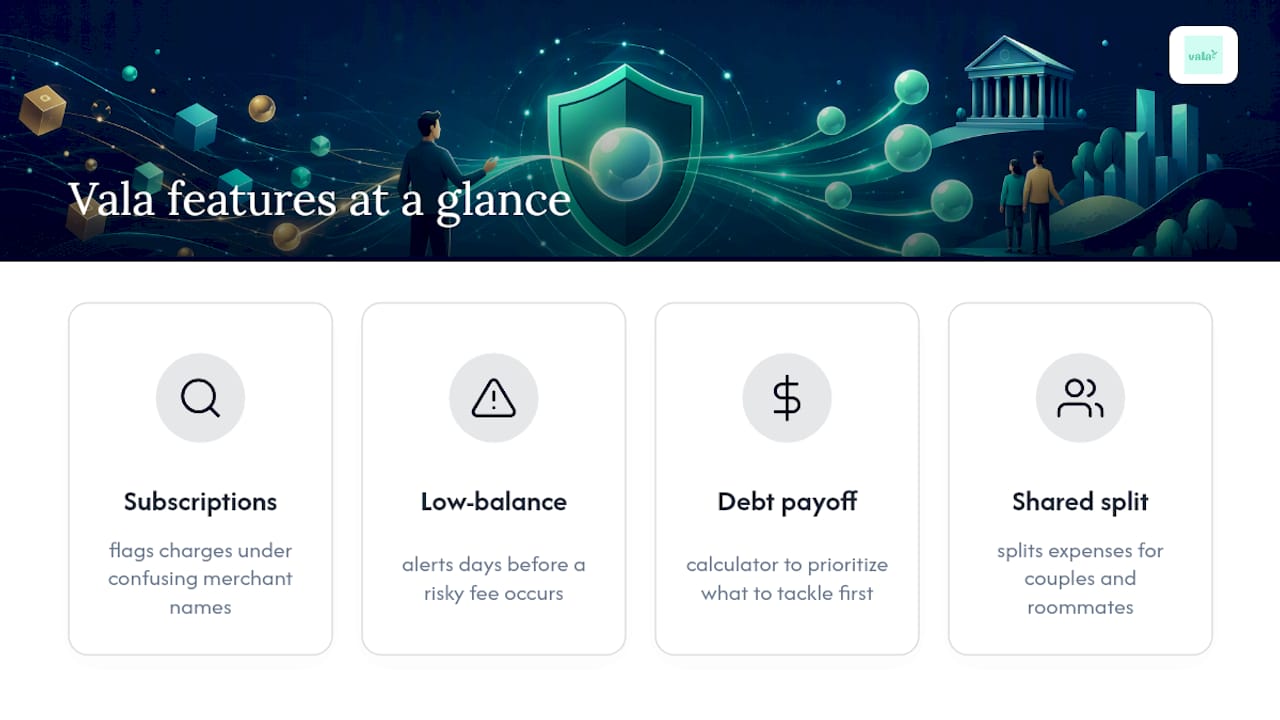
Vala builds several of these directly into the app: AI-driven spending insights that surface subscriptions you forgot about, a Debt Payoff Calculator for prioritizing which balances to clear first, overdraft prediction before a low-balance day hits, and shared expense splitting for couples or roommates managing costs together.
Banks waive an estimated 30 to 50 percent of fees when customers simply ask, especially for first-time occurrences, which makes a habit of checking your statement monthly worth far more than the five minutes it takes.
When you connect bank accounts to any finance app, use multi-factor authentication and confirm the connection is read-only. A read-only link means the app can see transactions but can’t move money, which keeps your recovery tools from becoming a new point of risk. Small, avoidable leaks like ADHD-related impulse spending or forgotten renewals respond especially well to automated reminders, since they remove the reliance on remembering in the first place.
A 20-Minute Audit That Found Over $200
A quick review of two months of statements turned up three forgotten subscriptions, a duplicate streaming service, and an overdraft fee triggered by a subscription renewal that hit before payday. Canceling the duplicates and disputing the fee recovered just over $200 in about three weeks.
The one change that stuck afterward: a recurring calendar reminder every first Sunday of the month to scan for new charges. It takes less time than making coffee, and it’s caught two more forgotten trials since.
If you haven’t run this kind of check in the last few months, block 20 minutes this week. Most people are surprised by what they find.
— SaverStride
Let Vala Handle the Recovery Legwork for You
Vala turns the manual audit you just read about into something that runs in the background. Instead of scrolling through statements once a quarter, you get automatic subscription detection, recurring-payment tagging, and low-balance alerts that catch a problem before it becomes a fee.
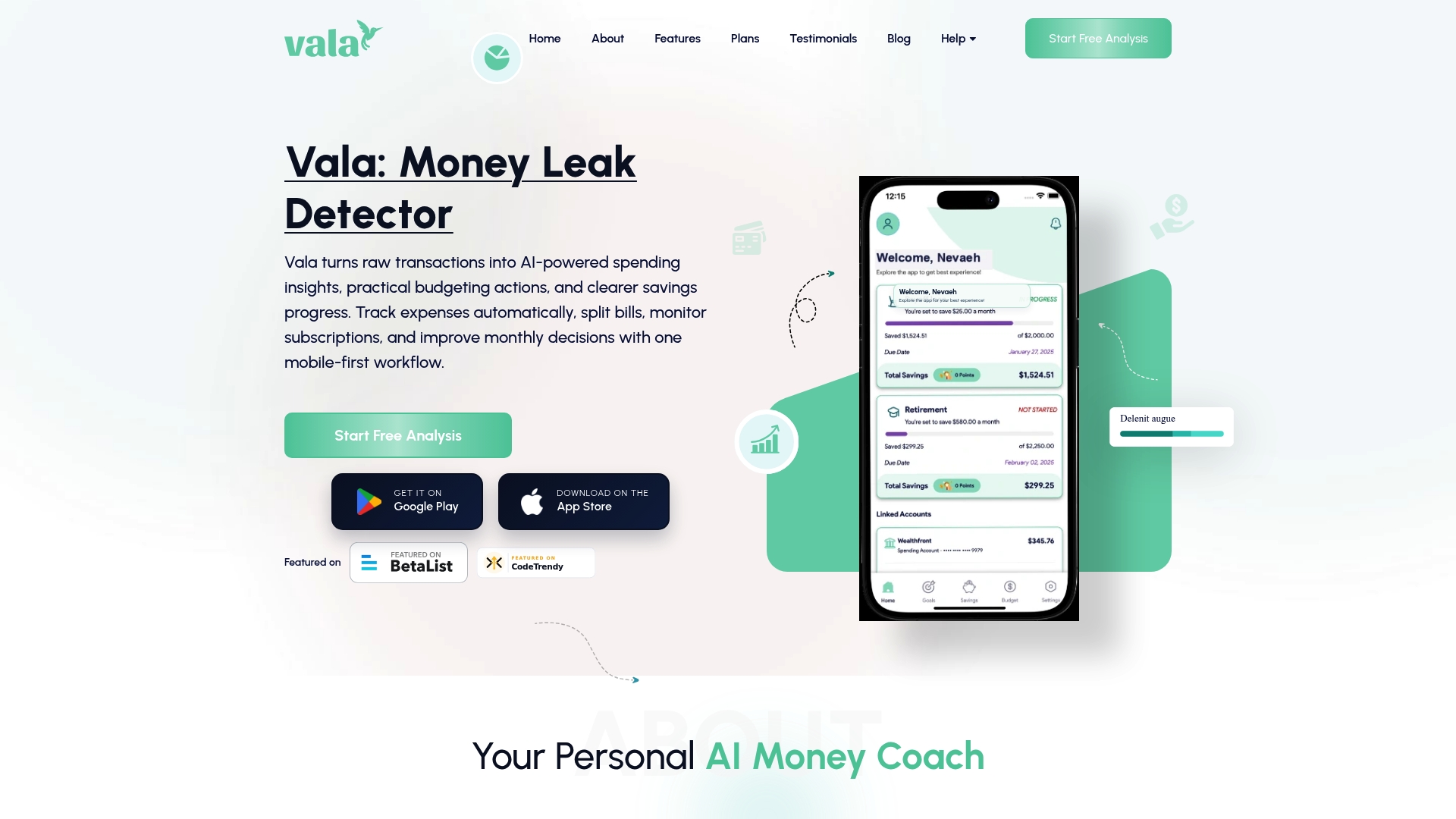
Every feature in this guide maps to something built into the app: subscription discovery that flags charges under confusing merchant names, a Debt Payoff Calculator for prioritizing what to tackle first, and overdraft prediction that warns you days before a risky transaction hits. Couples and roommates get shared expense splitting on top of it, so joint recovery efforts don’t fall apart over who forgot to cancel what.
If you want to see where your own money is leaking, start with Vala’s free tier and connect your accounts through a secure, read-only link. Explore the full set of personal finance tools, including the budget and subscription calculators, to see exactly how much your forgotten charges are costing you this year.
Where to Go for Official Dispute Help
For unauthorized transactions and dispute timelines, start with the CFPB’s guidance on unauthorized transactions. For undelivered or unordered merchandise, the FTC’s billing guidance covers your rights directly, and ReportFraud.ftc.gov handles scam reporting.
Sources
- How do I get my money back after I discover an unauthorized transaction or money missing from my bank account? | Consumer Financial Protection Bureau
- What to do if you’re billed for things you never got or you get unordered products | FTC
- Subscriptions are hard to cancel and easy to forget — NerdWallet
- Transactionlookup