
Group budget planning is the structured process of allocating and agreeing on shared financial responsibilities before expenses occur. It is the single most effective way to prevent money conflicts in shared activities like travel, dining, and group events. Without it, groups default to guesswork, awkward real-time negotiations, and resentment that outlasts the trip or dinner. Why group budgets need planning comes down to one fact: unplanned shared spending creates ambiguity, and ambiguity creates conflict. The good news is that a clear plan, agreed on upfront, removes both.
What are the primary benefits of planning group budgets?
Group budget planning delivers financial and social benefits at the same time. On the financial side, collaborative budgeting leads to significant monthly savings compared to isolated budgeting, with open financial sharing helping individuals save $200–$400 more per month through accountability and shared cost-cutting. That is not a small number. It reflects what happens when people stop making spending decisions alone and start making them together.
The social benefits are equally real. Budgeting reduces financial stress and prepares groups better for unexpected expenses, leaving everyone feeling more secure and in control. When a group agrees on a spending limit before booking a vacation rental or choosing a restaurant, no one feels pressured to overspend or embarrassed to speak up.

A concept gaining traction in personal finance circles is “loud budgeting,” which means being openly transparent about your financial limits with the people around you. Shared budgeting conversations reduce money shame, lead to better money habits, and create collective financial wins. Loud budgeting turns what used to be an awkward topic into a group norm.
The core benefits of group budget planning include:
- Spending visibility: Everyone sees where the money goes, which prevents surprise charges and forgotten costs.
- Cost savings: Groups that plan together identify cheaper alternatives before committing, not after.
- Reduced stress: Pre-agreed limits eliminate real-time pressure to spend beyond your comfort zone.
- Stronger trust: Transparency about money builds confidence between friends, couples, and roommates.
- Shared accountability: When everyone agrees to a plan, everyone feels responsible for sticking to it.
“Open money conversations shift a group from performative spending to genuine connection. The budget becomes the permission slip to be honest.” — Financial behavior research on loud budgeting
What common mistakes make group budgeting fail?
Most group budgeting failures are not about math. They are about assumptions. The most common mistake is splitting every expense equally without first agreeing on which costs are shared and which are personal. Splitting all expenses equally causes friction. A tiered split system, where shared costs like accommodation and transport are divided equally while personal expenses like spa treatments or extra drinks are paid individually, prevents guilt and resentment before it starts.
A second major mistake is failing to log expenses as they happen. Not logging expenses in real time causes forgotten or disputed costs, which leads directly to resentment after the fact. When someone pays for a group dinner and forgets to mention it until two weeks later, the conversation gets complicated fast.
Here are the most common group budgeting mistakes and how planning prevents each one:
- Assuming everyone has the same budget. Groups include people with different incomes and spending habits. Agreeing on a spending range upfront respects those differences without making anyone feel singled out.
- Skipping the pre-trip or pre-event money talk. Avoiding the conversation does not make it go away. It just moves it to a worse moment, like when the bill arrives.
- No clear owner for shared costs. When no one is responsible for tracking group expenses, costs get lost. Assign one person or use a shared app to log everything.
- Mixing personal and group expenses. Buying a souvenir on the group card creates confusion. Separate personal and shared spending from the start.
- Settling up at the end without receipts. Memory is unreliable. Real-time logging is the only way to settle fairly.
Pro Tip: Before any group trip or event, send a simple message to the group listing three things: the total estimated budget, how shared costs will be split, and who is responsible for tracking expenses. This one message prevents most conflicts.
The “passive-aggressive gap” is a real pattern in untracked group spending. One person pays for more than their share, says nothing, and grows quietly resentful. Planning closes that gap before it opens.
How to plan an effective group budget
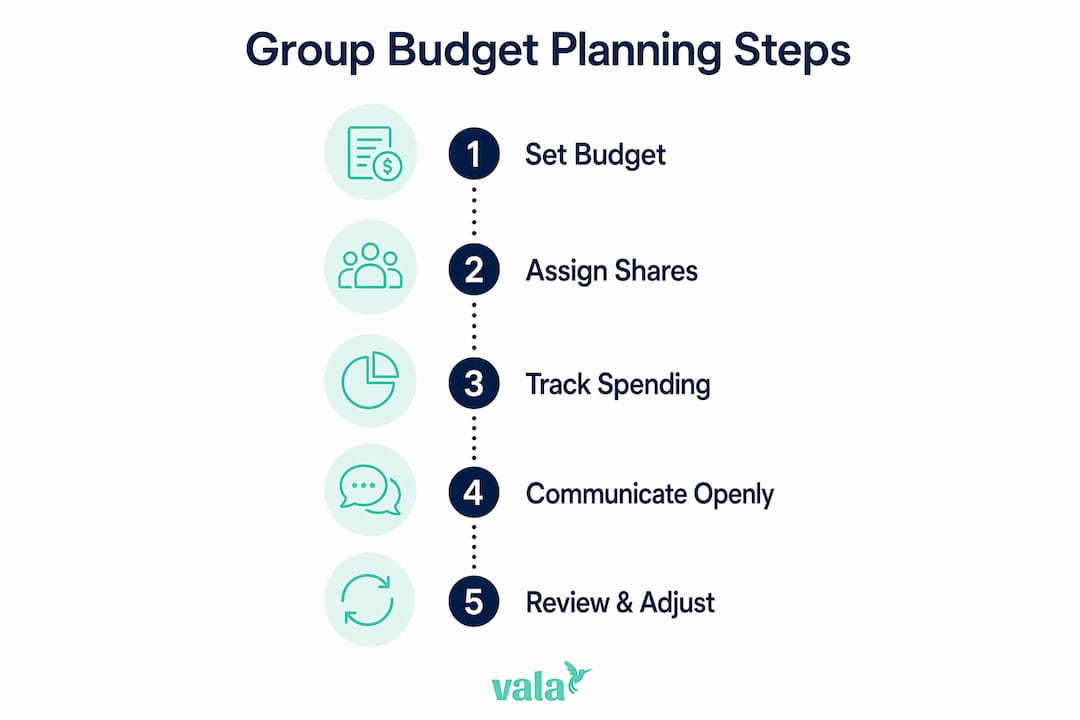
Effective group financial planning follows a clear sequence. Start with a conversation about comfort levels, not costs. Ask each person what they want to spend overall, then build the budget around the most conservative answer. This approach respects everyone and prevents the group from splitting later over money.
The practical steps look like this:
- Set a total budget first. Agree on the overall spend before breaking it into categories. This prevents category-by-category negotiation, which drags on and creates friction.
- Categorize expenses. Separate shared costs (accommodation, transport, group meals) from personal costs (individual activities, personal shopping). Use the tiered split system described earlier.
- Assign a tracker. One person or one shared app logs every group expense in real time. Rotating this role on longer trips keeps it fair.
- Build in a buffer. Add 10–15% to your estimated total for unexpected costs. Groups that skip this step almost always go over budget.
- Agree on the settlement method upfront. Decide before the trip whether you will settle daily, at the end, or through a shared app that calculates balances automatically.
The average American spends about $250 per month on social activities, and unplanned social costs are a leading driver of lifestyle creep and financial stress. That figure puts group planning in perspective. If you are spending $250 monthly on social activities without a plan, a significant portion of that is likely wasted on overspending driven by social pressure rather than genuine choice.
| Planning step | What it prevents |
|---|---|
| Set total budget upfront | Category-by-category arguments |
| Categorize shared vs. personal | Resentment over unequal contributions |
| Log expenses in real time | Disputed or forgotten costs |
| Build a buffer | Last-minute shortfalls |
| Agree on settlement method | Post-event confusion and conflict |
Technology makes all of this easier. Apps that track group spending in real time remove the need for manual calculations and give everyone visibility into the shared balance at any moment. Valapoint is built specifically for this, letting groups log expenses, split costs, and see exactly where the money stands without a single spreadsheet.
Pro Tip: Use a shared budgeting app to log expenses the moment they happen, not at the end of the day. Real-time logging takes 10 seconds per transaction and saves hours of argument later.
How does group budget planning strengthen relationships?
Money is one of the top sources of conflict in relationships, and shared group activities put that tension on full display. Group budget planning addresses this directly by replacing assumptions with agreements. When everyone knows the plan, no one has to guess whether their spending is acceptable or feel judged for their financial limits.
Couples who budget together report higher relationship satisfaction and financial harmony. The same principle applies to friend groups and roommates. The act of having the money conversation, even when it feels awkward at first, builds a level of trust that spending without a plan never creates.
Transparent group financial planning moves social groups away from performative spending. Performative spending is buying things to appear generous or avoid looking cheap, rather than because you actually want to. It is expensive, it is stressful, and it does not reflect what anyone actually values. A clear group budget gives everyone permission to spend intentionally instead.
“Vulnerability around money is one of the fastest ways to build real trust in a group. When you say ‘here’s what I can afford,’ you invite others to do the same.” — Research on financial transparency and social bonding
Groups that plan their budgets together also handle disagreements better when they do arise. Because the rules were agreed on upfront, a dispute about a specific expense has a reference point. Without a plan, every disagreement starts from scratch.
Key Takeaways
Group budgets need planning because unstructured shared spending creates conflict, resentment, and financial stress that a simple upfront agreement can prevent entirely.
| Point | Details |
|---|---|
| Plan before spending starts | Agree on total budget and split logic before any expenses occur to prevent real-time friction. |
| Use tiered expense splitting | Divide shared costs equally and let individuals pay for personal expenses to avoid resentment. |
| Log expenses in real time | Record every group cost as it happens to prevent disputed or forgotten charges. |
| Loud budgeting builds trust | Open money conversations reduce shame, improve habits, and strengthen group relationships. |
| Technology removes the friction | Shared budgeting apps give everyone visibility and automate the math so no one feels shortchanged. |
Why I think most groups get this completely backward
Groups treat the money conversation as the awkward part they want to skip. The actual awkward part is the argument at the end of the trip when someone feels they paid more than their share. I have seen this pattern repeat across friend groups, couples, and family vacations. The groups that plan upfront, even with a five-minute conversation, almost always finish the experience closer than when they started. The groups that skip it often do not plan another trip together.
The mistake most groups make is treating budgeting as a sign of distrust, as if asking “what’s everyone comfortable spending?” implies you do not trust your friends to be fair. The opposite is true. Asking that question is the most respectful thing you can do. It tells everyone that their financial reality matters and that no one will be pressured into spending beyond their means.
Consistent budgeting creates financial well-being comparable to households earning $25,000 more without budgeting. That finding applies to groups too. A group that plans its shared spending does not just save money. It builds a financial culture where honesty is normal and pressure is low. That is worth more than any individual line item on a trip budget.
The groups I have seen thrive financially are not the ones with the highest incomes. They are the ones who talk about money openly, agree on a plan, and use tools that keep everyone accountable without making it feel like a chore. Start the conversation early. The rest gets easier from there.
— SaverStride
Valapoint makes group budget planning straightforward
Tracking shared expenses across a group should not require a spreadsheet, a group chat full of Venmo requests, and three follow-up conversations. Valapoint handles the tracking, splitting, and visibility automatically so your group can focus on the experience instead of the math.
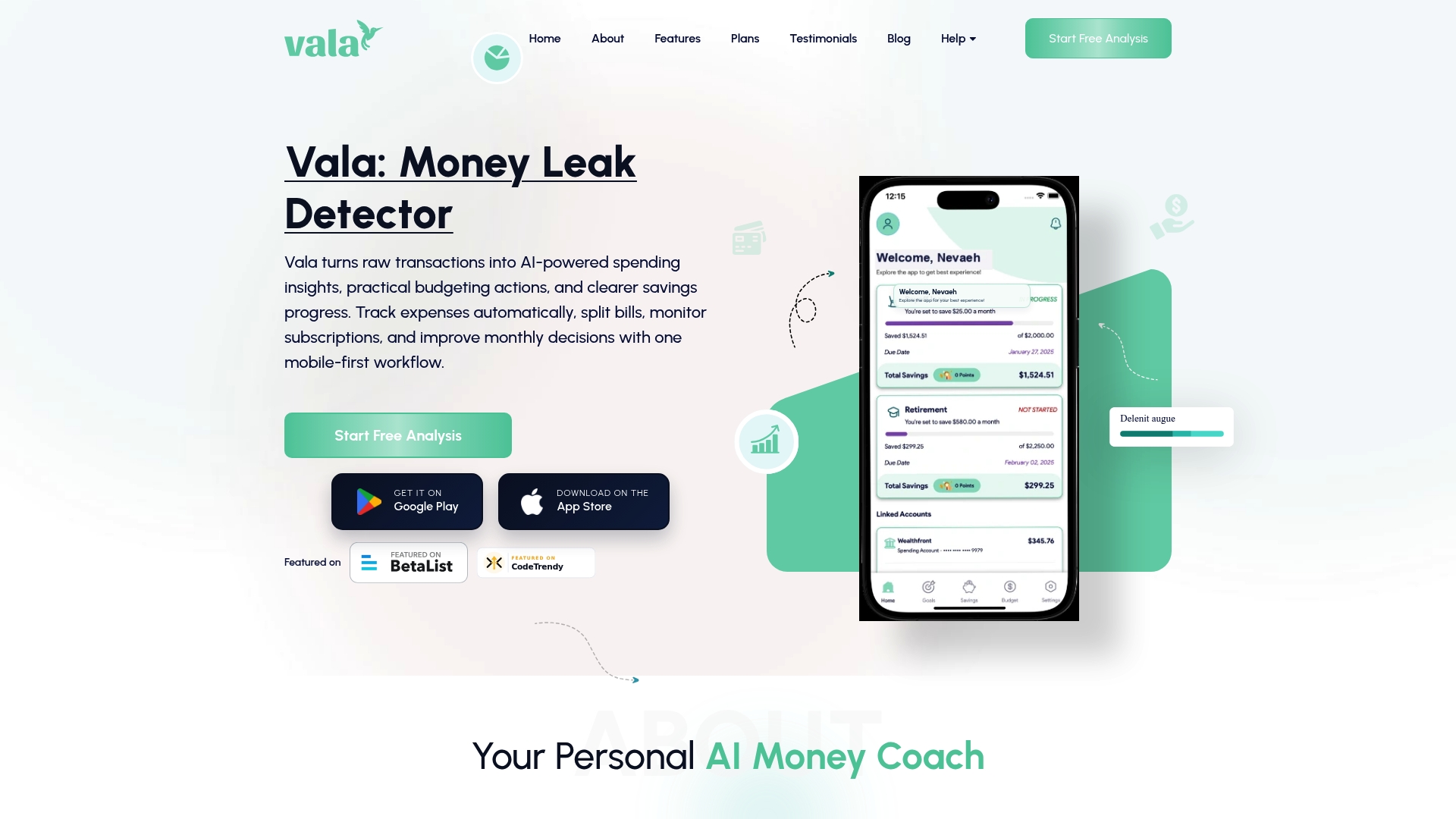
With Valapoint’s personal finance app, you can log group expenses in real time, split costs by category, and see exactly who owes what at any moment. The app surfaces hidden spending patterns so your group can make smarter decisions before costs spiral. You can also use Valapoint’s group expense tracking tools to set shared budget limits and get alerts before you go over. Whether you are planning a weekend trip, a group dinner, or a shared household budget, Valapoint gives your group the clarity to spend confidently and settle fairly.
FAQ
Why do group budgets need planning before the activity starts?
Pre-activity planning sets clear expectations for how costs will be split and what the total spending limit is. Groups that agree upfront avoid the real-time pressure and post-event disputes that unplanned shared spending creates.
What is the best way to split expenses in a group?
A tiered split system works best. Divide shared costs like accommodation and transport equally, and let each person pay for their own personal expenses. This approach prevents resentment from unequal contributions.
How does group budget planning reduce financial stress?
Budgeting reduces financial stress by removing uncertainty about what you will spend. When everyone knows the plan, no one feels pressured to overspend or anxious about unexpected costs.
What is loud budgeting and how does it help groups?
Loud budgeting means being openly transparent about your financial limits with the people around you. It reduces money shame, encourages better habits, and helps groups make spending decisions that reflect everyone’s actual comfort level.
How can technology help with group budget planning?
Shared budgeting apps log expenses in real time, calculate who owes what, and give every group member visibility into the shared balance. Real-time logging prevents forgotten costs and removes the need for manual calculations at the end of a trip or event.