
How to Create a Weekly Spending Plan That Works

Most people abandon their monthly budget by week two. The numbers look fine on paper, but life happens fast. A surprise car repair, a few extra takeout orders, and suddenly you’re behind with three weeks left in the month. When you create a weekly spending plan instead, you shrink the window for mistakes. You get clear, fast feedback on your spending. And you can fix a bad week before it becomes a bad month. This guide walks you through every step, from calculating your income to tracking and adjusting your plan over time.

Table of Contents

Key takeaways

Point Details
Use 4.33, not 4 Divide monthly expenses by 4.33 to get accurate weekly figures, not a rounded estimate.
Treat savings as fixed Automate savings and debt payments so they are never skipped or deprioritized.
Build in a buffer Reserve a small weekly amount for unexpected costs to avoid blowing your entire plan.
Check in mid-week A quick mid-week review lets you catch overspending before the week is gone.
Adjust regularly Review your spending envelopes monthly and update them as your income or life changes.

How to create a weekly spending plan from your income

Before you allocate a single dollar, you need to know exactly how much money you actually have each week. This sounds obvious, but most people guess. And guessing leads to budgets that fall apart fast.

Start with your net income, meaning what lands in your bank account after taxes and deductions. If you get paid monthly, divide by 4.33 to get your true weekly figure. Using 4 instead of 4.33 inflates your weekly number slightly, which creates a small but consistent gap between your plan and reality. For example, $3,000 per month divided by 4.33 gives you roughly $693 per week, not $750.

Once you have your weekly income, sort your expenses into two groups:

  • Fixed expenses: Rent, loan payments, subscriptions, insurance. These are predictable and do not change week to week.
  • Variable expenses: Groceries, gas, dining out, entertainment. These shift based on your choices and habits.

Then there is a third category most people forget entirely. Irregular expenses like car registration, annual software subscriptions, or holiday gifts feel like surprises, but they are not. Divide annual costs by 52 to find their weekly equivalent and include that amount in your plan. A $520 car insurance bill becomes $10 per week. Small, manageable, and no longer a shock.

To get accurate numbers, review several weeks of bank statements and credit card transactions. Patterns will emerge quickly. You will likely find categories where you spend more than you think, and a few where you have room to cut.
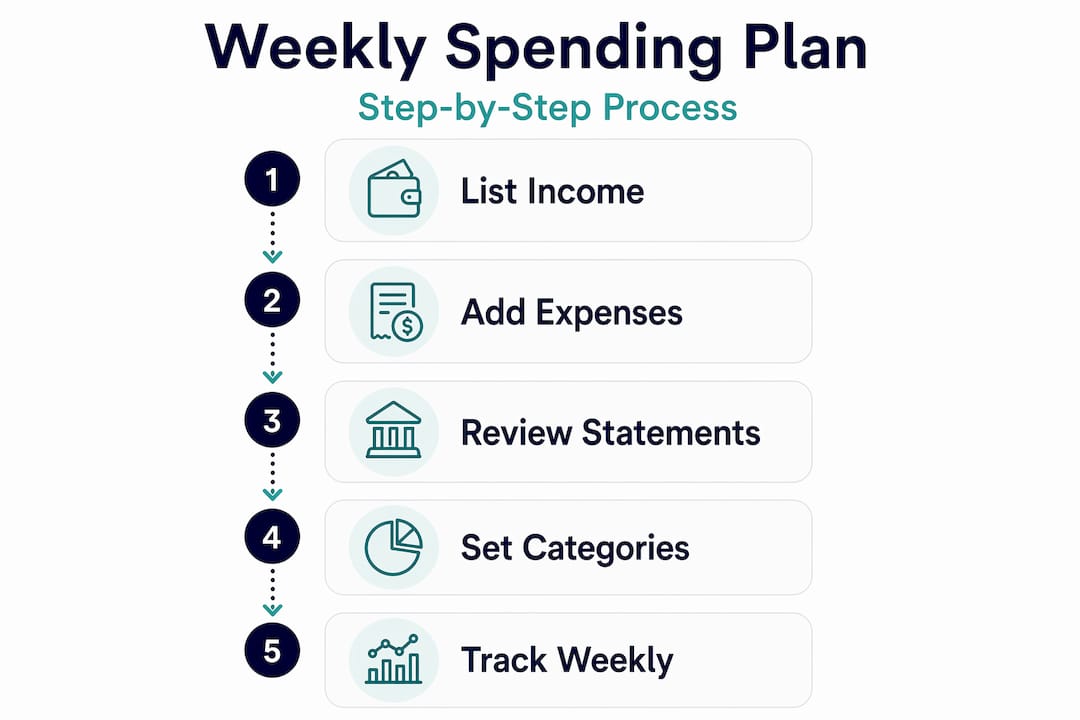
Infographic outlining weekly spending plan steps

Pro Tip: If your income varies week to week, base your weekly budget on your lowest consistent paycheck, not your average. Keep any extra income in a buffer account and draw from it during lean weeks.

Building your spending envelopes and allocations

Now you are ready to assign dollars to categories. Think of each category as a spending envelope. Once the envelope is empty, spending in that category stops for the week. This is the core mechanic that makes weekly expense management work.

Here is a step-by-step process to build your envelopes:

  1. List every spending category. Start with fixed costs, then variable ones. Common categories include groceries, transportation, dining out, entertainment, personal care, clothing, and household supplies.

  2. Set a realistic cap for each category. Base these on your actual spending history, not what you wish you spent. If you have been spending $120 per week on groceries, starting at $60 is a setup for failure. Reduce gradually instead.

  3. Allocate savings and debt repayment first. Treat these as non-negotiable fixed costs and automate the transfers. Paying yourself first means savings never get squeezed out by discretionary spending. A practical framework from Fidelity suggests no more than 60% of take-home pay to essentials, 30% to lifestyle spending, and 10% to savings and near-term goals.

  4. Add a buffer envelope. Allocate $15 to $30 per week specifically for unexpected small costs. This is not a slush fund for extras. It is a financial cushion for the things you genuinely could not predict.

  5. Check that your total allocations do not exceed your weekly income. If they do, identify which variable categories to trim. Do not cut savings or fixed costs first.

  6. Revisit your envelopes monthly. Life changes. A new gym membership, a pay raise, or a change in commute all affect your numbers. Budgeting percentages are flexible starting points and should shift as your circumstances do.

One practical option for enforcing envelope limits is to load each category’s weekly amount onto a separate prepaid card or sub-account. Using separate accounts per category creates a physical boundary that makes overspending much harder to rationalize.

Pro Tip: Do not create too many envelopes. Five to eight categories is the sweet spot. More than that and tracking becomes a chore. Fewer than five and you lose visibility into where money actually goes.

Man organizing budget envelopes on kitchen counter

Tracking, reviewing, and adjusting your plan

Creating the plan is only half the work. The other half is following through, and that requires a simple, consistent tracking habit.

A good weekly financial plan includes a place to record your starting balance, expected income, fixed bill amounts, variable spending by category, savings transfers, and a running total. A structured weekly money template helps you see all of this at a glance without having to do mental math every time you buy something.

Here is what a basic weekly tracking table looks like in practice:

Category Budget Spent Remaining
Groceries $120 $87 $33
Transportation $60 $45 $15
Dining out $40 $40 $0
Entertainment $30 $12 $18
Buffer $25 $10 $15

Updating this table takes less than five minutes a day. The payoff is that you always know where you stand.

A few habits that make tracking stick:

  • Do a mid-week check-in every Wednesday. Weekly budget cycles let you catch overspending early and make real-time adjustments before the week ends. If dining out is already at $35 of a $40 budget by Wednesday, you know to cook at home Thursday and Friday.
  • Use conditional formatting in spreadsheets. Embedding budget limits with automatic variance calculations highlights problem categories in red before they become crises. You can also find top expense tracking apps that do this automatically.
  • Reconcile at the end of each week. Compare what you planned to spend against what you actually spent. This weekly reconciliation is where real learning happens. Over time, your estimates get sharper and your plan gets more accurate.
  • Build a rolling buffer account. Any unspent buffer money at the end of the week rolls into a small reserve. After a few months, this reserve can absorb larger unexpected costs without touching your main budget.

Common pitfalls and how to avoid them

Even a well-designed plan can go sideways. Knowing where things typically break down helps you stay on track.

  1. Setting budgets based on hope, not history. This is the most common mistake. If your actual grocery spending has been $150 per week for the past two months, budgeting $80 will not change your behavior. It will just make you feel like you failed. Start with your real numbers and reduce by 5 to 10 percent over time.

  2. Forgetting irregular bills. Annual subscriptions, quarterly insurance payments, and seasonal expenses catch people off guard every time. Build these into your weekly plan as small, consistent amounts so they never surprise you.

  3. Skipping the weekly review. A budget you do not check is just a list of intentions. The review is where the plan becomes real. Missing even two weeks in a row can let spending drift significantly.

  4. Overspending early in the week with no plan to recover. If you blow your dining out budget on Monday, you need a clear rule for what happens next. Without a recovery plan, most people just keep spending and tell themselves they will do better next week.

  5. Making the plan too rigid. A budget that allows zero flexibility creates stress and leads to abandonment. Build in a small “no questions asked” amount each week for spontaneous spending. Even $10 to $20 of guilt-free money makes the whole system feel less punishing.

“Spending mistakes in a weekly budget only affect that week. Next Monday, you start fresh.” This reset quality is one of the most underrated advantages of weekly budgeting over monthly planning.

My honest take on weekly budgeting

I have seen a lot of budgeting systems come and go, and the weekly approach consistently outperforms monthly planning for one simple reason: the feedback loop is short. When you check in weekly, you are never more than a few days away from a reset. That psychological fresh start matters more than most financial advice acknowledges.

What I have also learned is that the plan itself matters less than the habit of reviewing it. I have watched people with imperfect budgets succeed because they checked in consistently. I have also seen people with beautifully designed spreadsheets fail because they only opened them once a month.

The other thing worth saying: do not wait until your finances are “ready” to start. Your first weekly plan will be inaccurate. That is expected and fine. The goal in week one is not precision. It is awareness. Once you know where your money actually goes, you can make real decisions about where you want it to go.

If your income is irregular, budget to your lowest consistent week and keep a buffer account for higher-earning periods. Budgeting to your lowest income and drawing from a buffer during lean weeks removes the anxiety of variable pay cycles entirely.

Automate whatever you can. Savings transfers, bill payments, even category tracking. The less your budget depends on willpower, the more likely it is to survive contact with real life.

— SaverStride

Take control with the right tools

Building a weekly spending plan by hand is a solid starting point, but the right app makes the whole process faster and more accurate.

https://valapoint.com

Valapoint’s personal finance app gives you real-time expense tracking, category budgets, and AI-powered insights that surface spending patterns you might miss on your own. Instead of manually updating a spreadsheet, Vala categorizes your transactions automatically and shows you exactly where you stand against your weekly budget at any moment. You can also use Valapoint’s finance calculators and tools to set up weekly savings targets, model debt payoff timelines, and build a budget that fits your actual income. If you are ready to stop guessing and start tracking with confidence, Valapoint gives you everything you need in one place.

FAQ

How do I calculate my weekly budget from a monthly income?

Divide your monthly net income by 4.33 to get an accurate weekly figure. Using 4 instead overstates your weekly amount and leads to a consistent shortfall.

What categories should I include in a weekly spending plan?

Start with fixed costs like rent and loan payments, then add variable categories such as groceries, transportation, dining out, and entertainment. Include a small buffer for unexpected expenses.

How often should I review my weekly spending plan?

Do a quick check-in mid-week and a full reconciliation at the end of each week. Review and update your category allocations at least once a month.

What should I do if I overspend in a category mid-week?

Reduce spending in another flexible category for the rest of the week to compensate. If overspending happens repeatedly, adjust that category’s budget to reflect your actual habits.

Is a weekly budget better than a monthly budget?

Weekly budgets create shorter feedback loops, so mistakes are caught and corrected faster. Overspending in a weekly plan only affects that week rather than derailing an entire month.


Article generated by BabyLoveGrowth

Where Is My Money Going? Understanding Your Expenses

Ever find yourself wondering where all your money actually goes? You’re not alone. It’s a common experience to look at your bank balance and feel a pang of confusion, especially when you know you haven’t bought anything major. This article aims to shed some light on those financial mysteries, helping you pinpoint where your hard-earned cash is landing and offering practical ways to get a better handle on your spending.

It’s an almost universal experience. One moment, your bank account looks healthy, and the next, it’s significantly lighter. Sometimes, there’s no obvious culprit. So, what’s going on?

Expected vs. Unexpected Outflows

We all have our regular bills: rent/mortgage, utilities, loan payments. These are the expected outflows. But often, it’s the smaller, less obvious ones that quietly chip away at your balance. Think about that streaming subscription you forgot about, the daily coffee habit, or even late fees you didn’t anticipate. These “silent killers” can add up shockingly fast.

The “Where Did My Money Go?” Phenomenon

A recent trend, as highlighted in some financial discussions, concerns unexpected bank balance drops without obvious spending. This can be genuinely perplexing. Sometimes, it’s simply a delay in transactions posting, or it could be a slew of small, recurring charges you’ve overlooked. The key is to acknowledge this feeling and then take active steps to investigate.

If you’re looking to gain better control over your finances and understand where your money is going, you might find it helpful to explore personal finance apps that can simplify budgeting and expense tracking. For more insights on this topic, check out the article on personal finance apps at Valapoint. This resource provides a comprehensive overview of various apps that can help you manage your finances effectively.

Unearthing Hidden and Unclaimed Funds

Before we even dive into where your current money is going, let’s talk about money that might be sitting out there, waiting for you. It’s like finding forgotten cash in an old coat pocket, but on a much larger scale.

Your State’s Unclaimed Property Office

This is often the first and best place to look. State governments hold billions in unclaimed property. This isn’t just lost cash; it could be old bank account balances, uncashed refund checks, insurance policy payouts, forgotten utility deposits, or even contents from safe deposit boxes.

  • How to Search: Most states have an online database. A quick search for “unclaimed property [your state]” will usually lead you to the right place. You simply enter your name and sometimes previous addresses.
  • What You Might Find: You’d be surprised. From forgotten inheritances to security deposits from long-ago rentals, people often discover significant amounts.

IRS Unclaimed Stimulus Payments

If you’re reading this sometime in late 2024 or early 2025, pay close attention: the IRS has recently been issuing special payments to over a million taxpayers who missed out on the 2021 Recovery Rebate Credit. These are for those who didn’t claim it on their original tax returns.

  • What to Check: While all initial Economic Impact Payments have been distributed, you might still be eligible for 2020 or 2021 credits.
  • How to Verify: The IRS urges non-filers to claim these by a specific deadline. You can check your eligibility by reviewing your tax returns for those years or by accessing your IRS online account. Don’t leave money on the table that’s rightfully yours!

Other Government Agencies and Databases

Beyond specific stimulus payments, there are quite a few other avenues for tracking down money that might belong to you.

  • IRS “Where’s My Refund?”: If you’re waiting on a tax refund, this tool is your go-to.
  • SEC Database (Investments): For investment-related funds, especially if you’ve had dealings with brokerage firms or investment accounts that may have become dormant.
  • FDIC (Bank Failures): If a bank you had an account with failed, the FDIC often steps in to ensure depositors get their money back, up to their insured limits.
  • TreasuryHunt.gov (Savings Bonds): Do you remember getting savings bonds as a kid or for gifts? This site can help you locate matured, unredeemed savings bonds.
  • Bankruptcy Courts: If you were owed money by a company or individual that went bankrupt, there might be funds from bankruptcy proceedings.
  • IIM Accounts (Native American Trust Funds): For individuals with Individual Indian Money (IIM) accounts, there are specific resources to check for unclaimed funds.

The takeaway here is simple: it pays to look. These aren’t obscure, hard-to-find programs; they are readily accessible resources designed to reunite people with their money.

Tracking Your Spending: The First Step to Control

money

Once you’ve looked for any lost treasures, it’s time to tackle your active spending. You can’t manage what you don’t measure.

The Power of Knowing Where Every Dollar Goes

This isn’t about being restrictive; it’s about being informed. When you know exactly where your money is flowing, you gain power over it. You can make conscious decisions instead of just reacting to a dwindling bank balance.

  • Financial Literacy and Empowerment: Understanding your expenses is a cornerstone of financial literacy. It’s how you identify problems, set realistic goals, and ultimately achieve financial success.

Methods for Tracking

There’s no one-size-fits-all method for tracking. The best one is the one you’ll actually stick with.

  • Budgeting Apps: These are probably the most popular choice for modern tracking. Apps like Mint, YNAB (You Need A Budget), or PocketGuard link directly to your bank accounts and credit cards, automatically categorizing transactions. Many offer robust reporting and goal-setting features.
  • Spreadsheets (Manual Tracking): For those who prefer a hands-on approach, a simple spreadsheet in Excel or Google Sheets can be incredibly effective. You manually enter your income and all your expenses. This often gives a deeper sense of engagement with your money.
  • Notebook and Pen: Don’t underestimate the power of the old-fashioned way. Carrying a small notebook and jotting down every purchase immediately can be a great way to stay mindful of your spending.
  • Bank/Credit Card Statements: While not a real-time tracking method, regularly reviewing your statements is crucial. Look for unrecognized transactions, recurring charges, and analyze patterns.

Identifying Spending Categories

Once you start tracking, you’ll naturally begin to see patterns. Categorizing your expenses is key to understanding these patterns.

  • Fixed Expenses: These are costs that generally stay the same each month, like rent/mortgage, loan payments, most insurance premiums, and many subscription services.
  • Variable Expenses: These fluctuate month to month. Think groceries, dining out, entertainment, gas, and clothing. These are often the areas where you have the most control and can make the quickest adjustments.
  • Discretionary Spending: This is the “fun” money – things you want but don’t strictly need. It includes things like hobbies, impulse purchases, and luxury items. This category is often the first place to look when trying to cut back.

Analyzing Your Financial Flow

Photo money

Tracking is just the beginning. The real magic happens when you pause to analyze the data you’ve collected. This is where you connect the dots between your habits and your bank balance.

Where Your Money Really Goes

Often, what we think we spend money on is very different from the reality. That daily coffee might seem insignificant, but multiply it over a month, and it’s a surprising sum. Likewise, those “just this once” purchases can add up.

  • The “Death by a Thousand Cuts” Principle: Small, frequent expenses can bleed your budget dry just as effectively as a large unexpected bill. Identifying these small leaks is critical.
  • Subscription Overload: In the age of streaming services, apps, and digital memberships, it’s easy to accumulate subscriptions you barely use or have forgotten about. Do a full audit of all recurring charges.

Shifting Money Trends and Their Implications

It’s not just your personal spending; the broader financial landscape also plays a role. Recent financial shifts can influence how you think about and manage your money.

  • Bank Deposit Outflows: The FDIC recently reported the first significant drop in bank deposits since 1995 – nearly a trillion dollars outflowed. What does this mean? It suggests people are moving their money.
  • Where is the Money Going?
  • Treasury Securities: Big players like Warren Buffett have moved substantial sums ($369 billion in his case) into Treasury securities. These offer more attractive returns than traditional savings accounts, especially in a higher interest rate environment.
  • Gold: Central banks have also been significantly increasing their gold reserves, buying hundreds of tonnes. Gold is often seen as a safe haven asset during economic uncertainty.
  • High-Yield FDIC-Insured Cash Strategies: For individuals, this means exploring options like high-yield savings accounts or Certificates of Deposit (CDs) that offer better returns while still being FDIC-insured.
  • Why This Matters to You: If your savings are sitting in a standard, low-interest savings account, you might be missing out on potential earnings. Understanding these trends can prompt you to explore more lucrative options for your idle cash.

If you’re looking to gain a better understanding of your finances, you might find it helpful to explore a related article that discusses budgeting strategies and financial planning. This can provide you with insights on where your money is going and how to manage it effectively. For more information, check out this informative piece on financial management at Valapoint’s blog.

Taking Action and Regaining Control

Category Amount
Housing 1000
Food 500
Transportation 300
Entertainment 200
Utilities 150

Understanding is crucial, but action is where change truly happens.

Creating a Realistic Budget

A budget isn’t a straitjacket; it’s a roadmap. It helps you allocate your income purposefully.

  • The 50/30/20 Rule: A popular guideline suggests 50% of your income for needs, 30% for wants, and 20% for savings and debt repayment. Adjust these percentages to fit your unique situation.
  • Zero-Based Budgeting: Every dollar of income is assigned a job – whether it’s an expense, savings, or debt repayment. This ensures no money is left unaccounted for.
  • Pay Yourself First: Automate transfers to your savings or investment accounts before you start spending on other things. This makes saving a priority, not an afterthought.

Identifying Areas for Optimization

Once you’ve tracked and budgeted, you’ll see opportunities to improve.

  • Cutting Unnecessary Expenses: Those forgotten subscriptions, untouched gym memberships, or expensive daily habits that don’t bring much joy.
  • Negotiating Bills: Many service providers (internet, cable, insurance) are willing to negotiate rates, especially if you’re a long-time customer or if you shop around for competitor pricing.
  • Smart Shopping: Meal planning to reduce grocery waste, buying in bulk for non-perishables, seeking out sales, or making a list and sticking to it.
  • Reviewing Financial Products: Are you getting the best interest rate on your savings? Is your credit card offering the most suitable rewards or the lowest interest rate? Regularly review these to ensure they’re working for you.

Regular Check-ins

Financial management isn’t a “set it and forget it” task. Life changes, and so do your expenses.

  • Weekly/Monthly Reviews: Take time each week or month to review your spending against your budget. Adjust as needed.
  • Annual Financial Audit: Once a year, do a deeper dive. Check for unclaimed funds again, review all your accounts, and reassess your long-term financial goals.

By actively engaging with your money – tracking where it comes from, where it goes, and even where it might be hiding – you transition from passively hoping your finances work out to actively directing them towards your goals. It’s an empowering process that can significantly improve your financial well-being.

FAQs

What is the importance of tracking where my money is going?

Tracking where your money is going is important for understanding your spending habits, identifying areas where you can save, and creating a budget to reach your financial goals.

How can I track where my money is going?

You can track where your money is going by using budgeting apps, keeping receipts, reviewing bank and credit card statements, and categorizing your expenses.

What are common areas where people’s money goes?

Common areas where people’s money goes include housing expenses, transportation costs, food and dining, entertainment, healthcare, and debt payments.

How can I control where my money is going?

You can control where your money is going by creating a budget, setting spending limits for different categories, prioritizing your expenses, and finding ways to reduce unnecessary costs.

Why is it important to have a clear understanding of where my money is going?

Having a clear understanding of where your money is going helps you make informed financial decisions, avoid overspending, and work towards achieving your financial goals.

Maximizing Your Auto Budget: Tips for Getting the Most Value

So, you’re looking to stretch your auto dollar as far as it can go. That’s a smart move, because let’s face it, cars are a necessary expense for many of us, but they don’t have to drain our bank accounts. The good news is, with a little know-how and some common sense, you can definitely get more bang for your buck when it comes to your car. It’s not about magic tricks; it’s really about being proactive and a bit savvy.

Keeping Your Car Running Smoothly (and Cheaply)

The biggest shock to your auto budget usually isn’t the everyday costs, but those unexpected, major repairs. A lot of that can be avoided by simply taking care of your vehicle. Think of it like going to the doctor for check-ups – it’s much better to catch a small issue early than to wait until it becomes a serious problem.

The Power of Regular Maintenance

Seriously, don’t skip those scheduled maintenance appointments. Your car’s manufacturer provides a recommended service schedule for a reason. These are the milestones where key fluids are checked and topped up, filters are replaced, and potential issues are identified before they get serious.

Oil Changes: More Than Just “Lube Jobs”

This is probably the most well-known maintenance task, and for good reason. Fresh oil lubricates your engine’s moving parts, keeping them from grinding against each other and overheating. Dirty, degraded oil is like trying to run an engine with sandpaper. Sticking to the recommended interval, whether it’s miles or months, is crucial.

Tire Care: Essential for Safety and Savings

Your tires are your connection to the road. Properly inflated tires wear down more evenly, last longer, and significantly improve your fuel efficiency. Aim to check your tire pressure at least once a month. It takes two minutes with a cheap gauge and can save you money on gas and premature tire replacement.

Tire Rotations: Balancing the Wear

Your front and back tires, and even the sides of your tires, wear at different rates. Rotating them according to the manufacturer’s schedule helps ensure they all wear down more evenly. This means you get more miles out of your set of tires overall.

Brake Checks: Don’t Wait for the Squeal

Brake pads are designed to wear down. Ignoring the signs that they need to be replaced can lead to damage to your rotors, which are a much more expensive fix. Paying attention to any changes in braking feel or new noises can save you a bundle.

DIY Basics: Empower Yourself

You don’t need to be a master mechanic to handle a few basic maintenance tasks. Learning to do some simple things yourself can save you money on labor costs.

Replacing an Engine Air Filter

This is often a surprisingly simple job, usually involving a few clips or screws. A clogged air filter chokes your engine, reducing performance and fuel economy. Replacing it yourself is often a matter of minutes and a few dollars for the part.

Cabin Air Filters: Breathing Easier

Similar to the engine air filter, the cabin air filter cleans the air that comes into your car’s interior. If it’s dirty, you’ll notice reduced airflow from your vents and perhaps a musty smell. Many are easily accessible and replaceable.

If you’re looking to enhance your financial management skills, you might find this article on auto budgeting particularly useful. It provides valuable insights into how to effectively allocate your resources and streamline your spending. For more information, check out the article here: Master Your Finances with a Smart Budget Tracker.

Driving Smarter, Saving More Miles Per Gallon

How you actually drive your car has a huge impact on how much you spend at the pump. Making small adjustments to your driving habits can add up to significant savings over time.

The Gentle Art of Acceleration and Braking

Think of your car’s fuel system like a sensitive faucet. Jerky starts and hard stops are like turning the faucet on and off rapidly – it uses way more water (or gas) than a steady flow. Accelerating smoothly and anticipating stops allows your car to use fuel much more efficiently.

Coasting to a Stop: Let Gravity Help

When you see a red light or stop sign coming up, take your foot off the gas and let your car coast. Modern cars often cut fuel entirely when coasting in gear, so you’re essentially using zero fuel until you need to touch the brakes.

The AC Dilemma: When to Use It

Air conditioning is a lifesaver on hot days, but it does put a strain on your engine and uses extra fuel. On the highway, it’s often more fuel-efficient to use the AC than to open the windows, as open windows create drag. However, at lower speeds, opening the windows might be the better option.

Lighten Your Load: Less Weight, Less Work

We all have that “stuff” we forget we’re carrying in our car. That spare tire you haven’t used in two years, the sports equipment, the bags of groceries that have been kicking around. All that extra weight makes your engine work harder and burn more fuel. Do a regular clear-out.

Smart Routing and Errand Planning

This is all about efficiency. Instead of making multiple short trips that involve a lot of starting and stopping, try to group your errands together. Plan your route to be as direct as possible, minimizing backtracking.

Combining Errands: The Power of One Trip

Think about your day or week and see what destinations are geographically close. Can you get your haircut before or after your grocery shopping? A little planning can save you a lot of miles and fuel.

Fuel Rewards Programs: A Little Bit Adds Up

Many gas station chains and even some credit card companies offer rewards programs. Signing up for these can give you points or discounts on future fuel purchases. It’s not a huge saving on a single fill-up, but over the year, it can make a difference.

Shopping for a Car: Savvy Strategies

Buying a car is a major expense, and there’s a lot of room to either overspend or find a fantastic deal. Being informed and prepared is key.

The Used Car Advantage

For most people, buying a used car makes a lot more financial sense than buying new. The moment a new car is driven off the lot, it depreciates significantly. A well-maintained used car, especially one that’s only a few years old, can offer incredible value.

Private Sellers: Direct Savings

Websites and apps like Facebook Marketplace, Craigslist, and dedicated car selling sites can be great places to find used cars directly from owners. This often cuts out the dealership markup.

The Importance of Maintenance Records

When looking at a car from a private seller, always ask for maintenance records. This is gold. It shows the owner took care of the car, and you can see what has and hasn’t been done.

Pre-Purchase Inspections: Your Best Friend

Before you hand over any money for a used car, even from a private seller you trust, pay for a pre-purchase inspection (PPI). A mechanic you choose will give the car a thorough once-over. For around $100-$200, they can spot underlying issues that you might miss, saving you thousands in potential repairs down the line. This is non-negotiable for smart used car buyers.

Insurance and Financing: Don’t Settle for Less

These are two areas where people often just accept the first offer they get, and that’s a costly mistake. A little comparison shopping and prep work can save you a significant amount of money.

Insurance: It’s Worth Shopping Around

Car insurance rates can vary wildly between companies for the exact same coverage. Don’t be loyal. Get quotes from multiple insurance providers every year or two. You might be surprised at how much you can save by switching.

Bundling Policies: Discounts Aplenty

If you have your home or renters insurance through a particular company, see if they offer auto insurance. Bundling different types of insurance with the same provider often leads to discounts.

Adjusting Your Coverage: What Do You Really Need?

Older cars with low resale value might not need comprehensive and collision coverage. If the cost to repair the car after an accident is more than its worth, you might be better off with just liability coverage. Talk to your provider about what makes sense for your vehicle and your risk tolerance.

Financing: Get Pre-Approved

If you’re planning on financing your car purchase, your dealership will likely offer financing options. However, it’s almost always a better strategy to get pre-approved for a loan from your bank or credit union before you even start looking at cars.

Bank/Credit Union Loans: Leverage at the Dealership

Having a pre-approved loan in hand gives you immense leverage at the dealership. You know the interest rate you qualify for, and you can use it to negotiate with the dealership’s finance department. They might be able to beat your pre-approved rate, but you won’t be forced to accept an inflated one just to get a car.

When managing your finances, creating an auto budget can be a crucial step towards achieving your financial goals. For those looking for effective tools to assist in this process, exploring the best personal finance apps can provide valuable insights. You can find a comprehensive overview of popular options in this article on personal finance apps that have garnered attention on Reddit. For more information, check out the article here.

Smart Budgeting and Avoiding Dealer Traps

This is where you become the boss of your car budget. It’s about being disciplined and recognizing the tactics that can cost you extra.

Track Your Expenses Meticulously

Do you actually know how much your car costs you each month? Most people don’t. Start tracking everything: fuel, insurance premiums, maintenance, repairs, registration fees, even parking. Seeing it all laid out can reveal where your money is going and highlight areas where you can cut back.

Monthly Budgeting: A Clear Picture

Dedicate a line item in your monthly budget specifically for your car. This forces you to acknowledge the expense and plan for it, rather than being surprised by it.

Resisting Dealer Add-Ons and Extras

Dealerships are businesses, and their goal is to maximize profit. They’ll try to sell you extras like extended warranties, paint protection, fabric protection, and all sorts of other “services” or products.

Extended Warranties: Often Not Worth It

For newer, reliable cars, extended warranties are often very expensive and rarely pay for themselves. The majority of issues that arise after the manufacturer’s warranty expires are minor and can be fixed for less than the cost of the extended warranty. Do your research and be skeptical.

Fees and Hidden Costs: Read the Fine Print

Be vigilant about dealership fees. “Documentation fees,” “preparation fees,” and other add-ons can significantly inflate the price of a car. Don’t be afraid to question them or walk away if they seem unreasonable.

Choosing Reliable Models: Invest Wisely

When you’re buying a car, reliability should be a top priority. A car that’s known to be dependable will cost you less in repairs and downtime over its lifespan, freeing up your budget for other things.

Research is Key

Before you even step onto a car lot, do your homework. Look for brands and specific models that have consistently good reliability ratings from consumer reports and owner surveys.

Build an Emergency Fund: Your Financial Safety Net

This is a crucial point that ties everything together. Instead of paying for unexpected car repairs out of pocket when they happen, have a dedicated emergency fund. This gives you peace of mind and prevents you from going into debt or draining your regular savings when your car needs attention.

Alternative Usage: Rethinking Your Commute

For some, the need to own a personal vehicle for every trip isn’t as strong as it used to be. Exploring alternatives can significantly reduce your auto expenses.

Carpooling: Share the Ride, Share the Cost

If you have colleagues or friends who live near you and commute to similar destinations, carpooling is an excellent option. You can split fuel costs, reduce wear and tear on your individual vehicles, and even share the driving.

Ride-Sharing Services: Flexibility When Needed

Services like Uber and Lyft have become incredibly popular. While they can be more expensive than owning a car for daily commutes, they offer flexibility for occasional trips, nights out, or when your own car is in the shop. You pay only for the rides you need, avoiding the fixed costs of ownership.

By incorporating these tips into your approach, you’re not just saving money; you’re being a smarter, more informed car owner. It’s about making your existing vehicle work harder for you and making wise choices when it comes to purchasing and maintaining it.

FAQs

What is an auto budget?

An auto budget refers to the amount of money a person allocates for their automobile-related expenses, including car payments, insurance, fuel, maintenance, and repairs.

Why is it important to have an auto budget?

Having an auto budget is important because it helps individuals manage their car-related expenses and ensure that they can afford the costs associated with owning and operating a vehicle.

What factors should be considered when creating an auto budget?

When creating an auto budget, individuals should consider factors such as car payments, insurance premiums, fuel costs, maintenance and repair expenses, as well as any additional costs such as parking fees or tolls.

How can I stick to my auto budget?

To stick to an auto budget, individuals can track their expenses, prioritize necessary costs, and look for ways to save money on car-related expenses, such as by comparing insurance quotes, carpooling, or performing regular maintenance to prevent costly repairs.

What are the consequences of not having an auto budget?

Not having an auto budget can lead to financial strain, overspending, and potential difficulty in covering unexpected car-related expenses, which can impact an individual’s overall financial well-being.