
Saving money on a tight budget is defined as building consistent financial reserves through small, repeatable habits rather than drastic lifestyle cuts. The 50/30/20 rule, pay-yourself-first automation, and targeted spending audits are the three frameworks that make this possible for most people. Stacking 5 to 10 small habit changes can save $200 to $500 per month even on a limited income. That means tools like Valapoint, subscription audits, and cheap meal planning are not optional extras. They are the core of any plan that actually works.
How to save money on a tight budget with a realistic budget
Building a budget that holds is less about willpower and more about structure. The 50/30/20 rule gives you that structure: 50% of income for needs, 30% for wants, and 20% for savings or debt repayment. If your income fluctuates, use the average of your last three months or your lowest recent paycheck as the baseline. This prevents you from over-committing in a good month and blowing your plan in a slow one.
Most budgets fail not because of overspending on big categories, but because of unplanned costs. Without a $50 to $200 monthly buffer built into the plan, 80 to 90% of people abandon their budget entirely. A buffer line is not a luxury. It is the single feature that keeps your plan alive when the car needs a repair or a medical copay shows up.
The pay-yourself-first method solves the “I’ll save whatever’s left” trap. Automating $10 to $50 transfers on payday removes the decision entirely. You never see the money, so you never spend it. Pair this with a budgeting app comparison to find the right tracking tool for your situation.
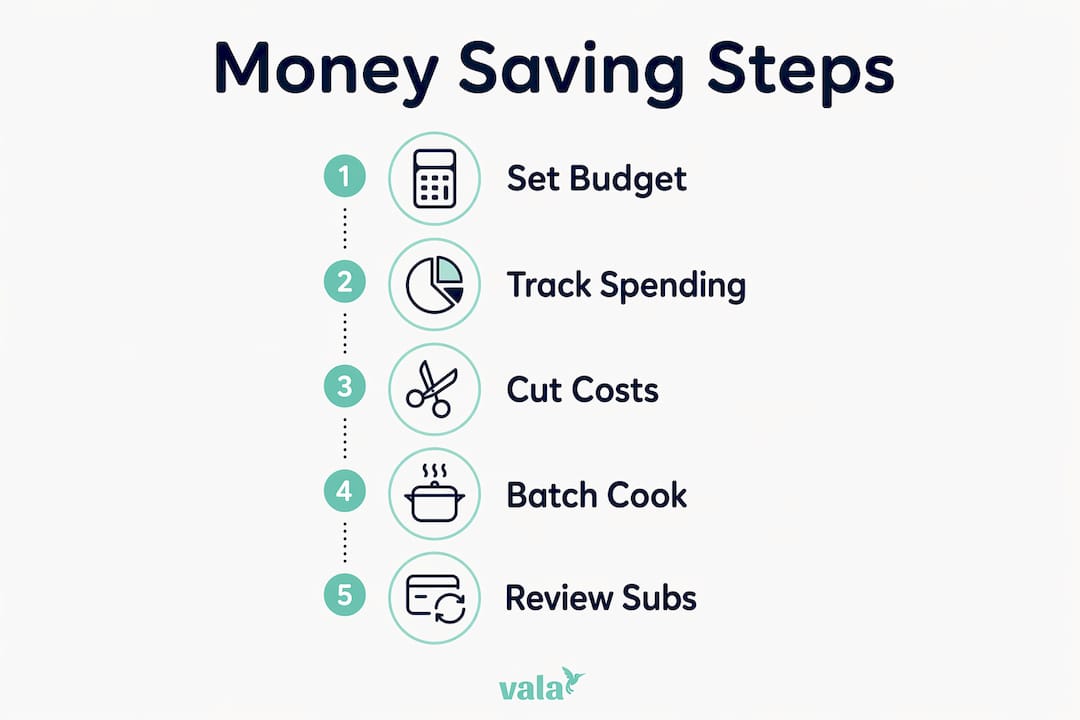
Here is what a functional tight-budget framework looks like in practice:
- Track every expense for 30 days before setting any limits. You cannot cut what you cannot see.
- Categorize spending into fixed (rent, utilities), variable (groceries, gas), and discretionary (dining out, subscriptions).
- Set a buffer category of at least $50 per month for unplanned costs.
- Automate savings on payday, even if it is only $10 to start.
- Review weekly, not monthly. Weekly check-ins catch problems before they compound.
Pro Tip: Treat your budget as a living document. Add a small guilt-free category for fun spending. Budgets that allow zero enjoyment fail faster than ones that budget for it intentionally.
What are the smartest ways to cut costs without feeling deprived?
Cutting costs works best when you target high-frequency, low-awareness spending first. These are the purchases you make on autopilot. Groceries, subscriptions, and recurring bills are the three categories where most people find the most room.
Here is a ranked approach to cutting costs effectively:
-
Audit your subscriptions first. Canceling unused subscriptions typically frees $50 to $150 per month. Pull up your last two bank statements and highlight every recurring charge. You will likely find two or three services you forgot you were paying for.
-
Plan your meals for the week. Meal planning with discount grocers like Aldi saves $80 to $150 monthly on groceries alone. Discount grocers run 20 to 40% cheaper than conventional supermarkets, and a written meal plan eliminates the impulse buys that inflate your cart.
-
Negotiate your recurring bills. Negotiating internet and phone bills saves $25 to $75 per month, and the success rate for these calls runs between 70 and 80%. Call your provider, mention a competitor’s rate, and ask for a loyalty discount. Most representatives have the authority to reduce your bill on the spot.
-
Use cashback apps for everyday purchases. Apps like Rakuten and Ibotta return a percentage of what you already spend on groceries and online shopping. This is not a savings strategy on its own, but layered on top of meal planning and coupon use, it adds up.
-
Apply the 48-hour rule for non-essential purchases. Wait two full days before buying anything that is not a planned need. Most impulse purchases lose their appeal within 48 hours. This one habit alone can save $50 to $100 per month for the average person.
Pro Tip: Set a calendar reminder to review subscriptions every 90 days. Services you use regularly today may go unused in three months. Quarterly audits keep your subscription list lean.
How do daily habits affect your monthly savings?
Daily habits create the most consistent savings because they compound over time without requiring ongoing decisions. The goal is to build thrifty spending habits that run on autopilot.
Cooking in bulk and packing lunch daily is one of the highest-return habits available. Batch cooking saves $150 to $300 per month compared to eating out, and it also reduces food waste and the temptation to order takeout on tired evenings. Spend two hours on Sunday preparing meals for the week and you remove the daily decision of what to eat, which is where most food spending leaks occur.

DIY minor repairs are another underused savings lever. Simple home and car repairs like unclogging a drain or replacing a toilet flapper cost $10 to $50 in parts. A professional service call for the same job runs $150 to $400. Learning three to five basic repairs through YouTube tutorials pays for itself the first time you use the skill.
Utility bills respond well to small behavioral changes. Switching to LED bulbs, adjusting your thermostat by two degrees, and unplugging devices on standby each contribute modest savings. Combined, these changes typically reduce a monthly utility bill by $15 to $30. That is not life-changing on its own, but it is consistent and requires no ongoing effort after the initial setup.
- Pack lunch at least four days per week instead of buying it. Even a $7 lunch adds up to $140 per month.
- Combine errands into one trip to reduce fuel costs and impulse stops.
- Use free entertainment options like public libraries, free museum days, and community events instead of paid alternatives.
- Unplug chargers and appliances when not in use. Standby power accounts for roughly 10% of home electricity use.
What should you do when cutting expenses is not enough?
When reducing monthly expenses still leaves you short, the answer is to increase your savings capacity from the income side. This does not require a second full-time job. It requires targeted, short-term action.
-
Sell unused belongings. Selling items on Facebook Marketplace or eBay generates $200 to $500 in one-time cash and clears space in your home. Start with electronics, clothing, and furniture you have not used in six months. Use a tool like DealFlipAI to check current market prices for electronics before listing.
-
Add gig income for 30 to 60 days. Platforms like DoorDash, TaskRabbit, and Fiverr allow you to earn on your own schedule. Even $100 to $200 per month in supplemental income can cover your buffer category and accelerate savings.
-
Check eligibility for public assistance programs. SNAP, LIHEAP, and local utility assistance programs exist specifically for people managing tight finances. Many eligible individuals never apply. A single SNAP benefit can offset $150 to $250 in monthly grocery costs.
-
Run a 30-day spending freeze on non-essentials. Commit to zero discretionary spending for one month. No dining out, no entertainment subscriptions, no clothing. The cash freed up during this period can seed an emergency fund or pay down high-interest debt.
-
Start automatic transfers at any amount. Automating savings at even $5 per week builds the habit and the account balance simultaneously. Increase the transfer by $5 every month. After six months, you are saving $30 per week without noticing the difference.
Key takeaways
Saving money on a tight budget requires a structured framework, targeted spending cuts, and consistent daily habits that collectively produce $200 to $500 in monthly savings without major lifestyle sacrifice.
| Point | Details |
|---|---|
| Use the 50/30/20 rule | Allocate 50% to needs, 30% to wants, and 20% to savings with a built-in buffer. |
| Audit subscriptions first | Canceling forgotten subscriptions frees $50 to $150 per month with minimal effort. |
| Automate savings on payday | Transferring even $10 automatically removes the temptation to spend it first. |
| Batch cook and pack lunch | Cooking in bulk saves $150 to $300 monthly compared to regular takeout habits. |
| Sell unused items when short | Facebook Marketplace and eBay can generate $200 to $500 in quick one-time cash. |
What I have learned from budgeting on almost nothing
I spent two years tracking every dollar on an income that left very little room for error. The biggest lesson was not a tactic. It was a mindset shift. I stopped thinking about budgeting as restriction and started treating it as direction. Every dollar I assigned a purpose felt like a decision I made, not a sacrifice imposed on me.
The automation piece changed everything practically. Before I set up automatic transfers, I saved whatever was left at the end of the month. That was usually nothing. The moment I moved $25 to savings on payday, my behavior around the remaining money shifted. I spent more carefully because I knew the savings were already handled.
The hardest part of budgeting on a tight income is the early months when the wins are small. You cancel a subscription and save $12. You pack lunch three days and save $21. None of it feels significant. But small, consistent wins compound into real financial stability over time, and the habits you build in lean months carry forward when your income grows. Persistence matters more than perfection here. A budget you stick to 80% of the time beats a perfect budget you abandon after two weeks.
— SaverStride
Take control of your finances with Valapoint
Knowing what to do is one thing. Having a tool that makes it automatic is another.

Valapoint is an AI-powered personal finance app that tracks your expenses in real time, flags hidden spending leaks, and helps you run subscription audits without digging through bank statements manually. You can set up automated savings goals, monitor your 50/30/20 split at a glance, and get intelligent insights on where your money is actually going. Whether you are managing a solo budget or splitting costs with a partner, Valapoint gives you a clear, confident view of your finances. Start taking control today with Valapoint’s personal finance app or explore the full suite of budgeting and savings tools built for real-life money management.
FAQ
What is the fastest way to save money on a tight budget?
Auditing your subscriptions is the fastest single action. Canceling unused services typically recovers $50 to $150 per month with one hour of work and no change to your daily routine.
How does the 50/30/20 rule work for low incomes?
The 50/30/20 rule allocates 50% of income to needs, 30% to wants, and 20% to savings or debt. On a low income, adjust the percentages so needs are covered first, then automate even a small savings transfer before spending on wants.
How much can meal planning actually save?
Meal planning combined with shopping at discount grocers like Aldi saves $80 to $150 per month on groceries. Batch cooking on top of that saves an additional $150 to $300 by replacing takeout meals with prepared food already in your fridge.
Is it worth trying to negotiate bills?
Negotiating internet and phone bills has a 70 to 80% success rate and saves $25 to $75 per month on average. One 15-minute phone call can reduce a recurring expense you pay every month for years.
How do I start saving when I have nothing left over?
Start with automated transfers of $5 to $10 on payday before any other spending. The pay-yourself-first method works because it removes the decision entirely. Even a small automatic transfer builds the habit and the balance over time.