

Calculate monthly free cash flow in seconds.
Budget Calculator: Build a Practical Monthly Plan
Enter your monthly numbers to estimate free cash flow, savings rate, and category risk before month-end.
Why People Choose Vala
Estimate savings rate and overspend risk quickly.
Get practical insights for category adjustments.
Move from calculator results to Vala app execution.
Who This Helps Most
Users planning a first monthly budget.
Households rebalancing fixed and discretionary categories.
People trying to increase savings consistency.
Interactive Calculator
Run your numbers, review insights, then implement the plan in Vala.
Your Results
Enter your values and click calculate to see your personalized insight.
How Budget Calculator Fits Into a Practical Money Workflow
Budget Calculator: Build a Practical Monthly Plan works best when it is part of a repeatable weekly routine. Enter your monthly numbers to estimate free cash flow, savings rate, and category risk before month-end. Users usually improve fastest when they combine planning, category tracking, and reminder-driven action instead of relying on one-time month-start setup. This gives better visibility before overspending compounds and helps users protect savings momentum even during high-spend weeks.
Vala is designed for this operating rhythm. Instead of leaving users with static reports, it turns financial activity into clear action prompts and progress checks. That structure helps people move from intent to execution: set targets, monitor drift, and correct early. Over time, this leads to more stable budget outcomes, stronger habit consistency, and improved confidence in daily money decisions.
- Calculate monthly free cash flow in seconds.
- Estimate savings rate and overspend risk quickly.
- Get practical insights for category adjustments.
- Move from calculator results to Vala app execution.
Execution Framework: Monthly Plan, Weekly Review, Daily Clarity
High-performing users keep their process simple. Step one is setting a realistic baseline for income, fixed costs, variable categories, and savings priorities. Step two is reviewing category burn rates weekly so course-corrections happen before month-end pressure builds. Step three is keeping reminders active for bills and recurring charges so timing errors do not derail the plan.
This framework supports both first-time budgeters and advanced users. It is effective for individuals, couples, and families because it separates strategic planning from daily execution. Whether your focus is reducing category leakage, improving shared-expense coordination, or building goal savings, consistent weekly adjustments usually outperform reactive resets. This is where Vala adds practical value beyond basic tracking tools.
- Set realistic category targets before the month begins.
- Run a short weekly review and adjust before drift compounds.
- Use reminders to protect due dates and recurring commitments.
Search Intent, Internal Navigation, and Conversion Path
Users landing on Budget Calculator pages typically need both information and a clear next action. They want to understand what the workflow does, verify that it matches their situation, and quickly move to installation when ready. Pages that satisfy this full journey tend to perform better in search and convert better because they remove uncertainty at each step.
For this page, the core value promise is: Use this budget calculator to estimate free cash flow, savings rate, and category balance with practical next-step guidance. Keep this message consistent from headline to CTA so users and search engines see one clear intent. Pair educational content with visible App Store and Google Play links, then reinforce next steps through related guides, calculators, and product feature pages.
- Use one clear value promise and keep it consistent across sections.
- Link to related pages that support the same budgeting intent.
- Place install CTAs where users naturally finish reading.
Trust Signals That Improve App-Install Confidence
Financial products convert better when trust language is concrete. Users need to see accurate feature descriptions, clear plan expectations, and practical outcomes they can measure. Avoid vague promises and outdated claims. Strong trust sections explain how users can start, what they can do immediately, and how they can evaluate progress over the first 30 to 90 days.
Frequently asked questions also help remove hesitation. A common user question on this page is: What if my free cash flow is negative? Start by reducing high-variance discretionary categories and reviewing recurring subscriptions. When pages answer real concerns in plain language, users are more likely to continue to store pages and complete installation.
- Users planning a first monthly budget.
- Households rebalancing fixed and discretionary categories.
- People trying to increase savings consistency.
How to Use This Calculator and Apply Results in Vala
Calculator output is most useful when paired with real spending behavior. Run one realistic baseline scenario, then test one conservative and one aggressive scenario to understand tradeoffs. This gives better planning context than relying on a single estimate. Use results to set monthly targets and define which category or debt action has the highest impact first.
After calculation, move directly to execution: update your category plan, set reminders, and track the related metric weekly in Vala. This closes the loop between planning and behavior. Users who apply calculator insights quickly usually see better retention and stronger financial progress than users who calculate once and wait for next month.
- Run baseline and scenario comparisons before choosing targets.
- Translate results into one specific weekly action plan.
- Track progress in-app so estimates become real outcomes.
Install Vala and Start Today
Return to the Vala homepage for full product details, or jump directly to the download section.
Latest Budgeting Guides
New practical money-management articles you can apply right away.
Save Money Automatically With AI Insights (Without Strict Budgeting)
Vala helps you save smarter with AI-powered insights, smart alerts, and simple visual tracking so your money works for you.
Read GuideTop Budgeting Apps for Financial Success
Navigating your money can feel like trying to assemble Ikea furniture without the instructions sometimes. You know you need a system, but where do...
Read GuideHow to predict overdraft before payday
Predicting an overdraft before payday is a proactive financial management strategy. It involves understanding your income, expenses, and identifying potential shortfalls in advance. This...
Read GuideBenefits of AI Budgeting with Vala
Faster category decisions
AI insights highlight where to adjust spending before month-end pressure builds.
Stronger savings consistency
Connect spending reductions to recurring goal contributions with less manual work.
Clear shared-money workflows
Split bills and track household expenses with practical visibility and reminder support.
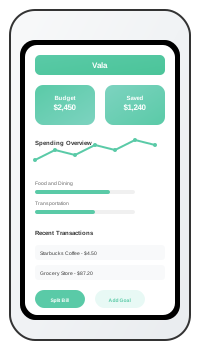
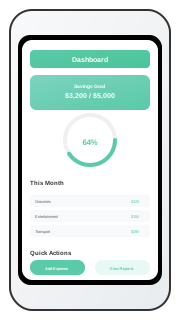
Vala App Screenshots
What Users Say About Vala
“Finally a budget app I keep using.”
“The insight cards make weekly decisions easy. I save more consistently now.”
“Shared budgeting is much clearer.”
“Split bills and reminders removed most of our monthly money confusion.”
“Great for building better habits.”
“I can see category trends and adjust before I overspend.”
FAQs for This Topic
Start by reducing high-variance discretionary categories and reviewing recurring subscriptions.
Use it monthly and after any major income or expense change.