
The fastest reliable way to split expenses is to scan or photograph itemized receipts, assign items to people, include proportional tax and tip, then save the receipt as proof. This gives you three things every group needs: accurate totals, a clear paper trail, and faster settlement with no back and forth. Some apps can support this workflow by handling the scanning and allocation steps for you.
TL;DR:
- Using receipt scanning apps speeds up expense splitting but still requires verifying extracted data due to common OCR errors with folded or faded receipts.
- Assigning each item to individuals and allocating taxes and tips proportionally prevents disputes, especially when combined with consistent rounding and confirmation.
- Keeping original receipts or digital scans with notes on who paid and when is essential for supporting deductions, reimbursements, or resolving future disagreements.
- Manual splitting is suitable for one-time expenses but lacks records, while spreadsheets create persistent logs, and apps offer quick, documented tracking for frequent sharing scenarios.
- Most disputes stem from forgotten items or assumptions, making accurate receipts with attached details the most effective way to ensure fair split and prevent conflicts.
Table of Contents
- Step-by-step process to scan, correct, allocate, and settle a receipt
- Comparing manual, spreadsheet, and app-assisted splitting
- How long to keep receipts and what records prove who paid
- Vala: a concrete app workflow that follows these steps
- Why precise receipt splits prevent most group money disputes
- Try Vala to split receipts without the spreadsheet
- Where these recordkeeping and tracking rules come from
- Sources
- FAQ
Step-by-step process to scan, correct, allocate, and settle a receipt
Splitting a bill fairly starts with the receipt itself, not with guesswork about who ordered what. Follow these steps in order and you will avoid the most common disputes.
- Capture the receipt clearly. Photograph it flat, in good light, with all four edges visible, or save the emailed version if the restaurant or store sends one.
- Check the extracted text. Whether you read it yourself or a scanning tool pulls the data, confirm quantities, item names, and prices before you move on.
- Watch for common OCR mistakes. Merged line items, misread quantities, and combined prices are the most frequent errors in automated extraction.
- Assign each item to a person. Use per-item assignment for accuracy, an equal split for simplicity, or a hybrid where shared plates get split and personal items don’t.
- Allocate tax and tip proportionally. Calculate each person’s share of the subtotal, then apply the same tax and tip rate to that share rather than splitting those charges evenly.
- Apply discounts and coupons the same way. Spread a shared discount across the people who ordered the discounted items, not across the whole group.
- Round consistently. Pick one rule, such as rounding each person’s final total to the nearest cent, and use it every time so nobody notices small differences.
- Confirm totals with the group. A quick message with each person’s amount before anyone pays keeps everyone on the same page.
- Record the settlement. Note who paid, how they paid, and the date, then save the receipt with that note attached.
Pro Tip: Keep the original photo or scan even after you’ve entered the numbers. If a dispute comes up weeks later, the receipt is your only real evidence.
This sequence works whether you’re doing the math by hand or letting an app read the receipt for you. The step that people skip most often is verification, and it’s the one that prevents the most arguments.
Comparing manual, spreadsheet, and app-assisted splitting
Which method you use depends on how often you split costs and how much documentation you need. Each option trades speed for control differently.
- Manual: best for one-off bills like a single dinner; take a photo, do the math in a group chat, and move on, though it leaves no lasting record.
- Spreadsheet: works well for recurring costs like a shared apartment; set up columns for item, price, and assigned person, then add formulas for tax and tip so the math updates automatically.
- App-assisted: built for frequent splitting; scanning tools speed up entry and keep a running record, but you still need to check the extracted items before confirming.
Manual splitting costs nothing and takes no setup, but it depends on memory and trust, which breaks down once a group splits more than a few bills. A spreadsheet template gives you a permanent, searchable log and lets you build in your own rounding and tax rules, though someone has to enter every line by hand. App-assisted scanning cuts that manual entry down and keeps a timestamped audit trail, which matters if you ever need to prove who paid what.
Practitioner observations show AI receipt scanning handles standard retail formats well but struggles with folded, faded, or multipage receipts, so a verification step still matters no matter which app you use.
Before picking a method, run through a short checklist: how many people are splitting, how often you split, whether you need records for reimbursement or taxes, and how much you care about keeping the data private. Groups that split rent and utilities every month benefit from a spreadsheet or app with a saved history, while a one-time group dinner rarely needs more than a phone photo. If you’re managing recurring utility charges among roommates, understanding how utility billing works for renters can help you decide how to categorize those shared costs before you split them.
How long to keep receipts and what records prove who paid
Receipts aren’t just for splitting bills fairly today. They matter later if a deduction, reimbursement, or dispute comes up.
- The IRS advises keeping records that support a tax return until the period of limitations for that return expires, which is commonly at least four years for employment tax records.
- Keep originals or clear digital scans whenever a receipt might support a deduction or reimbursement; a scanning app speeds up entry but does not replace holding on to a verifiable copy.
- For household expenses specifically, IRS guidance on verification lists receipts and cancelled checks as acceptable proof of who paid and how much, alongside costs like rent, utilities, and food consumed at home as relevant to maintaining a household.
- Attach a short note to each receipt recording who paid, who the expense was split among, and the date. That small habit resolves most disputes before they start.
- If questions come up around shared expenses in a marriage or a community property situation, talk to a tax professional rather than guessing. Publication 555 outlines how community funds can complicate who is considered to have paid what.
For a deeper look at sorting which household costs are shared versus individual, see how shared expense categories break down.
Vala: a concrete app workflow that follows these steps
Vala puts this process into a few taps instead of a spreadsheet. You upload or scan a receipt, the app extracts the line items, and you assign each one to a person in your group before confirming the split.
- Receipt scanning: upload a photo or forward an emailed receipt directly into the app.
- Group splitting: assign items to roommates, partners, or travel companions and let Vala calculate proportional tax and tip.
- Settlement tracking: see who has paid, who still owes, and keep a saved record tied to each receipt.
Picture a roommate dinner split three ways: you scan the receipt, Vala pulls out each item, you tap to assign the appetizer to two people and the entrees to each individual, confirm the tax and tip split, and the app logs who owes what.
Pro Tip: Always glance over the scanned items before you confirm a split. Folded or faded receipts can still trip up automated extraction, and a quick check takes seconds.
Why precise receipt splits prevent most group money disputes
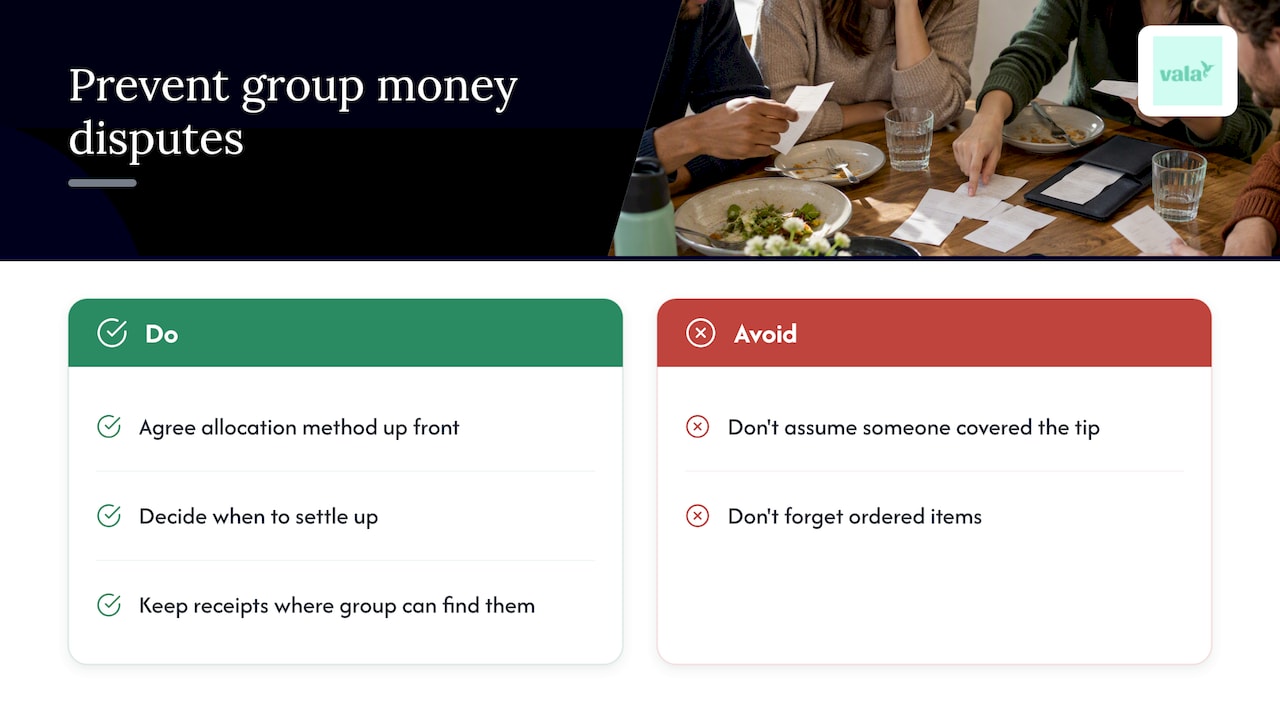
Most splitting disputes come from forgotten items or assumptions, not dishonesty. Someone forgets they ordered an extra side, or two people assume the other is covering the tip. A receipt removes the guesswork because the numbers are right there.
Setting a few ground rules helps too: agree on your allocation method up front, decide when you’ll settle up, and keep every receipt somewhere the whole group can find it later. One group of friends who split a weekend trip this way told us it was the first time nobody argued about who owed what, because every charge had a receipt and a name attached.
— SaverStride
Try Vala to split receipts without the spreadsheet
If you’re tired of doing this math by hand every week, some apps can handle scanning, allocation, and settlement tracking in one place, with bank data kept private and under your control. These apps can be used by roommates splitting rent and groceries, couples managing a shared card, and travel groups juggling group meals.

- Scan a receipt and use app features to extract line items.
- Assign costs to each person and confirm proportional tax and tip.
- Keep a saved, timestamped record for every split.
Check out Vala to start splitting your next shared bill.
Where these recordkeeping and tracking rules come from
These guidelines draw on IRS Topic 305 for how long to keep records, and the CFPB’s spending tracker for turning receipts into a weekly spending habit.
Sources
FAQ
What is an example of split expenses?
A common example is a group dinner where each person owes for their own food plus a proportional share of tax and tip. If one person orders an appetizer to share, that cost gets divided among everyone who ate it rather than the whole table.
What is the best expense splitting app?
The best choice depends on whether you want simple even splits or detailed per-item allocation with a saved record. Apps like Vala support receipt scanning and proportional tax and tip splitting, which suits groups who want documentation alongside the math.
How do you split expenses three ways?
Add up the total, assign any per-item costs to the person who ordered them, then divide shared charges like tax and tip proportionally across all three people’s subtotals. Round each person’s final amount consistently, such as to the nearest cent, so the numbers add back up to the receipt total.
What is a fair way to split household bills between couples?
A common approach is to list every shared cost, such as rent, utilities, and groceries, and split each either equally or by an agreed percentage based on income. Keeping receipts and a simple note of who paid what, as IRS guidance on household verification recommends, makes it easier to resolve any disagreement later.